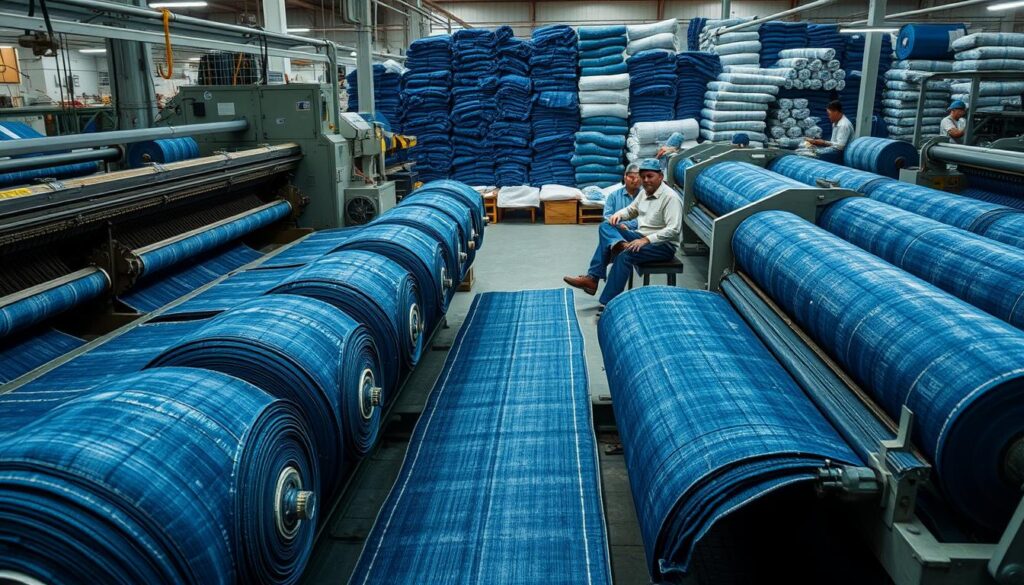
The global denim market is set to hit $120 billion by 2027. This shows how crucial denim fabric is for fashion brands. Jeans have come a long way from being miners’ clothes in the 1800s to being a staple in high-fashion today. This article dives into the top denim makers that supply fabric to jeans companies all over the world.
Key Takeaways
- The global denim market is expected to reach $120 billion by 2027, underscoring the significance of denim fabric for fashion brands.
- Denim manufacturing is a global industry, with leading producers like Arvind Mills, KG Denim, Ashima Denim, Kaihara Denim, and ISKO Denim supplying fabric to jeans companies worldwide.
- Denim fabrics are predominantly made of cotton, with some blends incorporating synthetic fibers like elastane or polyester for added stretch and durability.
- The fashion industry is shifting towards more sustainable denim production, with brands incorporating eco-friendly materials like organic and recycled cotton.
- Innovative collaborations and consumer demand for transparency are driving the denim industry to adopt greater sustainability measures in its manufacturing processes.
The Fabric of Denim: Unraveling the Origins
Denim, the iconic fabric, is deeply rooted in American style. It started in the 1600s in southern France. From there, it evolved into the fabric we love today.
Traditional Denim: A Cotton Twill Tapestry
At its core, denim is made from a cotton twill weave. This weave makes denim strong and stylish. Since the early 1700s, the United States has made its own denim.
The blue color of denim is famous. It comes from indigo dye. This color has become a symbol of workwear and culture.
Modern Blends: Comfort and Versatility
Modern denim is different from traditional denim. It now includes synthetic fibers like polyester or elastane. These blends make denim more comfortable and stretchy.
Today, denim comes in many types. From raw, selvedge denim to lightweight, stretchy denim. The industry combines tradition and technology to meet today’s fashion needs.
| Denim Fabric Type | Key Characteristics |
|---|---|
| Traditional Denim | 100% cotton, twill weave, indigo dyed |
| Blended Denim | Cotton-synthetic fiber blends, increased comfort and stretch |
| Lightweight Denim | Cotton-polyester or cotton-elastane blends, breathable and versatile |
“Denim has the ability to be both timeless and of-the-moment, seamlessly transitioning from workwear to high fashion.”
Denim Mills: The Titans of Textile Manufacturing
In the world of denim, two giants stand out – Arvind Mills and Kaihara Denim. They have made a big impact, each in their own way. They shape the global denim scene.
Arvind Mills: Indian Denim Powerhouse
Arvind Mills is a big name in Ahmedabad, India, since 1931. They make denim, woven fabrics, and knits. Known for top-notch premium denim fabrics and green practices, they’re a global leader.
Kaihara Denim: Japanese Craftsmanship Personified
Kaihara Denim, from Japan, has been around since 1893. They’re famous for their amazing denim and quality. They control every step, from cotton to finish, ensuring top quality. They supply denim to over 30 countries, known for Japanese denim manufacturing excellence.
| Company | Highlights |
|---|---|
| Arvind Mills |
|
| Kaihara Denim |
|
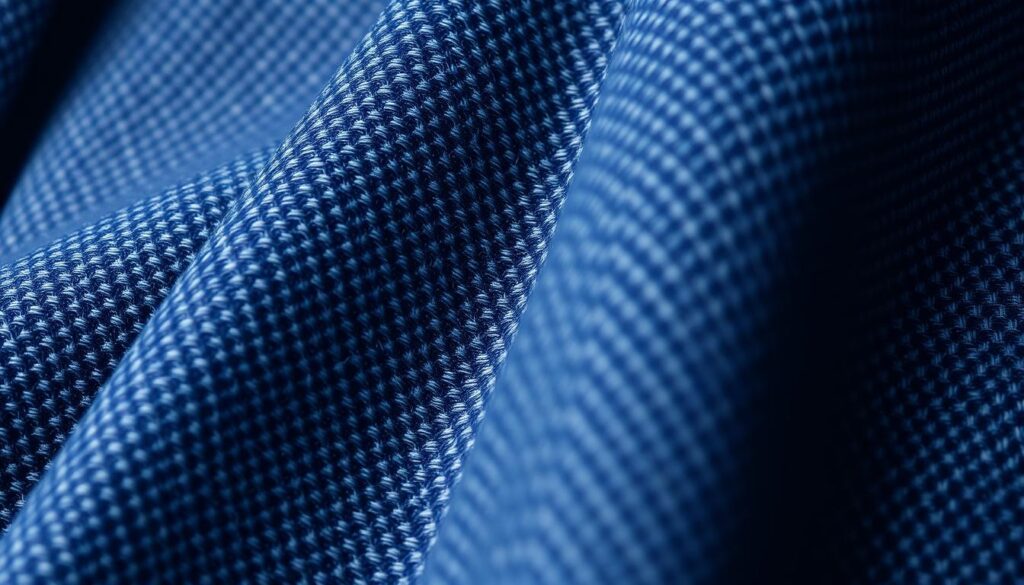
“Kaihara’s origins as a kasuri mill have influenced their dyeing practices, resulting in a unique and captivating denim fabric that is highly sought after by fashion brands worldwide.”
where do jeans companies get their fabric
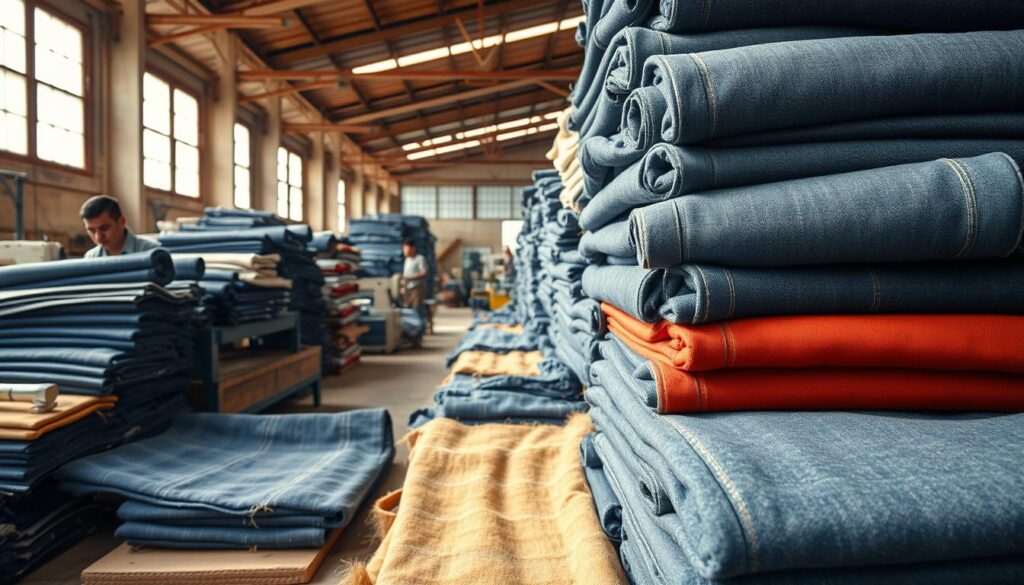
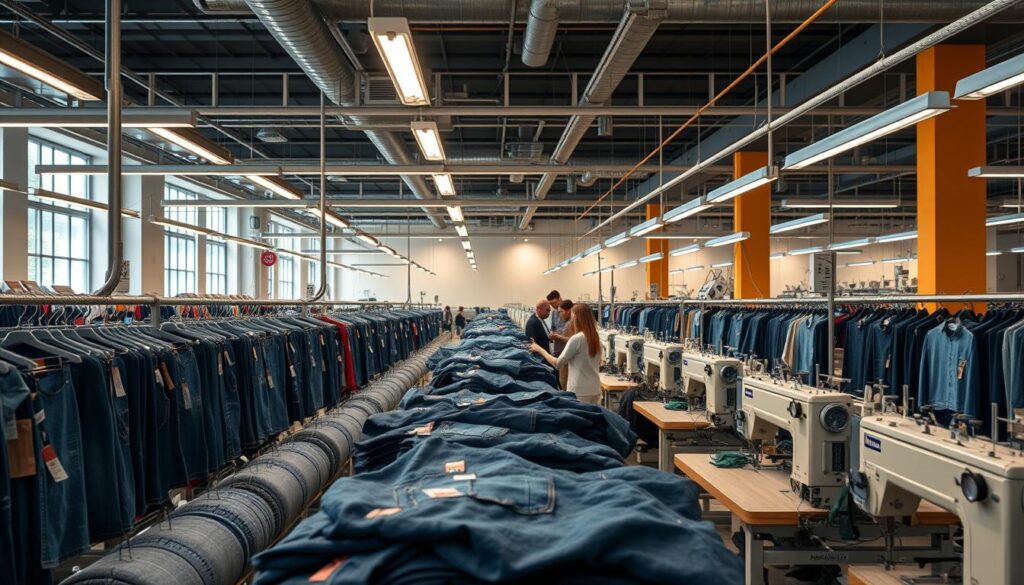
In the world of denim, jeans companies have a global network of trusted suppliers. These suppliers provide the high-quality fabrics needed for their iconic products. From traditional cotton denim to modern blends, these giants are key in the jeans supply chain. They ensure fashion brands and retailers have the materials they need.
Leading the pack are famous denim mills like Arvind Mills in India and Kaihara Denim in Japan. These textile powerhouses have perfected denim production over decades. They deliver exceptional fabrics to clients all over the world. Their expertise and advanced technologies offer a wide range of denim options, from classic indigo-dyed twills to innovative stretch blends.
Beyond these giants, jeans companies also source denim from smaller, specialized suppliers. These suppliers meet niche demands, from artisanal selvedge denim weavers to eco-conscious manufacturers. This diverse ecosystem ensures fashion brands can find the perfect fabric for their denim designs.
The jeans manufacturing supply chain is a global tapestry of partnerships and expertise. By tapping into this network, jeans companies can create timeless and innovative denim products. Consumers love these products, making them a staple in fashion.
Sustainable Denim: Weaving a Greener Future
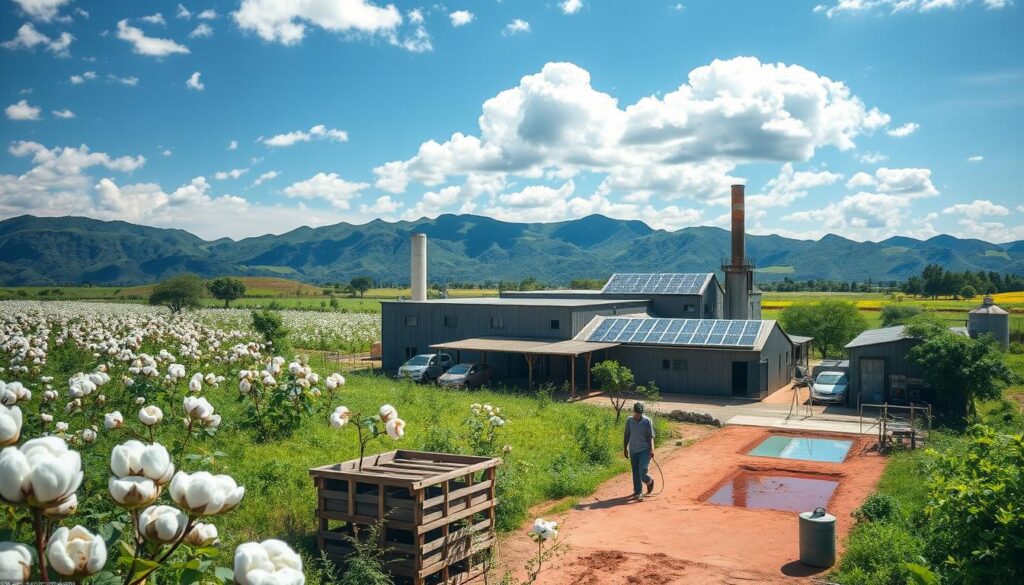
The denim industry has faced a lot of criticism for its environmental impact. This is mainly because of the water used in dyeing and finishing denim. But, there’s a big change happening. New eco-friendly dyeing methods and recycling efforts are making denim production more sustainable.
Eco-Friendly Dyeing Techniques
Old denim dyeing methods use a lot of water. But, new technologies like waterless dyeing and plant-based dyes are changing this. These methods use less water and are better for the planet. Laser washing also helps by making denim look worn without using much water.
Recycled and Repurposed Denim
Denim brands are now focusing on recycling and repurposing old jeans. Mud Jeans has a program to recycle jeans, turning them into new products. Outerknown even has a platform called Outerworn for buying and selling used denim.
Using recycled denim fibers in new products also helps. Brands like Ética mix cotton with materials like hemp and bamboo. This makes denim more eco-friendly.
The denim market is growing fast, and sustainable practices are key. By using eco-friendly dyeing and recycling, the industry is making a positive change. It’s creating a greener future, one piece of denim at a time.
| Brand | Price Range | Sustainability Initiatives | Size Range |
|---|---|---|---|
| Ética | $172–$215 | 90% less water used, 70% less energy consumed, InCloud water-saving nanotech technology | 24–32 |
| Unspun (Vega) | Baseline $215 | Custom tailoring with 3D weaving machine, 1% reduction target in global human carbon emissions | N/A |
| Triarchy | $289–$385 | Plastic-free denim, carbon offset production by donating to global projects | 24–32 |
| Nudie Jeans | Around $200 | Repair service, recycling pre-used denim, fair wages, reduce water use, lower net carbon emissions | 24–38 |
| Boyish | $198-$218 | Ethical production with Candiani denim, organic and recycled cotton, Tencel | 22–32 |
| Warp + Weft | $88–$98 | 30 years of collaboration with an eco-friendly mill, size-inclusive brand | 00–24 |
How to Evaluate a Denim Manufacturing Partner
When evaluating a denim manufacturing partner, fashion brands should review fabric sourcing, wash and finishing capability, MOQ, sample development, quality control, compliance documentation, and lead-time reliability rather than relying on marketing claims alone.
For smaller collections, confirm the supplier’s small-order production capability in writing, including MOQ per style and color, sample lead time, bulk lead time, fabric minimums, and any surcharges for low-volume orders.
Quality evaluation should cover denim weight and composition, shrinkage, colorfastness, wash consistency, measurement tolerances, seam construction, hardware performance, and final inspection criteria before bulk shipment.
If sustainability is part of the sourcing brief, request documentation that applies to the actual fabric mill, dyeing or washing process, and production site. Claims about recycled content, chemical management, water use, or labor standards should be supported by relevant evidence.
The right denim supplier should match the brand’s product category, order volume, quality standard, target price, finishing requirements, and delivery schedule. A sample order and documented production plan are useful before committing to larger quantities.
“NoName’s Flexi MOQ approach and commitment to sustainability have been a game-changer for our brand. We’re able to offer our customers premium denim at affordable prices without compromising on quality or ethics.”
Conclusion
We’ve explored the denim industry’s origins and the rise of top denim makers. We’ve also seen how the industry is moving towards a greener future. From classic cotton twill to modern blends, jeans’ story is one of lasting craftsmanship and changing tastes.
The denim market is growing fast, with a 5-7% annual growth rate expected by 2025. More jeans companies are choosing fabric from global leaders and eco-friendly partners like NoName. This move shows a growing need for products that are both sustainable and fair.
The future of denim looks bright, with a focus on both style and the environment. New technologies and a push for sustainability mean we’re on the verge of a new era of jeans. These jeans will not only please consumers but also protect our planet. The industry’s journey towards a greener, more ethical future is clear.
FAQ
What is the projected growth of the global denim market?
Denim remains a major global apparel category, making fabric selection, mill capability, minimum order requirements, finishing options, and supply-chain traceability important sourcing considerations for fashion brands.
How has the evolution of denim fabric impacted the fashion industry?
Jeans have changed a lot. They started as miners’ clothes in the 1800s. Now, they’re a big deal in high-fashion.
What are the key features of traditional denim fabric?
Traditional denim is 100% cotton, woven in a special way. This makes jeans strong. The cotton is dyed blue, usually with indigo.
How have modern denim fabrics evolved?
Modern jeans mix cotton with synthetic fibers like elastane. This blend makes them more comfy and stretchy. It’s what people want today.
Who are the prominent denim manufacturers in the global market?
Arvind Mills in India and Kaihara Denim in Japan are leaders. They make top-notch denim and care about the planet.
What are the sustainability initiatives in the denim industry?
The denim world has faced environmental concerns. But, it’s getting better. Eco-friendly dyeing and recycling denim waste are big steps forward.
What are the benefits of working with a private-label clothing manufacturer like NoName?
NoName in India is a top choice for denim. They offer quality, flexible orders, and care for the environment. They’re great for fashion brands looking for good denim.