How Long Does It Take to Manufacture Clothing? A Complete Guide for Fashion Brands
For fashion brands, understanding clothing manufacturing lead time is essential for planning product launches, inventory, marketing campaigns, and seasonal collections.
One of the most common questions brands ask when working with an OEM clothing manufacturer is:
How long does it take to manufacture clothing?
There is no single answer because production time depends on the product, order quantity, fabric availability, customization requirements, sampling process, and production schedule.
A simple garment may move through production relatively quickly, while a highly customized fashion collection can require significantly more development time.
This guide explains the typical clothing production timeline, the factors that affect manufacturing lead time, and how fashion brands can reduce unnecessary delays.
What Is Clothing Manufacturing Lead Time?
Clothing manufacturing lead time refers to the total time required to move a garment from product development through finished production.
Depending on the project, the process may include:
- Design review
- Fabric sourcing
- Pattern development
- Sample development
- Sample revisions
- Final sample approval
- Bulk fabric procurement
- Cutting
- Sewing
- Printing or embroidery
- Washing or special treatments
- Quality inspection
- Packing
- Shipment
The total production timeline depends on how many of these stages are required.
For this reason, brands should avoid evaluating manufacturers based only on a statement such as “production takes 30 days.”
Instead, ask the manufacturer what is included in the quoted production time.
Typical Clothing Production Timeline
A typical custom clothing project may follow this general structure:
1. Product Development
The manufacturer reviews the design, measurements, materials, construction details, and branding requirements.
This stage may take several days depending on how complete the product information is.
2. Fabric Sourcing
The factory identifies suitable fabrics according to the garment specifications.
If the required fabric is readily available, sourcing can be relatively quick.
If the fabric needs to be developed, dyed, knitted, printed, or specially treated, additional time may be required.
3. Sample Production
The manufacturer creates the first sample based on the approved specifications.
Sampling allows the brand to evaluate:
- Fit
- Measurements
- Fabric
- Color
- Construction
- Sewing quality
- Branding details
4. Sample Revision
Many garments require adjustments after the first sample.
For example:
- Sleeve length may need adjustment
- Body measurements may need modification
- Fabric may need to be changed
- Neckline construction may require revision
- Colors may need correction
Multiple sample revisions can significantly increase the overall lead time.
5. Bulk Production
Once the final sample is approved, bulk production can begin.
The manufacturing process generally includes:
Fabric → Cutting → Sewing → Finishing → Quality Inspection → Packing
The production time depends heavily on order quantity and garment complexity.
How Long Does Bulk Clothing Production Take?
There is no universal production time for every garment.
Simple products with readily available materials can usually move faster than highly customized garments.
Factors affecting bulk production include:
- Order quantity
- Garment complexity
- Fabric availability
- Number of colors
- Printing requirements
- Embroidery
- Washing processes
- Special construction
- Packaging requirements
- Factory production schedule
For example, a basic top with standard fabric may have a simpler production process than a heavily embellished dress requiring custom fabric, embroidery, washing, and specialized finishing.
Therefore, fashion brands should request a project-specific production timeline instead of relying on a general industry estimate.
 What Factors Affect Clothing Manufacturing Lead Time?
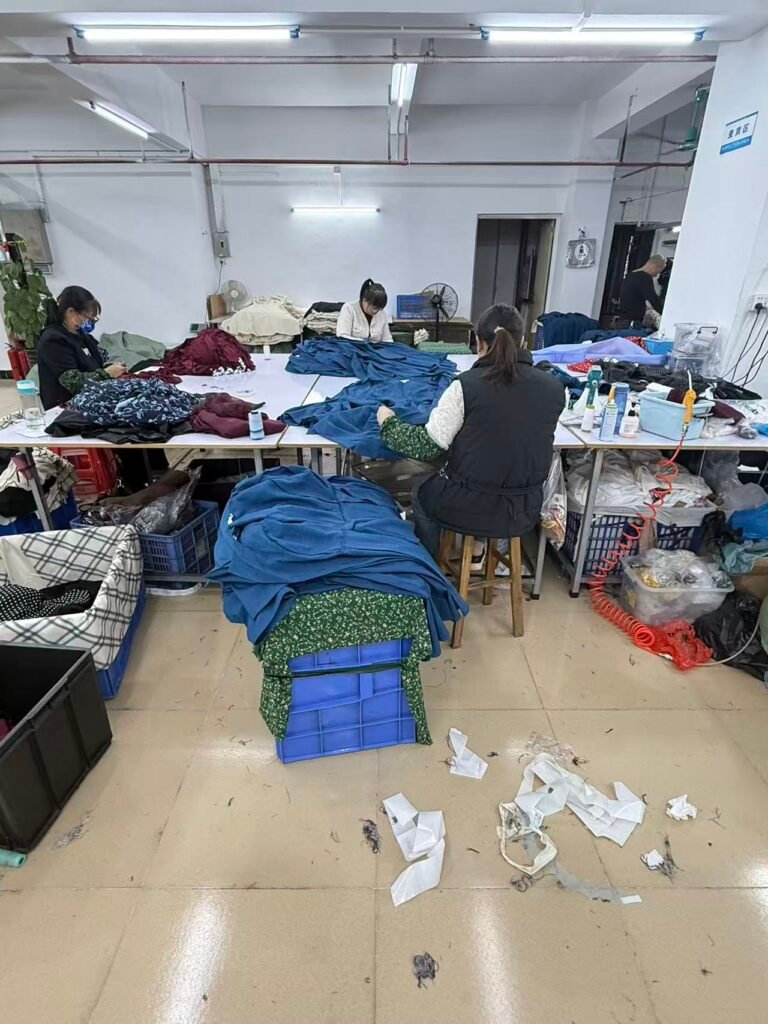 What Factors Affect Clothing Manufacturing Lead Time?
1. Garment Complexity
The more complicated the garment, the more production steps may be required.
A simple T-shirt may have relatively straightforward construction.
A structured jacket, detailed dress, or garment with multiple panels and special finishes can require considerably more work.
2. Fabric Availability
Fabric is one of the most important factors affecting production schedules.
If the required fabric is already available, production can move forward faster.
If the manufacturer needs to source or develop a specific material, the timeline may increase.
Brands should therefore confirm fabric availability as early as possible.
3. Order Quantity
Larger orders naturally require more production resources.
However, production time does not always increase in direct proportion to order quantity because factories can organize larger orders through optimized production planning.
The manufacturer should provide a realistic timeline based on the actual quantity.
4. Customization Requirements
Custom clothing may include:
- Custom labels
- Hangtags
- Embroidery
- Screen printing
- Digital printing
- Special buttons
- Custom packaging
- Unique washing
- Custom fabric development
Each additional process can affect the manufacturing timeline.
5. Sample Approval
Sample approval is often one of the most underestimated parts of apparel production.
A manufacturer may be ready to begin production, but if the brand has not approved the final sample, bulk manufacturing cannot start.
Fast and clear communication between the brand and manufacturer can significantly reduce unnecessary delays.
6. Production Capacity
A manufacturer’s current production schedule also matters.
Even if a factory can technically manufacture the garments quickly, its production lines may already be occupied by other orders.
Before placing an order, ask:
- When can production start?
- What is the estimated completion date?
- How long will fabric sourcing take?
- When will the final inspection be completed?
This gives the brand a more realistic production plan.
How Can Fashion Brands Reduce Manufacturing Lead Time?
Reducing production time does not mean rushing the factory.
Instead, brands should eliminate avoidable delays.
Prepare Complete Product Information
Before contacting a manufacturer, prepare as much information as possible.
This may include:
- Design drawings
- Measurements
- Fabric requirements
- Color references
- Construction details
- Labels
- Packaging requirements
- Quantity
- Target delivery date
A complete product specification helps manufacturers understand the project faster.
Approve Samples Quickly
Sample revisions can become a major source of delays.
Brands should establish a clear internal approval process so feedback can be provided quickly.
Instead of sending fragmented feedback over several days, provide consolidated comments whenever possible.
Confirm Materials Early
Fabric and trims should be discussed early in the development process.
Important materials may include:
- Main fabric
- Lining
- Buttons
- Zippers
- Labels
- Thread
- Elastic
- Packaging materials
Early confirmation helps prevent production from waiting for missing materials.
Communicate Clearly With the Manufacturer
International apparel production often involves communication between different countries and time zones.
Clear communication helps prevent misunderstandings regarding:
- Measurements
- Colors
- Materials
- Quantity
- Packaging
- Delivery requirements
A professional manufacturer should be able to provide clear updates throughout the production process.
Should Brands Choose a Manufacturer Based on Production Speed?
Not necessarily.
Fast production is useful, but reliable production is more important.
A manufacturer that promises an extremely short production time but cannot maintain quality may create greater costs later.
Production delays can lead to:
- Missed product launches
- Inventory problems
- Higher shipping costs
- Customer complaints
- Lost sales
- Additional production expenses
The ideal manufacturing partner should balance:
Quality + Lead Time + Cost + Reliability
Rather than choosing the manufacturer with the shortest promised production time, brands should evaluate whether the manufacturer can consistently meet agreed deadlines.
How to Build a Reliable Clothing Production Timeline
Fashion brands can create a simple production schedule based on major milestones.
For example:
Design Preparation
↓
Manufacturer Review
↓
Quotation
↓
Fabric Sourcing
↓
Pattern Development
↓
Sample Production
↓
Sample Approval
↓
Bulk Material Preparation
↓
Bulk Production
↓
Quality Inspection
↓
Packing
↓
Shipment
Each stage should have a target completion date.
This makes it easier to identify potential delays before they affect the final delivery date.
What Should You Ask a Clothing Manufacturer About Lead Time?
Before placing an order, ask the manufacturer:
- How long does sample production take?
- How long does fabric sourcing take?
- How long does bulk production take?
- Does the production timeline include material sourcing?
- Does it include quality inspection?
- When can bulk production begin?
- What factors could cause delays?
- Can you provide production updates?
- What happens if materials are delayed?
- What is the estimated shipment date?
These questions help brands understand the actual manufacturing schedule instead of relying on a single estimated number.
Clothing Manufacturing Lead Time vs. Shipping Time
Another important point is that manufacturing time and shipping time are different.
For example:
Product Development
Sampling
Bulk Production
Quality Inspection
Shipping
The final delivery date depends on the entire process.
Brands should therefore work backward from their target launch date.
If a collection needs to be available for a specific seasonal campaign, production should begin early enough to allow time for sampling, manufacturing, inspection, and transportation.
Why Working With an Experienced OEM Clothing Manufacturer Matters
An experienced OEM clothing manufacturer can help brands manage different stages of the production process more efficiently.
A professional manufacturing partner should be able to support:
- Product development
- Pattern making
- Fabric sourcing
- Sample production
- Bulk manufacturing
- Quality control
- Packaging
- Shipping coordination
At Mugekoo, we provide custom clothing manufacturing, OEM and ODM apparel production, and private label manufacturing support for fashion brands and businesses.
Our manufacturing process covers product development, sample making, bulk production, quality inspection, and shipping support.
This integrated approach helps brands manage their apparel projects through a more organized production process.
Final Thoughts
Understanding clothing manufacturing lead time helps fashion brands plan their collections more effectively.
The total production timeline depends on many factors, including garment complexity, fabric availability, customization, order quantity, sample revisions, and factory capacity.
The best approach is not simply to ask:
“How fast can you make my clothes?”
Instead, ask:
“Can you provide a realistic production timeline and consistently meet each milestone?”
A reliable clothing manufacturer should provide clear communication, realistic lead times, consistent quality, and professional production management.
For fashion brands developing custom apparel, planning early and communicating clearly with the manufacturer can make the entire production process smoother and more predictable.