Garment pattern file handover gives a clothing brand a usable development record for future production. Receiving a file called “final pattern” is not enough: it may contain only the base size, omit seam allowances or use units that the receiving system interprets incorrectly. The buyer needs to know what the delivery includes and whether it matches the approved garment.
This guide focuses on the technical handover package for OEM and custom women’s clothing. It applies when a brand receives files after development, changes production partners or prepares a repeat order. Ownership and permission to use the files must be agreed separately from the technical checks.
Agree the deliverables at the development stage
List which assets will be delivered, in which formats and at which milestone. Possible items include editable patterns, an agreed exchange file, a full-scale plotting reference, the graded size range, grade rules and a pattern-piece list. Ask whether the development fee includes those deliverables rather than assuming a paid sample includes every working file.
The design confidentiality guide addresses ownership and permitted use. The handover checklist then makes the agreed delivery concrete. Do not request another party’s proprietary files beyond the rights established for the project.
Identify the approved revision
The file should reference the style code, pattern revision, approval date and corresponding sample. Keep superseded versions in a clearly marked archive rather than placing several files named “final” in the same folder.
If the sample room altered the approved garment during fitting, confirm that the changes were transferred into the delivered pattern. A corrected sample and an outdated digital pattern are not a usable production pair. Request a short change summary for revisions that affect fit or construction.
| Handover item | Check to make |
|---|---|
| Style and revision | Matches the approved sample and technical specification |
| Pattern-piece list | Includes shell, lining, facing and other required pieces |
| Size range | Contains the contracted sizes and correct base-size identification |
| Units and scale | Opens and plots at the intended full size |
| Seam information | Distinguishes stitch lines, cut lines and included allowances |
| Construction markings | Preserves grain direction, notches and relevant internal points |
| Import record | Documents the receiving system and unresolved differences |
Check completeness across materials and sizes
A dress pattern may need separate lining, facing, interlining and pocket components in addition to the visible shell. Compare the piece list with the bill of materials and construction drawing. Identify whether repeated or mirrored pieces are represented by a cutting instruction rather than separate geometry.
Confirm the required size range and the grading reference. An exchange file containing one size does not establish that the remaining sizes were delivered. Use the size grading guide to review the relationship between the approved base size and other sizes.
Confirm units, allowances and markings
State whether the files use millimetres, centimetres or another unit. On import, measure a known reference dimension to detect a scale problem before plotting or cutting. Ask the pattern technician to verify that the geometry opens as intended in the receiving system.
Clarify whether seam allowance is already included. Adding it a second time changes the cut panels; omitting it where needed can make the pattern unusable. Where both stitch and cut lines are present, identify each clearly. Check notches, grainlines, fold instructions and internal points used for darts, pockets or other construction details.
Test the import rather than promising universal compatibility
Two systems can interpret a file differently even when they accept the same extension. Confirm the agreed exchange format with the receiving pattern team and perform an import check. Compare piece count, size labels, scale and critical geometry with the supplied reference.
If something is missing or changed, return the issue to the originating technician. Keep the original delivery alongside any corrected import. Avoid silently redrawing a piece and continuing to call it the supplier’s approved pattern.
Connect the handover to the physical garment
Review the received pattern against the approved measurement sheet and construction reference. Where the handover will support a different factory or material, make a sample to validate the interpretation before bulk cutting. A technical file is a development input, not proof that a new process will reproduce the same result automatically.
The repeat production guide explains the wider reference package. Include the fabric and trim approvals, construction notes and physical sample where the agreed arrangement allows. These explain decisions that geometry alone cannot communicate.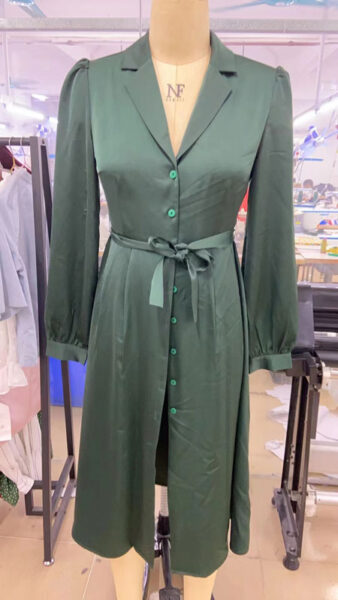
Close the transfer with a written checklist
Record the delivered filenames, versions, formats, size range and receiving team’s import result. Identify unresolved items and who will correct them. Keep the approval record with the pattern package so a future production team can find the intended reference without reconstructing the development history.
For a project with Mugekoo, include your required pattern deliverables, file formats and intended future use in the enquiry. You can send the development requirements to Mugekoo and agree the handover scope before sampling begins, with technical verification completed before the package is accepted for repeat production.