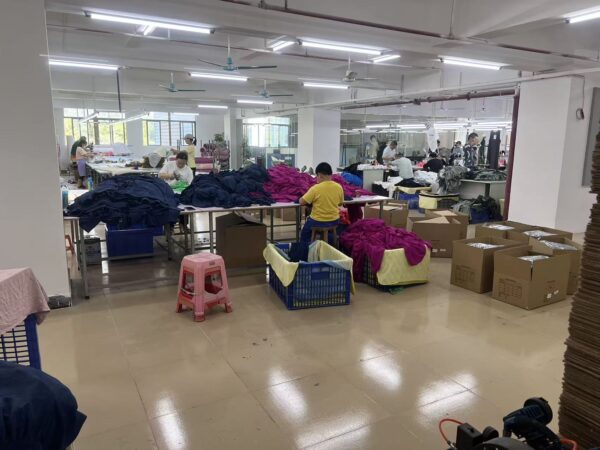
For overseas fashion brands, wholesalers and retailers, final inspection is the last major quality checkpoint before an OEM clothing order leaves the factory. AQL inspection gives buyers a structured way to judge shipment quality from a defined sample instead of relying on random visual checks.
What AQL Means in Clothing Manufacturing
AQL means Acceptance Quality Limit. It is a sampling method used to determine how many garments should be checked and how many defects can be accepted before a lot requires corrective action or rejection.
AQL does not replace production control. Buyers should still require material checks, inline QC and approved samples. See our garment quality control checklist for the full process.
1. Agree on the Standard Before Production
Define the inspection level, defect categories, measurement tolerances, packaging requirements and who will perform the final inspection before bulk production begins.
2. Separate Critical, Major and Minor Defects
Critical defects relate to safety, legal or serious usability issues. Major defects can make a garment unsellable or clearly different from the approved standard. Minor defects are smaller appearance or workmanship issues. Buyers should define examples for their product category.
3. Use the Approved Sample as the Main Reference
Bulk garments should be compared with the final approved specifications and pre-production sample for fabric, color, measurements, construction, trims, labels and overall appearance.
Before bulk cutting, follow a documented pre-production sample approval process.
4. Check Measurements by Size
Inspect important points of measurement across multiple sizes rather than checking only one garment. For women’s clothing these may include bust, waist, hip, garment length, sleeve length and style-specific openings.
5. Inspect Workmanship and Construction
Typical checks include skipped stitches, broken stitches, seam puckering, open seams, loose threads, poor zipper insertion, asymmetric details, twisted panels and damaged fabric.
6. Verify Fabric and Shade Consistency
Check for stains, holes, pulls, shade variation, printing defects, needle marks and surface damage. If shade differences are visible, the buyer and factory should decide whether sorting or rework is required.
7. Verify Labels and Branding
Check main labels, size labels, care labels, composition labels, country-of-origin labels, hangtags, barcodes and branded hardware for accuracy and placement.
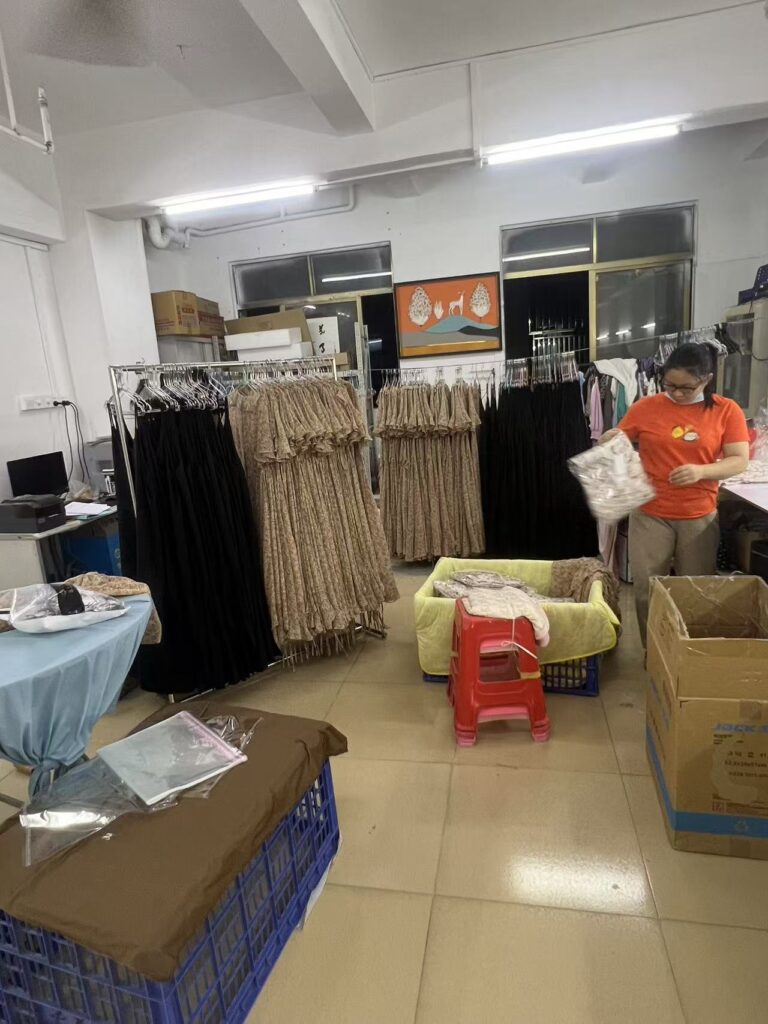
8. Check Packing and Carton Accuracy
Confirm folding, polybags, barcode stickers, carton marks, size-color assortments and carton quantities. Private-label buyers can also review our labeling and packaging guide.
9. Define the Corrective Process
The purchase order should state what happens if the shipment fails inspection. Common actions include rework, sorting, replacement, re-inspection or another documented commercial resolution.
10. Connect Inspection to Payment and Shipment Release
For many OEM orders, final inspection is linked to final payment or shipment release. Agree on this before production. Our OEM clothing manufacturer payment terms guide explains the relationship between deposits, milestones and inspection.
Buyer Checklist Before Shipment
- Approved sample and latest tech pack available
- AQL level and defect categories agreed
- Measurement tolerances documented
- Workmanship and appearance checked
- Labels and packing verified
- Corrective-action process defined

Conclusion
AQL inspection is most effective when quality expectations are controlled throughout sampling and production. Clear standards help both buyer and factory make faster shipment decisions and reduce claims after delivery.
If you are preparing an OEM order, send your tech pack and inspection requirements for production review.