Women’s clothing manufacturer fabric inspection should happen before bulk fabric is released to the cutting room. Once defective, narrow, off-shade or incorrectly finished fabric has been cut into garment panels, the options become expensive: recut pieces, accept inconsistent goods or delay shipment while replacement fabric is produced. A clear incoming-inspection plan gives buyers evidence that the material received matches the approved standard.

What should be checked when bulk fabric arrives?
The receiving team should first confirm the supplier, purchase order, fabric code, color, roll numbers, stated length and lot information. The physical material is then compared with the approved quality and color standard. Buyers should define the required checks in the fabric specification rather than assume every factory or mill follows the same method.
- Fiber composition, construction and fabric weight
- Usable width and selvedge condition
- Color and shade consistency between rolls
- Surface defects, holes, stains, slubs and printing faults
- Bow, skew, spirality or distortion where relevant
- Shrinkage, colorfastness and dimensional behavior
- Hand feel, finish, stretch and recovery
- Total usable quantity after inspection
The approved material should remain traceable to the fabric sourcing specification, including supplier reference, width, weight, finish and any test requirements.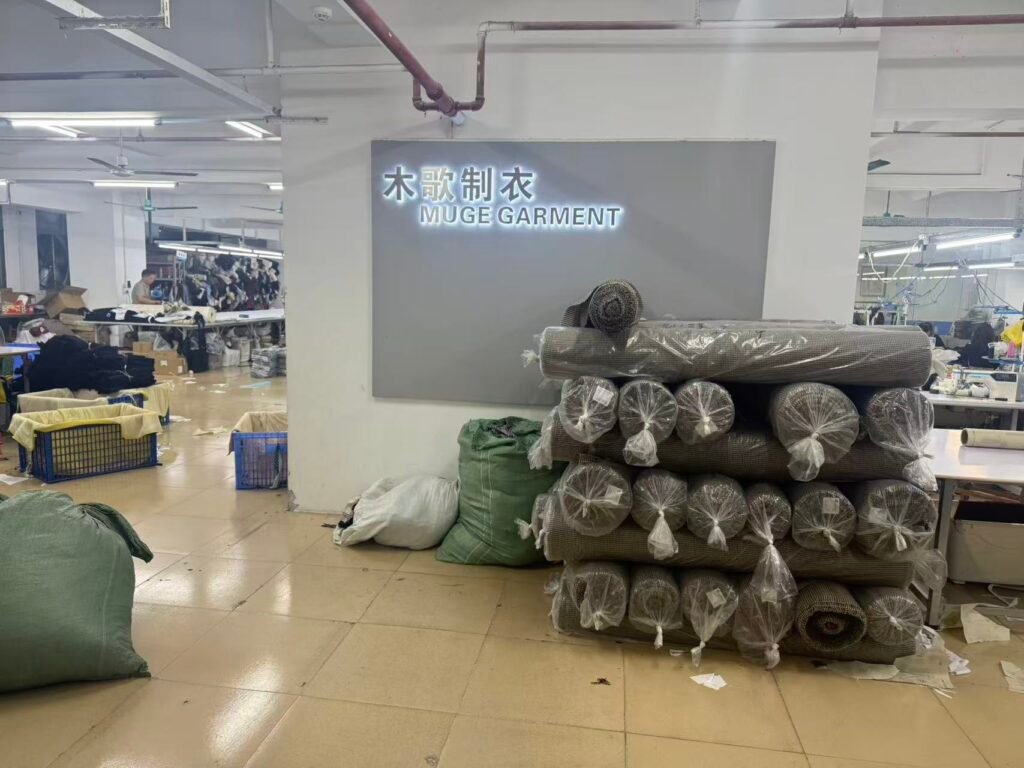
Roll inspection and defect recording
Factories commonly inspect fabric roll by roll or according to a buyer-approved sampling plan. The inspector moves the cloth across an inspection machine or table, marks defects and records their position. A recognized point system may be used to classify the severity and frequency of faults, but the contract should state the acceptance rule and any customer-specific restrictions.
A roll can meet an overall point limit yet still be unsuitable if defects repeat in visible garment areas. Large holes, continuous printing faults or severe shade variation require separate attention. The report should show inspected meters, defect type, roll number, location and final disposition.
Measure usable width, not only nominal width
Fabric may be sold at a nominal width, while the cuttable width is smaller after excluding selvedges or damaged edges. This affects marker efficiency and purchasing quantity. The article on OEM clothing manufacturer fabric consumption explains why even a modest width difference can change the number of meters required per garment.
Width should be measured at several points across representative rolls. If the result is outside the agreed range, the pattern marker and consumption may need recalculation before cutting begins.
Control shade lots before spreading
Different dye lots, rolls or positions within a roll can show visible shade variation. The factory should group acceptable rolls by shade and avoid mixing different shade groups in one garment. Bundles should retain roll identification through cutting and sewing so replacement panels are cut from the correct lot.
For custom colors, incoming inspection should reference the approved lab dip or bulk shade band. The separate guide to private label clothing color approval covers lab dips, strike-offs and bulk-lot decisions in more detail.
Complete dimensional tests before cutting
Fabric behavior after washing, steaming or pressing can change finished garment measurements. The test method should reflect the intended care label and production process. If the result differs from development assumptions, the pattern may require shrinkage allowance or the material may need rejection.
For woven dresses, check the fabric together with any lining, fusing or contrast component that will be processed in the same garment. Components that shrink at different rates can create twisting, bubbling or uneven hems.
Approve printed and directional fabrics carefully
Printed fabric inspection should include registration, repeat, motif direction, base-cloth quality and color consistency. Stripes and checks require review for bow and skew because distorted lines become highly visible after sewing. The buyer should state whether one-way cutting or motif placement rules apply before the factory calculates consumption.
Use a fabric release status
Inspected rolls should be clearly identified as approved, held for review or rejected. Material on hold should not be placed beside released stock without visible separation. If the buyer accepts a deviation, the concession should identify the affected lot, quantity and order rather than becoming an informal new standard.
- Receive and identify each roll.
- Inspect appearance, width and quantity.
- Complete required shade and performance tests.
- Record results by roll and lot.
- Segregate rejected or held material.
- Release approved fabric to spreading and cutting.
Connect incoming fabric checks with garment QC
Fabric inspection does not replace in-line and final garment inspection. It prevents material defects from entering production, while the garment quality-control checklist covers construction, measurements, finishing and packing. When a finished defect appears, roll-level records also help the factory trace the likely cause.
Ask for evidence before cutting begins
Women’s clothing manufacturer fabric inspection should produce a usable record: received quantity, inspected rolls, defect findings, shade groups, test results and release decision. Buyers can ask for the summary before bulk cutting, especially for high-risk colors, prints or fabrics. Brands preparing a new order can send their fabric specification and inspection requirements for a production-readiness review.