Woven dress pocket construction affects both function and the way a dress hangs on the body. A pocket that is positioned too low, cut off-grain or attached without enough reinforcement can distort the side seam, show through the garment or fail during wear.
Buyers should approve pocket type, dimensions, placement and construction during sampling, then convert those decisions into measurable bulk-production checkpoints.
Select a pocket type that suits the style
Common options include side-seam pockets, patch pockets, welt pockets and shaped inseam pockets. The right choice depends on silhouette, fabric weight, lining, intended use and the visual importance of the pocket.
A lightweight dress may need a pocket bag that adds little bulk, while a structured style may need firmer reinforcement. Pocket capacity should also be realistic: making the bag larger without supporting the opening can pull the garment out of shape.
Approve placement on the fitted sample
Check pocket access while the sample is worn, not only on a flat table. The opening should be comfortable to reach without changing the dress balance. Record its position from stable reference points such as the waist seam, side seam notch or high point shoulder.
Review placement across the size range during the size set sample approval. A pocket that works on the base size may become too high, low or narrow if the grading rule is not clear.
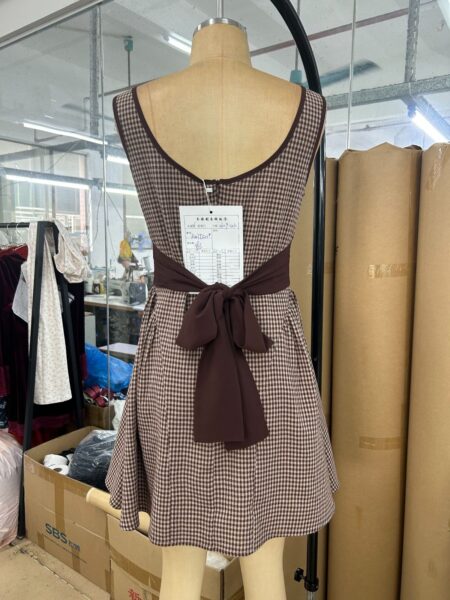
Control grain, matching and pocket-bag materials
Pocket components should follow the approved grain direction and, where visible, any stripe, plaid or print-matching requirement. For a side-seam pocket, the bag material should be compatible with the shell and care method without creating excessive show-through.
Fabric inspection and cutting instructions should identify directional or matching needs before components reach sewing. The cutting room checklist helps link these requirements to markers, bundles and first-cut approval.
Reinforce stress points without adding bulk
Pocket openings experience repeated pulling. Reinforcement may involve back-tacking, a bartack, stay tape, interfacing or another approved method depending on the fabric and design. The result should secure the opening while remaining discreet on the face side.
Inspect seam allowance, stitch balance and the transition where the pocket joins the side seam. Weak or narrow allowances can contribute to opening failure and should be considered with the broader seam slippage assessment.
Check symmetry and garment balance in bulk
Paired pockets should match in height, opening length and angle. On side-seam pockets, check that the pocket bags face the correct direction and do not become caught in the hem, lining or zipper operation. On patch pockets, verify corner shape, topstitch distance and alignment with prints or seams.
Add pocket checks to the inline inspection plan while corrections can still be made at the operation. A repeated difference between left and right sides should trigger a template, marking or method review.
Check pocket performance after handling and care
A pocket can look correct immediately after pressing but change after hanging, packing or laundering. Where the care method could affect shrinkage or seam appearance, include a pocketed sample in the relevant wash or handling test. Recheck the opening, pocket-bag position and surrounding side seam after conditioning. For dark or lightweight fabrics, also confirm that the pocket material does not bleed, create shine or become visible through the shell. Record any required material or pressing change before bulk production continues.
Final buyer inspection points
At final inspection, insert a hand into the pocket, check the opening under light load and view the dress from front, side and inside. Look for seam grin, puckering, twisting, visible pocket bags and press marks. Compare representative sizes and colors with the approved sample.
Woven dress pocket construction should feel useful without disturbing the silhouette. When pocket type, placement, reinforcement and inspection are agreed early, the factory can repeat the detail consistently. To review a woven dress specification or sample, send the design details through the contact page.