For fashion brands, controlling clothing production costs is one of the most important factors in building a profitable business.
However, reducing manufacturing costs does not simply mean finding the cheapest clothing manufacturer.
A factory with the lowest quotation may eventually create higher costs through poor quality, production delays, excessive fabric waste, high minimum order quantities, or inconsistent workmanship.
The better approach is to reduce unnecessary production costs while maintaining the quality, fit, materials, and brand standards that customers expect.
In this guide, we explain practical ways fashion brands can reduce clothing production costs and build a more efficient apparel manufacturing process.
What Determines Clothing Production Cost?
Before reducing production costs, fashion brands need to understand where those costs come from.
The final manufacturing price of a garment can be influenced by several factors:
- Fabric and material costs
- Garment construction
- Pattern complexity
- Number of sewing operations
- Trims and accessories
- Printing and embroidery
- Sample development
- Labor
- Packaging
- Order quantity
- Shipping
- Quality requirements
- Production efficiency
For example, a basic cotton T-shirt may require relatively simple cutting and sewing, while a structured jacket with multiple panels, zippers, pockets, lining, embroidery, and special finishing can require significantly more production time.
This means that reducing clothing production costs starts with understanding the entire production process.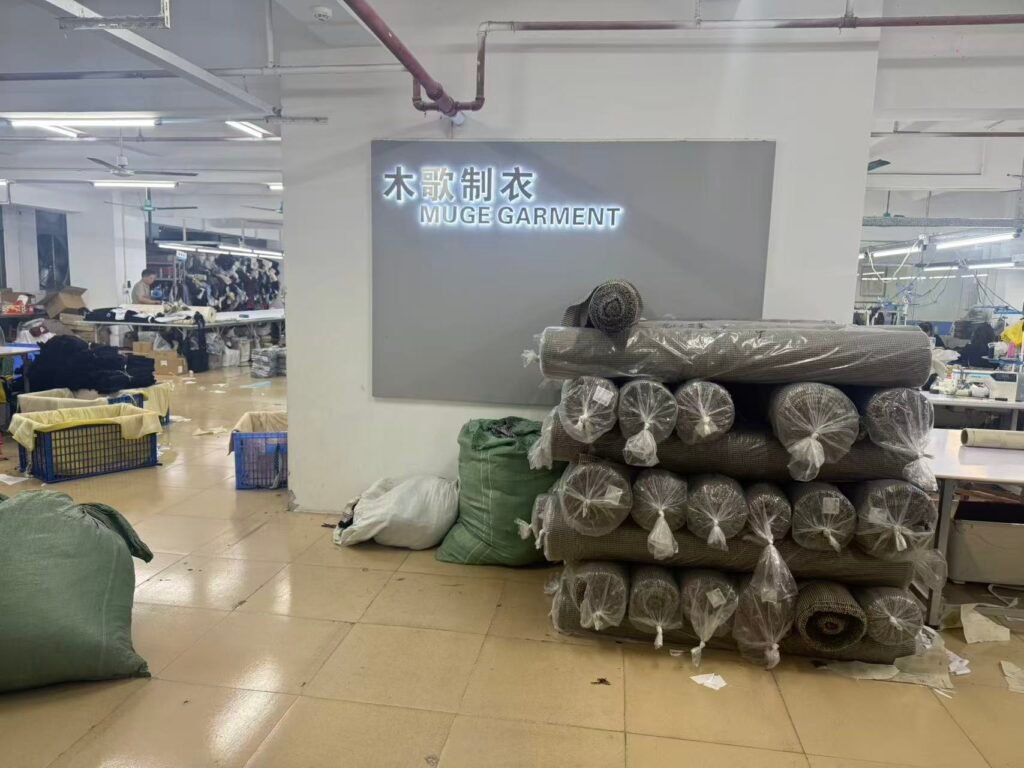
1. Choose the Right Fabric
Fabric is often one of the largest components of garment production costs.
However, cheaper fabric does not always mean lower total costs.
Low-quality materials can create problems such as:
- Shrinkage
- Color inconsistency
- Pilling
- Poor hand feel
- Fabric defects
- Sewing difficulties
- Customer complaints
Instead of simply selecting the cheapest fabric, brands should compare fabrics based on price, quality, performance, availability, and suitability for the product.
Working with a manufacturer that has access to multiple fabric suppliers can also help brands identify better price-to-quality options.
For brands developing custom apparel, fabric selection should be discussed with the manufacturer before finalizing the production quotation.
2. Simplify Garment Construction
One of the most effective ways to reduce apparel manufacturing costs is to simplify unnecessary construction details.
Every additional production operation can increase manufacturing time.
For example, adding:
- Extra seams
- Decorative panels
- Multiple pockets
- Complex pleats
- Special stitching
- Complicated closures
- Multiple layers
can increase labor and production costs.
This does not mean brands should remove important design features.
Instead, the goal is to identify which details actually contribute to the product’s value and which details simply increase manufacturing complexity.
A professional manufacturer can often suggest alternative construction methods that maintain the appearance of the garment while reducing production time.
3. Increase Order Quantities Strategically
Manufacturing costs are often affected by order quantity.
Larger production runs can allow factories to spread certain costs across more units.
For example, pattern development, sample development, cutting preparation, machine setup, and material purchasing can become more cost-efficient when production quantities increase.
However, fashion brands should not automatically place extremely large orders.
Overproduction can create another major problem: excess inventory.
The better strategy is to determine a realistic order quantity based on:
- Historical sales
- Expected demand
- Product lifecycle
- Available cash flow
- Inventory turnover
- Market testing
For new brands, smaller initial production runs followed by larger repeat orders can sometimes provide a better balance between production cost and inventory risk.
4. Reduce Fabric Waste
Fabric waste can have a surprisingly large impact on garment production costs.
During the cutting process, manufacturers need to arrange garment patterns efficiently on the fabric.
Poor pattern placement can result in unnecessary fabric consumption.
Brands can reduce fabric waste by working with manufacturers during the pattern development stage.
Small adjustments to:
- Pattern shapes
- Garment dimensions
- Seam allowances
- Panel layouts
- Size grading
can sometimes improve fabric utilization without changing the overall appearance of the product.
For high-volume production, even a small reduction in fabric waste per garment can produce meaningful savings.
5. Standardize Materials Across Products
Fashion brands often use many different fabrics, buttons, zippers, labels, and other accessories across their collections.
This can increase purchasing complexity.
If several products can use the same:
- Fabric family
- Zipper type
- Button
- Label
- Packaging
- Thread
- Drawcord
- Hardware
the manufacturer may be able to purchase materials more efficiently.
Standardization can also make quality control easier because the factory becomes familiar with the materials.
For growing brands, creating a standardized material library can therefore improve both cost control and production consistency.
6. Improve Your Tech Pack Before Production
A poorly prepared tech pack can create hidden manufacturing costs.
If important information is missing, the manufacturer may need to ask additional questions, create multiple revisions, or produce extra samples.
A good tech pack should clearly communicate important product specifications, including:
- Measurements
- Fabric composition
- Color references
- Construction details
- Stitching requirements
- Label placement
- Artwork
- Print specifications
- Embroidery details
- Packaging requirements
Clear technical documentation reduces misunderstandings between the fashion brand and manufacturer.
It can also shorten the product development process.
For brands that are still developing their production system, understanding the difference between a tech pack, sample, prototype, and production specification can make the entire process more efficient.
7. Reduce Unnecessary Sample Revisions
Sampling is an important part of apparel development, but repeated revisions can increase both development time and cost.
One of the best ways to reduce sample revisions is to provide the manufacturer with complete information from the beginning.
Before sending a production request, brands should prepare:
- Reference images
- Tech pack
- Fabric requirements
- Color specifications
- Measurement chart
- Logo artwork
- Print or embroidery files
- Expected order quantity
- Target market
- Quality expectations
The more information the manufacturer receives at the beginning, the easier it becomes to develop the correct sample.
8. Avoid Overcomplicated Customization
Customization is valuable for fashion brands, but excessive customization can increase production costs.
For example, using completely different materials, trims, labels, and construction methods for every product can make manufacturing less efficient.
A better strategy is to create a recognizable brand identity while keeping certain production elements standardized.
For example, a brand could maintain consistent:
- Labels
- Packaging
- Hardware
- Fabric categories
- Logo placement
- Signature details
while changing colors, silhouettes, graphics, or seasonal designs.
This allows the collection to remain distinctive without unnecessarily increasing production complexity.
9. Compare Suppliers Based on Total Cost
When comparing clothing manufacturers, brands should avoid looking only at the unit price.
A supplier offering a lower quotation may still produce a higher overall cost if they have:
- Higher defect rates
- Longer lead times
- Poor communication
- High sample costs
- Expensive rework
- Unreliable delivery
- Inconsistent quality
Instead, brands should consider total production cost.
A useful comparison can include:
| Cost Factor | Supplier A | Supplier B |
|---|---|---|
| Unit Price | $ | $ |
| Sample Cost | $ | $ |
| Material Cost | $ | $ |
| Packaging | $ | $ |
| Shipping Preparation | $ | $ |
| Defect/Rework Risk | Low/High | Low/High |
| Production Lead Time | Days | Days |
| MOQ | Units | Units |
This provides a more realistic picture of the supplier’s actual value.
10. Build a Long-Term Manufacturing Relationship
Long-term cooperation can make apparel production more efficient.
Once a manufacturer understands a brand’s:
- Quality standards
- Preferred fabrics
- Measurements
- Construction methods
- Packaging requirements
- Label specifications
- Communication process
future production can become faster and more predictable.
Repeat orders can also reduce the need to explain the same requirements repeatedly.
For fashion brands that plan to release multiple collections, establishing a reliable manufacturing relationship can therefore be more valuable than constantly switching suppliers for small price differences.
11. Plan Production Earlier
Urgent production can be expensive.
When brands place orders at the last minute, they may face:
- Rush production fees
- Limited material availability
- Expedited shipping
- Scheduling problems
- Reduced supplier flexibility
Planning ahead gives manufacturers more time to source materials and organize production capacity.
A practical production timeline can include:
Design → Tech Pack → Sampling → Sample Approval → Material Sourcing → Bulk Production → Quality Control → Packaging → Shipping
Each stage should have enough time to handle unexpected problems.
Better planning can reduce unnecessary emergency costs.
12. Work With a Manufacturer During the Design Stage
Many brands only contact manufacturers after the design has been completely finalized.
However, involving a manufacturer earlier can sometimes reduce production costs.
Experienced manufacturers can identify potential manufacturing problems before bulk production begins.
For example, they may suggest:
- Alternative fabrics
- Simpler construction
- More efficient stitching methods
- Different trims
- Better pattern layouts
- Alternative printing methods
This approach is sometimes called Design for Manufacturing (DFM).
The goal is not to change the brand’s creative vision.
Instead, it is to make the design easier and more efficient to manufacture.
What Is the Best Way to Reduce Clothing Production Costs?
There is no single method that works for every fashion brand.
The most effective approach is usually a combination of several improvements:
**Better fabric sourcing
- Efficient garment construction
- Accurate technical documentation
- Reduced fabric waste
- Strategic order quantities
- Fewer sample revisions
- Standardized materials
- Reliable manufacturing partners**
The goal should not be to produce the cheapest garment possible.
The goal is to achieve the best balance between manufacturing cost, quality, production speed, and product value.
Why Choosing the Right Clothing Manufacturer Matters
A capable manufacturer can contribute much more than sewing and assembly.
The right manufacturing partner can help fashion brands improve:
- Material sourcing
- Product development
- Pattern making
- Sample production
- Manufacturing efficiency
- Quality control
- Packaging
- Production planning
This is particularly important for brands producing custom apparel or launching new collections.
Instead of treating a manufacturer as simply a supplier, brands can develop a long-term production partnership.
Final Thoughts
Reducing clothing production costs does not mean sacrificing garment quality.
In many cases, the biggest savings come from eliminating inefficiencies throughout the production process.
Better fabric sourcing, smarter garment construction, improved pattern utilization, accurate tech packs, strategic order quantities, and strong communication can all contribute to lower manufacturing costs.
For fashion brands, the best manufacturing strategy is not simply finding the lowest quotation.
It is finding a manufacturer that understands the product, communicates clearly, maintains consistent quality, and can help optimize the production process from development to bulk manufacturing.
If your brand is developing custom apparel and looking for a manufacturing partner, Mugekoo can support the process from product development and sampling to bulk garment production.
Contact Mugekoo to discuss your next clothing production project.