Introduction
Finding a clothing manufacturer is only the beginning of apparel production.
For fashion brands, the bigger challenge is building a reliable manufacturing process that can consistently deliver the right quality, price, quantity, and delivery time.
A manufacturer may offer competitive prices, but that does not automatically mean the factory is the right long-term production partner. A successful clothing production project requires coordination between product development, fabric sourcing, pattern making, sampling, production, quality control, packaging, and international shipping.
This is especially important for brands working with manufacturers in China.
China has one of the world’s most complete apparel supply chains, giving fashion brands access to fabric suppliers, trim suppliers, printing companies, embroidery factories, garment factories, packaging suppliers, and logistics providers within an established manufacturing ecosystem.
However, overseas production also creates challenges.
Communication gaps, unclear specifications, inconsistent samples, poor quality control, unexpected costs, and production delays can turn a seemingly inexpensive order into an expensive problem.
The solution is not simply finding the cheapest factory.
The solution is creating a clear and repeatable clothing manufacturing process.
This guide explains how fashion brands can work with Chinese clothing manufacturers from the first product idea to final delivery.
1. Start With a Clear Product Specification
Before contacting a clothing manufacturer, a brand should understand exactly what it wants to produce.
A factory cannot accurately quote or manufacture a garment based only on a reference photograph.
For example, saying:
“I want a heavyweight oversized hoodie.”
is not enough.
The manufacturer needs more information.
A professional product specification may include:
- Garment type
- Fabric composition
- Fabric weight
- Fabric color
- Garment measurements
- Size range
- Fit
- Construction details
- Stitching requirements
- Labels
- Hangtags
- Printing
- Embroidery
- Wash treatment
- Packaging requirements
- Expected quantity
- Delivery destination
The more clearly these requirements are communicated, the easier it becomes for the factory to calculate the correct production cost.
Why specifications matter
Many manufacturing problems begin before production even starts.
If the brand and factory have different interpretations of the product, the final garment may technically follow the factory’s understanding while still failing to meet the brand’s expectations.
A detailed specification reduces this risk.
2. Prepare a Tech Pack
For professional fashion brands, a tech pack is one of the most useful documents in the manufacturing process.
A tech pack translates a design concept into technical manufacturing instructions.
A typical clothing tech pack can include:
Product Information
- Style name
- Style number
- Season
- Product category
- Intended market
Measurement Specifications
- Body length
- Chest width
- Shoulder width
- Sleeve length
- Waist
- Hip
- Leg opening
- Other garment-specific measurements
Construction Details
- Seam type
- Stitch type
- Pocket construction
- Collar construction
- Cuff construction
- Zippers
- Buttons
- Elastic
- Reinforcement
Fabric Information
- Fiber composition
- GSM
- Fabric construction
- Finish
- Color
- Stretch requirements
Branding
- Main label
- Size label
- Care label
- Woven label
- Printed label
- Hangtag
Decoration
- Screen printing
- Digital printing
- Embroidery
- Appliqué
- Heat transfer
- Special effects
A good tech pack gives the manufacturer a much clearer understanding of the product.
It also makes it easier to compare quotations from different factories because each manufacturer is working from the same specifications.
3. Choose the Right Type of Clothing Manufacturer
Not every clothing manufacturer is suitable for every brand.
Different factories may specialize in different products, order sizes, production methods, and customer types.
Common manufacturing models include:
OEM Manufacturing
OEM means the manufacturer produces garments according to the customer’s specifications.
The brand usually provides:
- Design
- Tech pack
- Materials requirements
- Branding requirements
- Measurements
The manufacturer handles production according to those requirements.
OEM is particularly suitable for brands that already have their own product designs.
ODM Manufacturing
ODM manufacturers may provide existing designs, product development, patterns, or manufacturing solutions that brands can customize.
ODM can be useful for brands that want to launch products faster without developing every garment completely from scratch.
Private Label Manufacturing
Private label production allows a brand to use manufacturer-developed products while selling them under its own branding.
This can reduce development time and simplify the product creation process.
However, brands should carefully understand:
- Product ownership
- Customization options
- Exclusivity
- Minimum order quantities
- Branding requirements
before placing an order.
4. Evaluate the Factory Before Placing an Order
A factory should not be selected purely because its quotation is the lowest.
A more useful evaluation looks at several factors.
Production Capability
Ask whether the manufacturer regularly produces the type of clothing your brand sells.
For example, a factory specializing in T-shirts may not be the best choice for:
- Technical outerwear
- Tailored jackets
- Denim
- Complex activewear
- Structured garments
Experience with similar products matters.
Minimum Order Quantity
MOQ is another important consideration.
Different manufacturers have different minimum order requirements.
MOQ may be affected by:
- Fabric purchasing
- Dyeing
- Printing
- Production efficiency
- Pattern development
- Trims
- Packaging
A factory offering a very low MOQ may be attractive to startup brands, but the unit price may be higher.
A larger order may reduce the unit cost but increase inventory risk.
Therefore, brands should evaluate total production economics, not just MOQ.
5. Understand the Sampling Process
Sampling is one of the most important stages of clothing manufacturing.
The sample is where a design becomes a physical product.
A typical development process may include:
Design → Tech Pack → Pattern → First Sample → Fitting → Revision → Final Sample → Production
The first sample is rarely perfect.
This is normal.
The purpose of sampling is to identify problems before bulk production.
What Should Be Checked During Sampling?
A brand should examine:
Fit
- Shoulder position
- Chest width
- Body length
- Sleeve length
- Waist
- Overall silhouette
Construction
- Stitch quality
- Seam construction
- Pocket placement
- Collar shape
- Cuffs
- Zippers
- Buttons
Fabric
- Weight
- Hand feel
- Stretch
- Shrinkage
- Color
- Surface appearance
Branding
- Label position
- Logo size
- Printing quality
- Embroidery quality
Finishing
- Loose threads
- Pressing
- Washing
- Garment appearance
Only after the sample meets the brand’s requirements should bulk production begin.
6. Confirm the Pre-Production Sample
Before mass production, the brand and manufacturer should agree on a final approved sample.
This is sometimes called a PP sample, or pre-production sample.
The approved sample becomes an important reference for bulk production.
It should represent:
- Final fabric
- Final color
- Final measurements
- Final construction
- Final decoration
- Final labels
- Final finishing
The factory should not make significant changes to the garment without approval.
This is especially important for repeat production.
If the brand orders the same product six months later, the manufacturer should be able to reproduce the product according to the established specifications.
7. Confirm Fabric and Trims Before Bulk Production
Fabric is often one of the biggest factors affecting garment quality.
Two fabrics may have the same fiber composition but feel completely different.
For example, two cotton fabrics can differ in:
- GSM
- Yarn quality
- Knitting structure
- Shrinkage
- Color consistency
- Softness
- Strength
- Surface appearance
Therefore, brands should approve the actual production fabric rather than relying only on a written description.
The same principle applies to trims.
Important trims can include:
- Zippers
- Buttons
- Snaps
- Elastic
- Drawcords
- Labels
- Woven patches
- Packaging
These details can significantly affect the final appearance of a garment.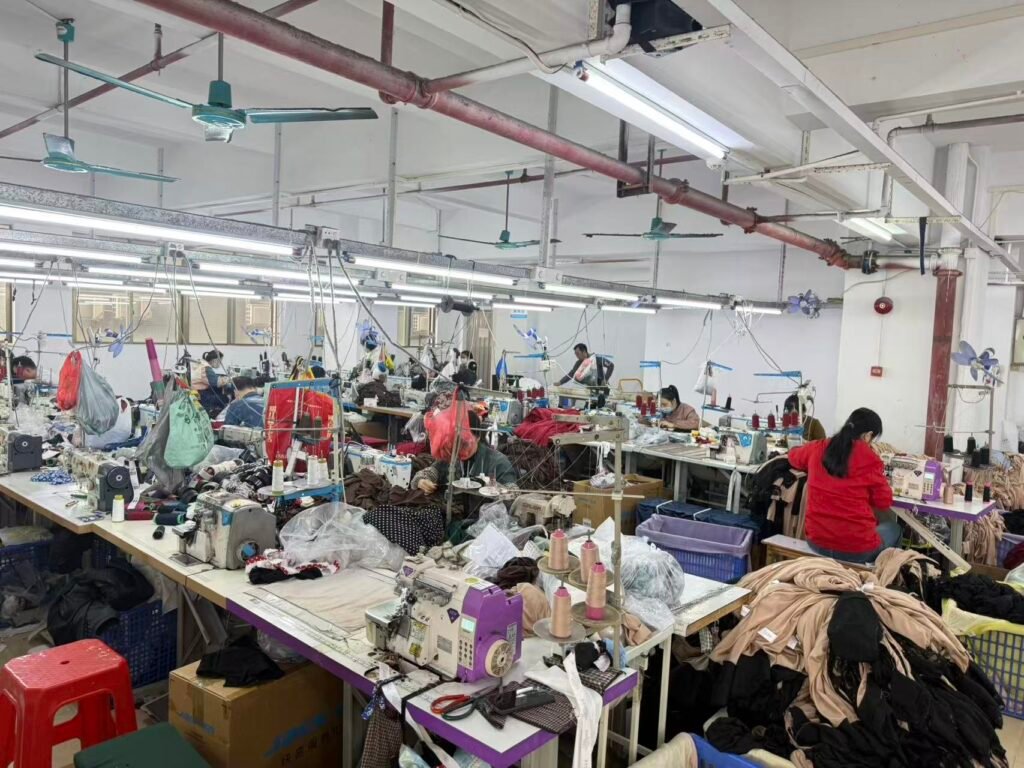
8. Establish a Clear Quality Control System
Quality control should not begin after production is finished.
A reliable system checks quality throughout the manufacturing process.
A basic quality-control structure can include:
Incoming Material Inspection
Check:
- Fabric color
- Fabric width
- GSM
- Quantity
- Surface defects
- Trims
During Production Inspection
Check:
- Cutting accuracy
- Sewing quality
- Measurements
- Construction
- Decoration
- Workmanship
Final Inspection
Check:
- Finished garment measurements
- Appearance
- Stitching
- Labels
- Printing
- Packaging
- Quantity
This approach helps identify problems earlier.
Finding a problem after 10,000 garments have been completed is much more expensive than finding it after the first production batch.
9. Use an Approved Measurement Tolerance
Garments are not manufactured with unlimited measurement precision.
A brand should establish acceptable measurement tolerances.
For example, depending on the garment and measurement point, a brand may define an acceptable tolerance range.
The exact tolerance should be agreed between the brand and manufacturer rather than assumed.
A measurement chart may include:
| Measurement | Target | Tolerance |
|---|---|---|
| Chest | 58 cm | ±1 cm |
| Body Length | 72 cm | ±1 cm |
| Shoulder | 54 cm | ±0.8 cm |
| Sleeve Length | 61 cm | ±1 cm |
The actual tolerance depends on the garment category and manufacturing requirements.
The important point is consistency.
10. Understand Clothing Production Costs
The factory quotation is not always the final landed cost.
A brand should understand the major cost components.
A garment’s manufacturing cost may include:
Fabric + Trims + Cutting + Sewing + Printing/Embroidery + Washing + Packaging + Quality Control + Other Processing
International shipping and import-related costs may be additional.
Therefore, brands should ask manufacturers what is included in the quotation.
For example:
- Is packaging included?
- Are labels included?
- Is printing included?
- Is embroidery included?
- Is washing included?
- Is sampling included?
- Are special trims included?
A lower quotation is not necessarily cheaper if important costs are excluded.
11. Compare Manufacturers Using Total Value
When comparing Chinese clothing manufacturers, avoid comparing only the unit price.
Instead, consider:
Price
Is the quotation competitive?
Quality
Can the factory consistently achieve the required quality?
MOQ
Does the factory’s MOQ fit your business model?
Lead Time
Can the factory meet your launch schedule?
Communication
Does the factory understand your requirements?
Development Capability
Can the manufacturer help solve technical problems?
Production Capacity
Can the factory scale with your brand?
Quality Control
Does the manufacturer have a structured inspection process?
Supply Chain
Can the factory source the required fabrics and trims efficiently?
The best supplier is usually the one that provides the best overall manufacturing value, rather than the lowest unit price.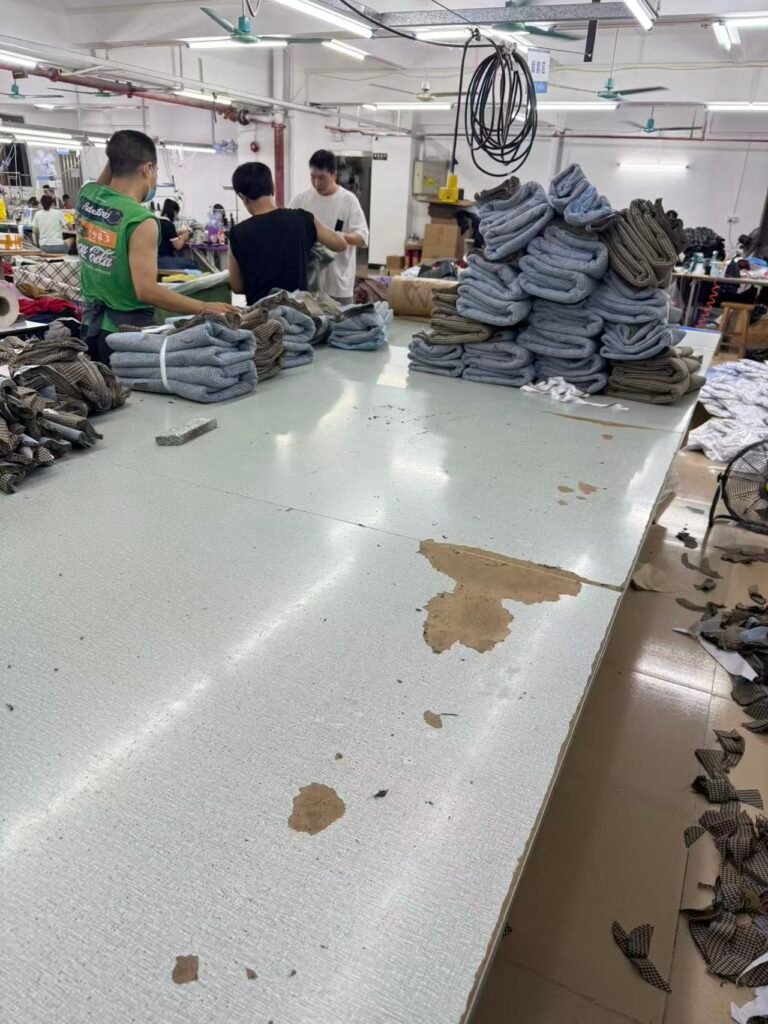
12. Manage Communication Professionally
Communication becomes especially important when working with an overseas manufacturer.
Brands should avoid relying entirely on informal messages such as:
“Make it slightly bigger.”
Instead, use specific instructions.
For example:
Increase chest width from 56 cm to 58 cm at size M.
This makes the requirement measurable.
A professional communication system should keep records of:
- Product specifications
- Sample revisions
- Approved measurements
- Fabric approvals
- Color approvals
- Packaging requirements
- Production deadlines
- Inspection results
Clear documentation reduces misunderstandings.
13. Create a Production Timeline
A clothing production schedule should be planned before the purchase order is confirmed.
A simplified production process may look like:
Design
↓
Tech Pack
↓
Factory Evaluation
↓
Quotation
↓
Sample Development
↓
Sample Revision
↓
Final Approval
↓
Material Sourcing
↓
Cutting
↓
Sewing
↓
Printing / Embroidery / Washing
↓
Finishing
↓
Quality Inspection
↓
Packaging
↓
Shipping
The actual timeline varies depending on:
- Product complexity
- Quantity
- Fabric availability
- Custom fabric development
- Decoration
- Season
- Factory capacity
Brands should therefore build buffer time into their launch schedule.
14. Plan for Bulk Production
Once the final sample is approved, the factory can prepare for bulk production.
Before production begins, confirm:
- Final quantity
- Size breakdown
- Color breakdown
- Fabric
- Trims
- Labels
- Packaging
- Shipping destination
- Delivery date
- Payment terms
- Quality requirements
The production team should work from the final approved specifications.
This reduces the possibility of production being based on an outdated sample.
15. Pay Attention to Packaging
Packaging is often overlooked.
However, packaging can influence both customer experience and logistics costs.
Depending on the product, packaging may include:
- Individual polybags
- Size stickers
- Barcode labels
- Hangtags
- Cartons
- Tissue paper
- Custom packaging
- Retail packaging
For international shipping, packaging should also protect the garments from:
- Moisture
- Dust
- Compression
- Transportation damage
Brands should provide clear packaging instructions before production is completed.
16. Understand International Shipping
After production is complete, the garments need to reach the brand’s warehouse or fulfillment center.
Common shipping methods include:
Air Freight
Suitable when speed is more important than cost.
Sea Freight
Usually more economical for larger shipments but requires longer transit times.
Express Shipping
Useful for samples or small urgent shipments.
The best shipping method depends on:
- Order volume
- Destination
- Required delivery date
- Shipping budget
- Product weight
- Carton dimensions
Brands should discuss shipping arrangements with the manufacturer or logistics provider early in the process.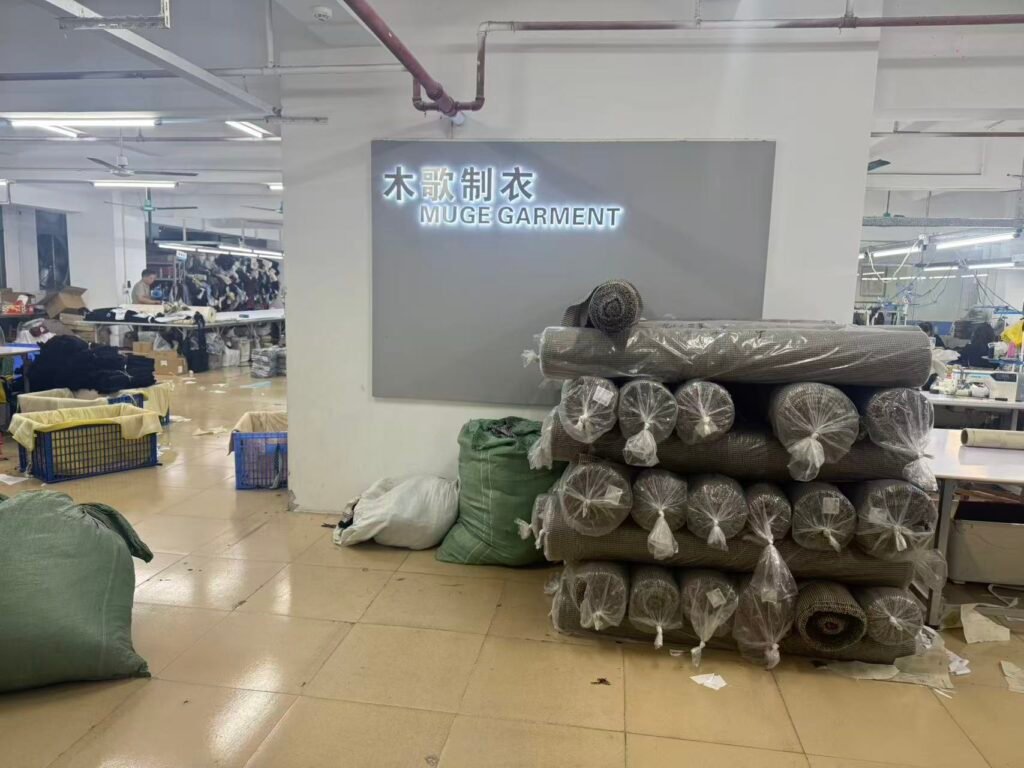
17. Start With a Small Production Run When Appropriate
For a new supplier, a smaller initial order can reduce risk.
This allows the brand to evaluate:
- Product quality
- Communication
- Delivery performance
- Packaging
- Production consistency
- Problem-solving ability
If the manufacturer performs well, the brand can gradually increase order volumes.
This approach can be particularly useful for startups and emerging fashion brands.
18. Build a Long-Term Manufacturing Relationship
A good manufacturer should not be viewed simply as a company that produces garments.
Over time, a reliable factory can become an important part of the brand’s supply chain.
Long-term cooperation may improve:
- Communication
- Production efficiency
- Product development
- Material sourcing
- Cost control
- Quality consistency
- Lead times
The relationship becomes even more valuable when the factory understands the brand’s product standards and customer expectations.
19. Common Mistakes Fashion Brands Should Avoid
Choosing Only by Price
The cheapest quotation may lead to higher costs later through defects, delays, or inconsistent production.
Starting Bulk Production Before Approving the Final Sample
This creates unnecessary production risk.
Providing Incomplete Specifications
A factory cannot manufacture accurately if important information is missing.
Changing Requirements During Production
Last-minute changes can cause delays and additional costs.
Ignoring Fabric Quality
Fabric has a major influence on the final product.
Not Checking Measurements
A garment can look correct while still having incorrect measurements.
Waiting Until the End to Inspect Quality
Quality problems should be identified as early as possible.
Using Different Specifications for Repeat Orders
This can result in different versions of the same product.
20. How to Build a More Efficient Clothing Supply Chain
As a fashion brand grows, manufacturing should become increasingly standardized.
A mature production system can include:
Standardized Tech Packs
Every product follows the same documentation structure.
Approved Fabric Library
The brand keeps records of approved fabrics and suppliers.
Standard Measurement Charts
Fit standards remain consistent across collections.
Supplier Database
The brand records:
- Factory capabilities
- MOQ
- Product categories
- Lead times
- Pricing
- Performance
Quality Standards
The brand establishes measurable quality requirements.
Production Calendar
Each collection has defined deadlines for:
- Sampling
- Approval
- Production
- Inspection
- Shipping
This turns clothing manufacturing from a series of individual orders into a repeatable business process.
21. Questions to Ask a China Clothing Manufacturer
Before choosing a manufacturing partner, brands can ask:
- What types of garments do you specialize in?
- What is your MOQ?
- Can you support small and growing brands?
- Can you produce according to a tech pack?
- Do you provide pattern-making services?
- Can you develop custom fabrics?
- What sample development services are available?
- What is the estimated production lead time?
- What quality-control process do you use?
- Can you provide custom labels and packaging?
- Can you handle printing and embroidery?
- How do you manage production changes?
- How do you handle defective products?
- Can you support repeat production?
- What shipping options are available?
The answers to these questions can reveal much more about a manufacturer than the initial price quotation.
22. Why China Remains an Important Manufacturing Option
China’s advantage is not simply low-cost production.
One of its major strengths is the depth of its manufacturing ecosystem.
A clothing project may require:
Fabric → Dyeing → Trims → Printing → Embroidery → Cutting → Sewing → Washing → Finishing → Packaging → Logistics
Having many supporting industries within an established supply-chain environment can make product development and production more efficient.
For fashion brands, this can be particularly valuable when products require customization.
Instead of simply purchasing finished garments, brands can work with manufacturers to develop products around their own specifications.
23. What a Reliable Clothing Manufacturer Should Provide
A professional manufacturing partner should ideally be able to support multiple stages of the process.
These may include:
Product Development
Design interpretation, pattern development, sampling.
Material Sourcing
Fabric and trims sourcing according to specifications.
Production
Cutting, sewing, printing, embroidery, washing, finishing.
Quality Control
Inspection throughout production and before shipment.
Branding
Labels, tags, packaging, and other customized details.
Logistics Support
Preparation and coordination for international shipment.
The exact services vary by manufacturer, so brands should confirm capabilities before placing an order.
24. Final Checklist Before Placing a Clothing Order
Before confirming production, make sure the following information is clear:
- Product specifications
- Tech pack
- Approved sample
- Fabric
- Color
- Size chart
- Measurement tolerance
- Quantity
- Size breakdown
- Labels
- Printing
- Embroidery
- Packaging
- Quality requirements
- Production schedule
- Delivery date
- Payment terms
- Shipping arrangements
If these details are clearly documented, the probability of production problems can be significantly reduced.
Conclusion
Building a reliable clothing manufacturing process in China is about much more than finding a factory with a competitive price.
Successful apparel production requires a complete system covering product specifications, manufacturer selection, sampling, fabric sourcing, production management, quality control, packaging, and international shipping.
For fashion brands, the ideal manufacturing partner is not necessarily the cheapest supplier.
It is the manufacturer that can understand the brand’s requirements, communicate clearly, maintain consistent quality, meet realistic production schedules, and grow alongside the business.
A well-structured manufacturing process also gives brands greater control over their products and makes future production much easier.
Whether you are launching your first clothing collection or expanding an established fashion brand, the right manufacturing workflow can reduce unnecessary costs, prevent quality problems, and create a more reliable supply chain.
Frequently Asked Questions
What is the clothing manufacturing process in China?
The process generally includes product specification, factory selection, quotation, sampling, sample approval, material sourcing, cutting, sewing, decoration, finishing, quality inspection, packaging, and shipping.
What is the MOQ for clothing manufacturing in China?
MOQ varies between manufacturers and products. It can depend on fabric purchasing, production efficiency, garment complexity, and customization requirements.
Should I approve a sample before bulk production?
Yes. A final approved sample provides an important physical reference for bulk production and helps reduce quality and specification problems.
Can small fashion brands work with Chinese clothing manufacturers?
Yes. Some manufacturers support smaller brands and lower-volume production, although MOQ and pricing vary by factory.
What is the difference between OEM and ODM clothing manufacturing?
OEM generally means the manufacturer produces according to the customer’s specifications, while ODM may involve manufacturer-developed designs or product solutions that can be customized by the brand.
How long does clothing production take in China?
Production time depends on the garment type, quantity, fabric availability, customization, sampling requirements, and factory capacity. Brands should confirm the production schedule with the manufacturer before placing an order.
How can I maintain consistent quality for repeat orders?
Use approved samples, standardized tech packs, measurement charts, fabric specifications, quality standards, and documented production requirements for every repeat order.
What should I look for when choosing a China clothing manufacturer?
Look beyond price. Evaluate production capability, product experience, MOQ, quality control, communication, sampling capability, lead time, material sourcing, and the manufacturer’s ability to support long-term production.