Woven dress seam slippage testing helps buyers evaluate whether yarns will pull away from a stitched seam when the garment is under stress. The risk is common in loosely constructed, smooth or low-density woven fabrics and may only become obvious when a customer sits, bends or moves. Checking fabric and construction before bulk cutting is far less costly than discovering opened seams after delivery.
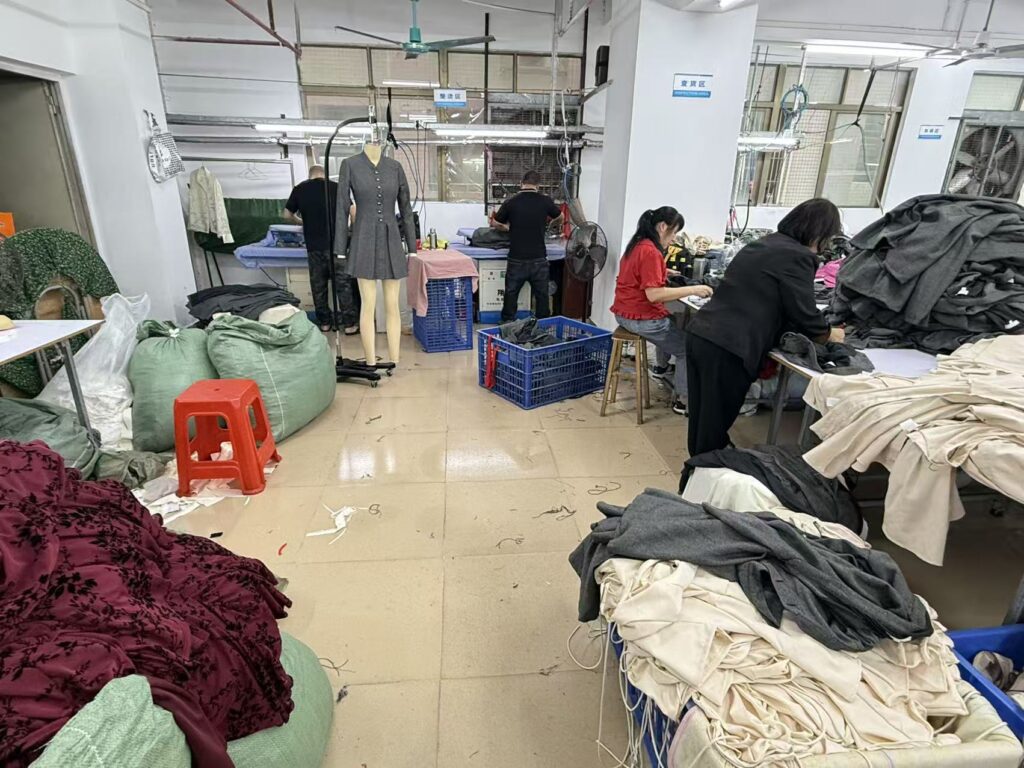
What seam slippage looks like
Seam slippage occurs when fabric yarns shift away from the stitch line, creating a visible gap without necessarily breaking the thread. It is different from seam strength failure, where the thread breaks, the fabric tears or the seam construction opens. A garment can have strong thread and secure stitching yet still show slippage because the fabric structure cannot hold the seam under load.
Typical risk areas on a woven dress include the center-back seam, side seams at the hip, armholes, sleeve seams, waist joins and concealed zipper areas. Fitted silhouettes and narrow seam allowances increase the importance of testing because the garment experiences more local tension during wear.
Why fabric construction matters
Slippage risk is influenced by yarn type, weave density, surface finish, fiber, fabric weight and direction of stress. Smooth filament yarns can move more easily than textured yarns. Open weaves provide less resistance, while some softening finishes reduce friction between yarns. Bias-cut panels behave differently from panels cut on the straight grain.
Buyers should therefore confirm the actual bulk fabric rather than relying only on the design sketch. The woven dress bulk production guide explains why fabric approval, pattern engineering and production planning need to be connected before cutting.
How seam slippage is tested
A laboratory test prepares a sewn specimen and applies a controlled force perpendicular to the seam. The movement or opening near the seam is measured according to the selected method. Different markets and customers may reference different standards, so the buyer should state the required test method, seam construction, force and acceptance criterion in the product specification.
Factory pull checks are useful for early risk screening but should not be represented as a formal laboratory result. For higher-risk styles, retailer programs or regulated claims, an accredited third-party laboratory may be appropriate. The tested specimen should use the production fabric, thread, stitch type, stitch density and seam allowance.
Test before approving bulk production
The best time to identify the risk is during fabric and sample development. A pre-production sample made in substitute fabric cannot prove that the bulk cloth will perform the same way. When the production fabric arrives, the team should confirm its construction and repeat critical checks before authorizing cutting.
Connect the result with the pre-production sample approval. If construction changes are needed, update the sealed sample, specification sheet and operation instructions together so the sewing line does not follow an obsolete method.
Ways to reduce seam slippage risk
There is no single correction for every fabric. The pattern, seam type and intended appearance must be considered together. Possible engineering responses include:
- Increase the seam allowance to provide more fabric beyond the stitch line.
- Adjust stitch density without creating fabric damage or puckering.
- Use a suitable seam type, reinforcement tape or binding at critical points.
- Change the sewing thread or needle size after compatibility trials.
- Reduce excessive garment tension by adjusting fit or ease.
- Change the fabric construction or finish when the material cannot meet the requirement.
Simply adding more stitches can make some lightweight fabrics weaker by perforating them. Likewise, overlocking alone may neaten the raw edge but not solve yarn movement at the structural seam. Any proposed fix should be tested on the real fabric and then checked for appearance, comfort and production practicality.
Seam slippage versus wash shrinkage
These are separate risks. Shrinkage changes garment dimensions after laundering, while slippage creates yarn movement near a seam under force. A style can pass one test and fail the other. Buyers sourcing washable dresses should include both risks in the test plan and review the separate guide to woven dress shrinkage testing.
Production quality-control points
Once the construction is approved, line supervisors and inspectors should check that operators use the correct seam allowance, stitch density and reinforcement. They should also look for needle damage, seam grin, puckering and stress marks. Final inspection should include the specified measurements and visual checks at the hip, armhole, waist and zipper.
A broader garment quality-control checklist can combine incoming-fabric review, in-line inspection and final inspection. The test report should be traceable to the approved fabric lot and style, not treated as a generic certificate for every woven product.
Questions buyers should ask the manufacturer
- Which seams and garment areas carry the highest stress?
- Was the test completed on the actual bulk fabric and approved construction?
- Which standard and acceptance value were used?
- What corrective options were tested if the first result failed?
- How will the sewing line and QC team control the approved method?
Turn a hidden material risk into an early decision
Woven dress seam slippage testing is a focused safeguard for fabrics and styles that may open at the seam during wear. Buyers should define the test requirement early, use production-representative materials and link any correction to the approved sample. Brands evaluating a lightweight or fitted woven dress can share the fabric specification and construction details for a risk review before bulk production.