Cotton poplin dress manufacturing starts with the particular fabric and silhouette the buyer intends to order. The material name alone does not define weight, finish, coverage or the appearance of a gathered skirt. Brands, wholesalers and retailers should approve those details before comparing quotations. This guide focuses on material-led development for cotton poplin dresses; collar and front-opening requirements for a shirt dress remain separate construction decisions.
Create a complete material specification
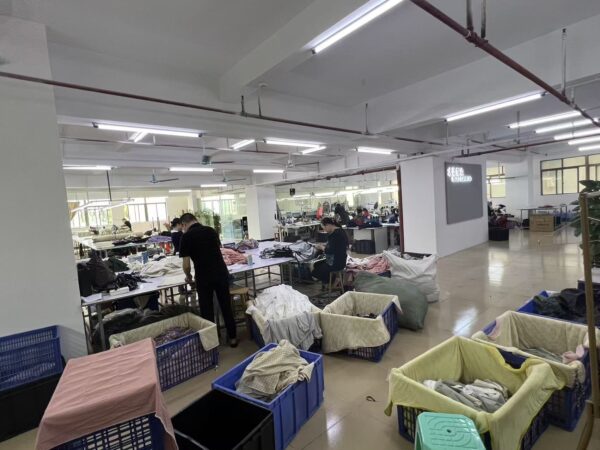
Record the declared composition, fabric code, weight, usable width, finish and color. State whether the buyer requires a particular approved cotton fabric or is inviting alternatives. Ask the supplier to identify any blend, treatment or substitute clearly instead of quoting under a loose commercial description.
Keep the swatch and specification connected through the fabric sourcing process. Two materials carrying the poplin name may not give the same garment result. Evaluate the offered material against the design rather than approving it because its description resembles the initial enquiry.
Match the sample to the intended silhouette
Provide drawings showing whether the dress is straight, fitted, gathered, tiered or otherwise shaped. Include pockets, lining, support, closures and any belt. Review the proposed fabric in the complete sample, with particular attention to volume at joined seams and the way the skirt hangs.
If the first sample uses substitute material, identify which fit decisions it can support. A later fabric change should prompt review of the affected appearance and construction. Keep a physical reference for the approved result rather than depending only on a carefully arranged photograph.
Approve coverage and pocket visibility
Review the actual proposed colors under agreed viewing conditions. Check the bodice, seat and other areas that become taut in wear. Inspect pocket bags, facings and seam allowances for unwanted visibility through the shell.
Use the fabric opacity assessment guide to define a repeatable review. If a lining or different pocket material is proposed, approve the combination on the garment. Do not assume a pale color behaves like an approved dark color or that adding any lining automatically produces the intended appearance.
Trial visible seams and details
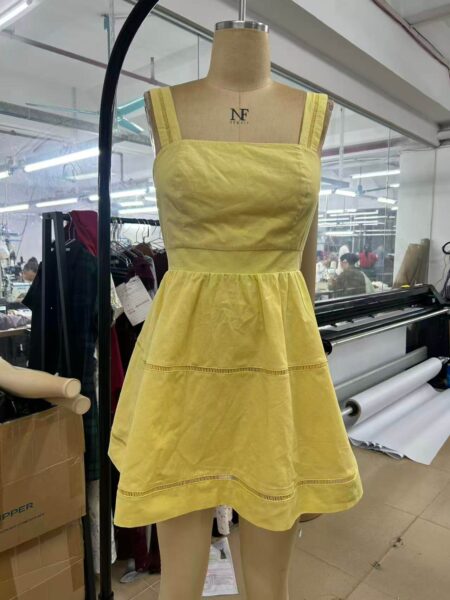
Ask for representative sewing trials where the design includes gathering, narrow edges, darts or bulky intersections. Check both the face and reverse. Distinguish intentional gathers from puckering in areas intended to lie flat, and ask the sample team to identify the cause before changing the specification.
Approve the effect of support layers at waistbands, necklines or closures. A heavier support may alter the intended feel and shape. Record the actual materials and sewing arrangement so the bulk instruction describes a reproducible construction rather than a general request for better finishing.
Define care and finished appearance expectations
Agree the care treatment and the dimensions, shape and appearance to be checked afterward. Use the final fabric and relevant trims for the approval sample. Do not infer dimensional behavior from fiber content alone or assume that a development swatch represents every finished bulk lot.
Coordinate the review through the garment wash-care plan. Record pressing and wrinkle expectations separately. If an appearance change is unacceptable, review the proposed material or process correction and approve a revised sample before cutting bulk fabric.
Quote and release the exact approved version
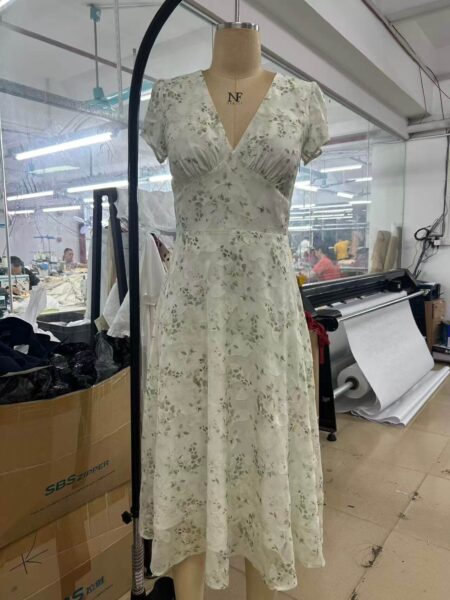
Request confirmation of fabric, consumption basis, lining, support, trims, labels, finishing and packing. Identify quantities by color and size, material minimums and sample charges. Compare quotations only after identifying differences in the included material and construction.
Retain the accepted sample, material code, pattern version and measurement sheet together. Agree which incoming lots require verification and who may authorize substitutions. During production, inspect the approved construction, coverage and finishing as well as dimensions and closure function.
To discuss a cotton poplin dress with Mugekoo, send drawings, material preferences, color and size quantities and the delivery window using the manufacturing RFQ checklist. Ask the factory to confirm capability, sourcing options and a sample approval sequence.