When a buyer asks several factories to quote the same women’s collection, the prices often look impossible to compare. One supplier may include fabric testing, grading, labels and export packing; another may quote only cutting and sewing. The problem is usually not the factory’s calculator. It is the request for quotation.
A clear women’s clothing manufacturing RFQ gives every shortlisted supplier the same commercial and technical assumptions. It helps brands receive a faster, more accurate quotation and reduces expensive changes after sampling begins. This guide explains exactly what overseas fashion brands, wholesalers and retailers should send before requesting a production price.
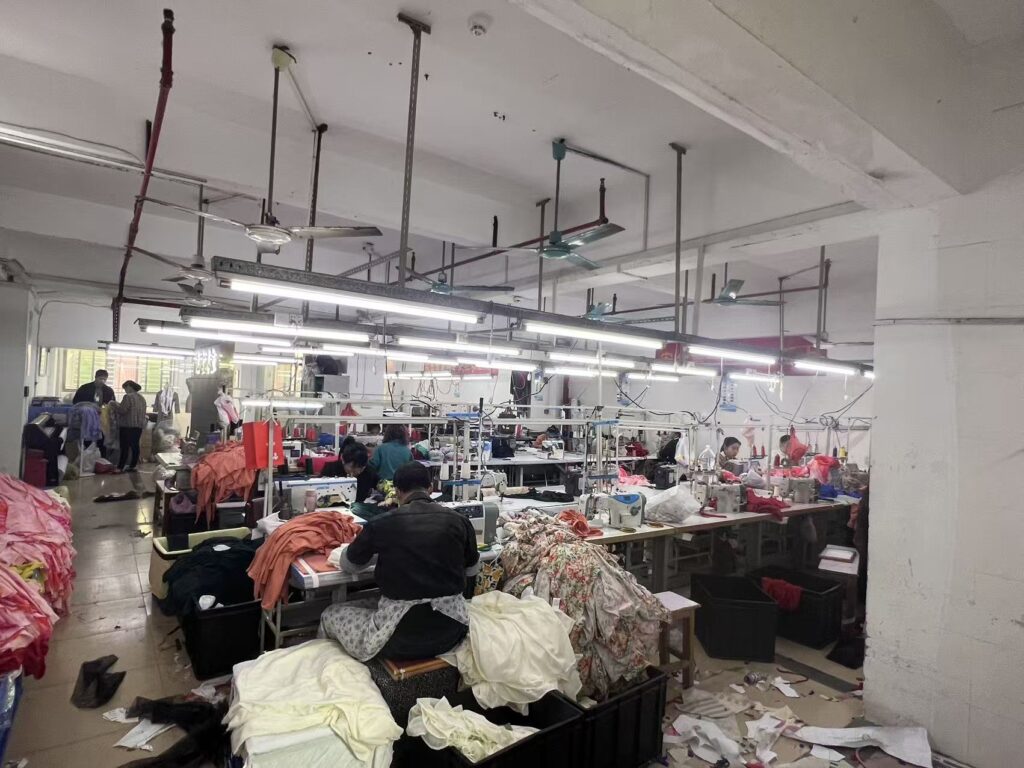
Why a vague RFQ produces an unreliable clothing quote
“Please quote 500 dresses” is not enough information for a manufacturer to calculate a dependable price. A dress can use a stable woven fabric or a delicate stretch fabric; it may have a simple hem or several layers of lining, boning and hand finishing. Even apparently minor choices affect fabric consumption, production minutes, inspection requirements and packing cost.
A factory that receives incomplete information must either delay the quote while asking questions or make assumptions. The lowest quote may simply contain the fewest included services. Buyers should therefore compare the scope behind the price, not only the number in the final column.
1. Start with a one-page collection summary
Give the manufacturer a short commercial overview before attaching individual style files. Include:
- brand and target market;
- product category and number of styles;
- estimated units per style and color;
- target launch date and required delivery window;
- sales channel, such as boutique retail, wholesale or e-commerce;
- expected incoterm and destination country;
- whether the order is OEM, ODM or private label.
This summary lets the factory assess whether the order fits its production lines, sourcing network and available capacity. If you are still deciding between development models, review the OEM vs ODM clothing manufacturing guide before sending the RFQ.
2. Provide a separate tech pack for every style
Each style should have a unique style number and revision date. The tech pack should contain front and back flats, construction details, a bill of materials, measurement specifications, artwork placement, stitch requirements and finishing instructions. Avoid using only inspiration photographs: a photograph shows appearance but rarely defines construction.
Mark unknown items clearly. For example, write “factory to recommend 180–200 gsm rayon blend with soft drape” instead of leaving the fabric field blank. This tells the supplier where it may propose alternatives without changing the design intention. Buyers who need a starting structure can use this clothing tech pack guide.
3. Define fabric, trim and color assumptions
Materials frequently represent the largest share of the garment cost. An accurate RFQ should specify the fiber content, construction, weight, finish, stretch and acceptable color standard. If a nominated fabric is required, include the supplier, article number and current quoted price. If the manufacturer will source it, ask for the quotation to state the proposed fabric specification and minimum order requirement.
List trims individually: zippers, buttons, elastic, lining, interlining, thread, pads, labels, hangtags and packaging. State whether colors can be shared across styles. Consolidating compatible fabric or trim colors may help a low-volume collection reach mill minimums without inflating inventory.
For a deeper look at material approvals and supplier responsibilities, see the guide to fabric sourcing for clothing manufacturing.
4. Show the order quantity by style, color and size
A total quantity alone can hide the real production complexity. Five hundred pieces in one color and a narrow size range are different from five hundred pieces divided across five colors and seven sizes. Send a quantity matrix showing units for every style-color-size combination.
Ask the factory to confirm whether its MOQ applies per order, per style, per color or per fabric. Also request any surcharge for quantities below the standard production minimum. This prevents a quote based on 500 identical garments from being applied later to a highly fragmented assortment.
5. State the sample stage included in the quotation
Sampling terms should be visible, not assumed. Ask the manufacturer to list the price and estimated lead time for each applicable stage:
- development or prototype sample;
- fit sample and revision rounds;
- size-set sample;
- pre-production sample;
- salesman or photo sample;
- shipping cost for sample dispatch.
Clarify whether sample fees are refundable or credited after a bulk order. Also define how many correction rounds are included. The pre-production sample approval guide explains what should be locked before the factory cuts bulk fabric.
6. Request a transparent cost breakdown
The amount of detail varies by supplier, but a useful quotation should identify the main cost areas. Ask for fabric, trims, cut-and-sew labor, embellishment, testing, labels, packaging and logistics to be separated where practical. At minimum, request written confirmation of what the unit price includes and excludes.
For multi-style orders, compare the cost drivers of each style rather than negotiating every product toward the same target price. A style with lining, print matching or complex ruching will require more material and production time than a basic unlined top.
7. Specify quality standards and inspection scope
The RFQ should define objective acceptance requirements. Include measurement tolerances, workmanship criteria, approved color standard, appearance rules and any mandatory testing. State whether the price must include incoming-material inspection, inline inspection, final inspection and third-party inspection support.
For retailers and wholesalers, add packing audit requirements such as barcode readability, carton assortment, carton marks and metal detection when relevant. Use the garment quality control checklist to convert general expectations into checkpoints a production team can follow.
8. Separate product cost from delivery terms
Confirm the currency, payment terms, quotation validity and incoterm. An EXW price should not be compared directly with an FOB or delivered price. Ask which charges are included: export packing, inland transport, customs declaration, port charges and freight are common areas of confusion.
Give the expected destination and preferred shipping method even if freight will be quoted later. Carton size, garment volume and hanging-garment requirements can materially affect landed cost.
A practical RFQ comparison table
| Item | What the buyer should confirm |
|---|---|
| Product scope | Style numbers, construction and revision date |
| Materials | Specification, supplier, MOQ and testing |
| Quantity | Units by style, color and size |
| Sampling | Stages, fees, revisions and lead times |
| Bulk price | Inclusions, exclusions and quantity breaks |
| Quality | Tolerances, inspections and acceptance criteria |
| Packing | Labels, barcodes, polybags and cartons |
| Delivery | Incoterm, destination and shipment window |
Questions to ask after receiving the quote
Before selecting a supplier, ask it to identify every assumption used in the quotation. Confirm which materials are provisional, when prices may change, what triggers a surcharge and how long production capacity can be held. Request a revised written quote after any material, quantity or construction change.
A strong factory will not simply return a low number. It will flag missing specifications, suggest cost-effective alternatives and explain the conditions behind its price. This dialogue is an early test of how the supplier will communicate during sampling and bulk production.
Final takeaway
An accurate women’s clothing manufacturing RFQ is a control document, not a quick price request. When every supplier receives the same technical files, quantity matrix, material assumptions, quality standards and delivery terms, the buyer can compare real production proposals instead of incomplete estimates.
Mugekoo supports overseas apparel buyers with OEM and ODM development, fabric sourcing, sampling and women’s clothing production. Brands preparing a collection can contact the production team with their style files and quantity plan for a structured review.