What Is a Tech Pack for Clothing? A Complete Guide for Fashion Brands
When a fashion brand is ready to turn a clothing design into a real product, a clear clothing tech pack can make the manufacturing process much easier.
A design sketch may show what a garment should look like, but it usually does not provide enough information for a clothing manufacturer to produce the product accurately.
A professional tech pack provides the detailed technical information a manufacturer needs to understand the product, develop samples, calculate costs, and move into bulk production.
For fashion brands working with an OEM clothing manufacturer, understanding how to prepare and use a tech pack can significantly reduce communication problems, sampling mistakes, and production delays.
In this guide, we explain what a clothing tech pack is, what information it should contain, and how brands can use it when working with a garment manufacturer.
What Is a Clothing Tech Pack?
A clothing tech pack is a technical document that contains the specifications and production requirements for a garment.
It acts as a communication tool between a fashion brand and a clothing manufacturer.
A typical tech pack may include:
- Technical drawings
- Garment measurements
- Size specifications
- Fabric information
- Color requirements
- Construction details
- Stitching requirements
- Labels and branding
- Trims and accessories
- Artwork
- Packaging requirements
- Sample comments
- Quality requirements
Instead of explaining every detail through emails or messages, brands can organize the product information in one structured document.
This makes the manufacturing process more efficient and reduces the possibility of misunderstandings.
Why Is a Tech Pack Important for Clothing Manufacturing?
One of the biggest challenges in apparel production is communication.
A fashion designer may have a very specific vision for a garment, while a manufacturer needs technical information to turn that vision into a physical product.
Without sufficient specifications, important details can easily be misunderstood.
For example, a manufacturer may not know:
- The exact garment measurements
- Which fabric weight should be used
- Where the logo should be positioned
- What type of stitching is required
- Which colors should be used
- How the garment should be finished
A detailed tech pack helps solve these problems.
It gives the manufacturer a reference document that can be used during sampling and production.
What Should a Clothing Tech Pack Include?
There is no single universal format for every fashion brand.
The contents of a tech pack depend on the product and its complexity.
However, a professional apparel tech pack commonly includes the following information.
1. Technical Flat Sketches
Technical flat drawings show the garment from different angles.
Usually, brands provide:
- Front view
- Back view
- Side details
- Close-up construction details
Unlike a fashion illustration, a technical flat should focus on construction rather than styling.
It should clearly show elements such as:
- Seams
- Pockets
- Collars
- Cuffs
- Closures
- Panels
- Pleats
- Waistbands
- Decorative details
These drawings help the manufacturer understand how the garment should be constructed.
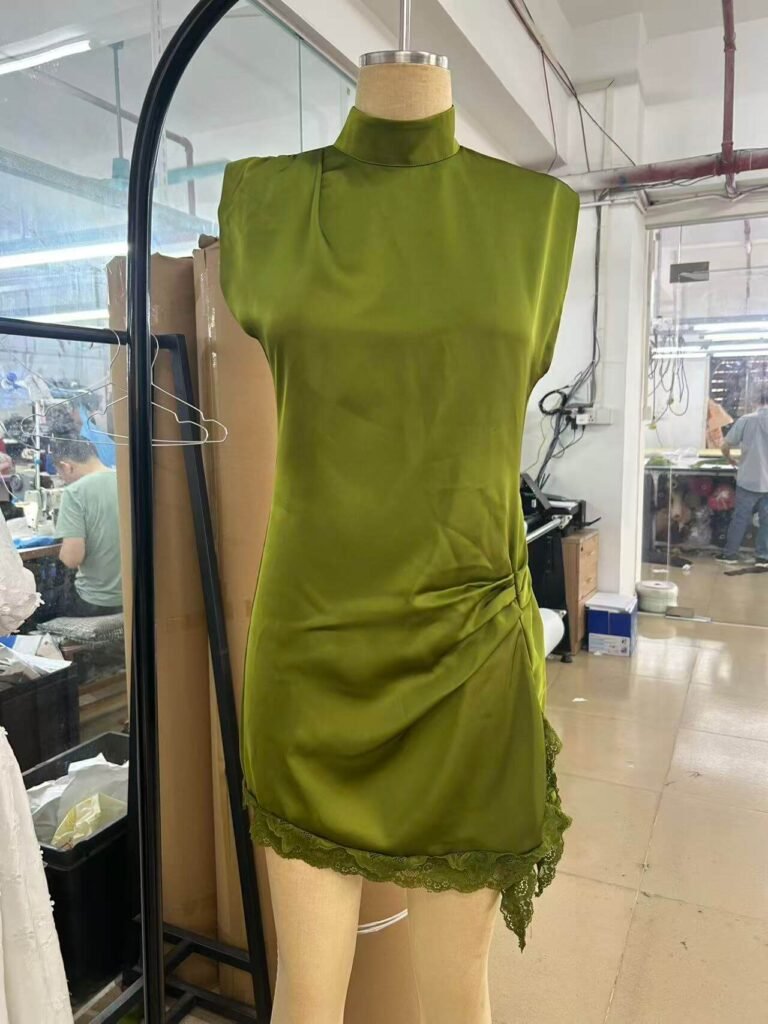
2. Measurement Specifications
Measurements are one of the most important parts of a clothing tech pack.
A measurement chart may include:
- Bust
- Waist
- Hip
- Shoulder width
- Garment length
- Sleeve length
- Armhole
- Neck opening
- Inseam
- Leg opening
The exact measurements depend on the garment category.
For example, a dress tech pack will require different measurement points from a hoodie or pair of trousers.
Brands should clearly identify each measurement point and specify the acceptable tolerance.
3. Size Grading
If a garment is going to be produced in multiple sizes, the manufacturer needs to understand how the measurements change between sizes.
For example:
XS → S → M → L → XL
A size grading chart helps the manufacturer develop the correct pattern for each size.
Incorrect grading can result in garments that fit differently from the original approved sample.
Therefore, size specifications should be reviewed carefully before bulk production.
4. Fabric Specifications
The tech pack should provide as much fabric information as possible.
Depending on the product, this may include:
- Fiber composition
- Fabric type
- Fabric weight
- GSM
- Stretch percentage
- Fabric width
- Finish
- Texture
- Color
- Wash requirements
For example, simply writing “cotton fabric” may not be enough.
A manufacturer may need to know whether the brand wants:
- 100% cotton
- Cotton-polyester blend
- Cotton with elastane
- Jersey
- French terry
- Rib knit
- Woven cotton
The more precise the fabric specification, the easier it is for the manufacturer to source or reproduce the required material.
5. Color Information
Colors should also be clearly specified.
Whenever possible, brands can provide recognized color references such as Pantone numbers.
This is particularly important when producing branded collections where color consistency matters.
A color reference can reduce differences between:
- Design files
- Approved samples
- Bulk production
- Different production batches
6. Construction Details
Construction information explains how the garment should be assembled.
For example:
- Seam type
- Stitch type
- Seam allowance
- Hem construction
- Pocket construction
- Collar construction
- Zipper installation
- Button placement
- Elastic requirements
For more complicated garments, brands can include enlarged technical drawings to explain specific construction details.
This can be especially useful for garments with unusual silhouettes or complex details.
7. Labels and Branding
A fashion brand’s product usually requires more than the garment itself.
Branding requirements may include:
- Main label
- Size label
- Care label
- Hangtag
- Logo
- Woven label
- Printed label
- Packaging
- Stickers
- Custom polybags
The tech pack should clearly indicate where each branding element should be positioned.
This prevents mistakes during production.
8. Artwork and Print Specifications
If the garment includes printing, embroidery, or other artwork, the tech pack should provide detailed information.
This may include:
- Artwork files
- Logo dimensions
- Print location
- Embroidery location
- Print technique
- Embroidery size
- Thread colors
- Artwork placement
For example, instead of saying:
“Put the logo on the chest.”
A better specification would identify the exact position and dimensions.
Clear instructions reduce sampling revisions.
How a Tech Pack Helps During Sampling
Sampling is one of the most important stages of apparel development.
The manufacturer uses the tech pack to create the first sample.
The brand then reviews the sample and provides feedback.
Typical sample feedback may include:
- Increase sleeve length
- Reduce garment width
- Change fabric weight
- Adjust neckline
- Move logo position
- Change stitching
- Modify pocket size
These changes can then be recorded in the updated tech pack.
This creates a clear development history for the product.
Tech Pack vs. Fashion Sketch: What Is the Difference?
A fashion sketch communicates the creative concept.
A tech pack communicates the technical requirements.
For example, a fashion sketch may show:
“This is the silhouette I want.”
A tech pack explains:
“This is exactly how the manufacturer should make it.”
Both are useful, but they serve different purposes.
For professional apparel production, the manufacturer usually needs more technical information than a visual design alone can provide.
Can a Clothing Manufacturer Create a Tech Pack?
Yes, depending on the manufacturer’s development capabilities.
Some fashion brands already have professional technical designers and provide complete tech packs.
Other brands may have:
- Sketches
- Reference garments
- Product photos
- Measurements
- Inspiration images
but no complete technical documentation.
In this situation, an experienced OEM or ODM clothing manufacturer may be able to assist with:
- Pattern development
- Measurements
- Sample development
- Fabric selection
- Construction adjustments
- Product development
This can be particularly useful for startups and emerging fashion brands.
What Happens After the Tech Pack Is Sent to the Factory?
A typical process may look like this:
Design Concept
↓
Tech Pack Preparation
↓
Factory Review
↓
Quotation
↓
Pattern Development
↓
Sample Production
↓
Sample Review
↓
Revisions
↓
Final Sample Approval
↓
Bulk Production
↓
Quality Inspection
↓
Shipment
The exact process can vary depending on the manufacturer and product.
However, having a clear tech pack makes each stage easier to manage.
How Can Brands Make a Better Tech Pack?
A good tech pack does not necessarily need to be extremely complicated.
The most important thing is that the information is:
Clear + Complete + Consistent + Easy to Understand
Before sending a tech pack to a manufacturer, check:
Product Information
- Is the product name clear?
- Is the style number included?
- Are all garment views included?
Measurements
- Are all important measurement points listed?
- Is the size chart complete?
- Are tolerances specified?
Materials
- Is the fabric composition clear?
- Is the fabric weight specified?
- Are trims and accessories listed?
Branding
- Are labels clearly specified?
- Is logo placement documented?
- Are packaging requirements included?
Artwork
- Are print and embroidery files included?
- Are dimensions and positions specified?
The more complete the information, the easier it is for a manufacturer to provide an accurate quotation and sample.
Do Small Fashion Brands Need a Tech Pack?
Not every small brand needs a highly complicated technical document.
However, having a basic tech pack can still be extremely valuable.
For startups, it can help:
- Reduce sampling mistakes
- Improve communication
- Compare different manufacturers
- Control product specifications
- Speed up revisions
- Maintain consistency between production batches
As a brand grows and develops more products, organized technical documentation becomes increasingly important.
Working With an OEM Clothing Manufacturer
When working with an OEM clothing manufacturer, the tech pack becomes an important part of the communication process.
At Mugekoo, we work with fashion brands and businesses looking for custom apparel manufacturing, OEM and ODM production, private label clothing, and product development support.
Our manufacturing process covers product development, sample making, bulk production, quality inspection, and shipping support.
For brands that already have complete technical specifications, the production process can begin from the manufacturer’s review and sampling stage.
For brands that need additional product development support, the manufacturing team can discuss the requirements and determine the appropriate development process.
Final Thoughts
A clothing tech pack is much more than a document.
It is a practical communication tool that helps connect a fashion brand’s creative concept with the manufacturer’s production process.
A clear tech pack can help manufacturers understand:
- What the garment should look like
- What materials should be used
- How the garment should be constructed
- What measurements are required
- Where branding should be placed
- What quality standards need to be followed
For fashion brands working with an OEM clothing manufacturer in China, preparing accurate product specifications before sampling can save time, reduce misunderstandings, and create a smoother path from design to bulk production.
If you are developing a new clothing collection and need help turning your designs into production-ready garments, Mugekoo can work with you through the sampling and manufacturing process.