For fashion brands, understanding clothing manufacturing costs is essential before placing a production order.
Whether you are launching a new collection, developing private label apparel, or working with an OEM clothing manufacturer, the final garment cost is affected by much more than fabric and labor.
A professional clothing costing process should consider materials, production processes, order quantity, trims, packaging, sampling, quality control, and logistics.
By understanding how garment costs are calculated, fashion brands can compare manufacturers more accurately, set realistic retail prices, and avoid unexpected production expenses.
What Are Clothing Manufacturing Costs?
Clothing manufacturing costs are the expenses involved in turning a garment design into a finished product.
Depending on the product and manufacturer, these costs may include:
- Fabric
- Trims and accessories
- Cutting
- Sewing
- Printing
- Embroidery
- Washing
- Finishing
- Labels
- Packaging
- Sampling
- Quality inspection
- Production management
- Shipping
Not every garment requires every process.
For example, a simple cotton T-shirt may have relatively few production steps, while a structured women’s dress with lining, embroidery, special washing, custom hardware, and complex construction can require significantly more labor and materials.
This is why there is no single standard price for clothing manufacturing.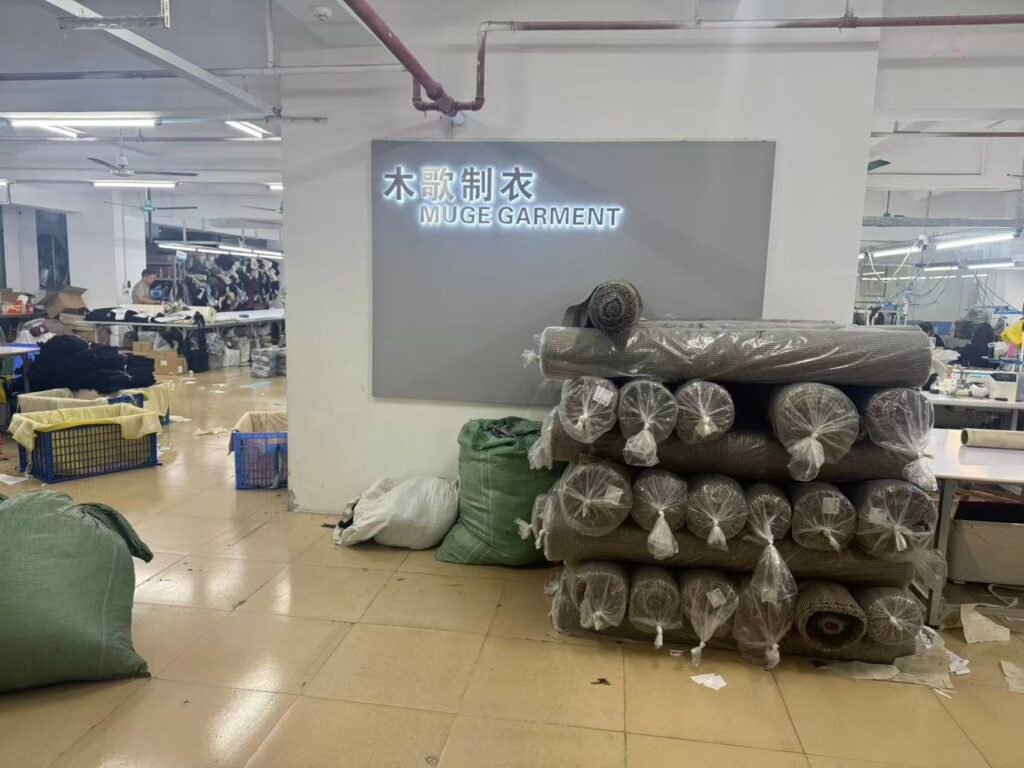
1. Start With the Fabric Cost
Fabric is often one of the largest components of a garment’s total manufacturing cost.
The fabric price depends on factors such as:
- Fiber composition
- Fabric weight
- Fabric construction
- Width
- Color
- Dyeing requirements
- Finishing treatments
- Order quantity
- Custom fabric development
For example, cotton, polyester, rayon, linen, wool, and blended fabrics can have very different prices.
Fabric consumption also matters.
A garment requiring 1.5 meters of fabric will naturally have a different material cost from one requiring 2.5 meters.
A basic calculation is:
Fabric Cost = Fabric Consumption × Fabric Price
However, professional costing should also consider fabric waste.
Fabric Waste
During cutting, some fabric is lost because of:
- Pattern shapes
- Fabric width
- Size distribution
- Pattern placement
- Cutting efficiency
Therefore, manufacturers usually calculate fabric consumption based on the actual production pattern rather than simply estimating fabric requirements from the garment length.
2. Calculate Trims and Accessories
Fabric is only one part of the garment.
Depending on the product, manufacturers may also need:
- Buttons
- Zippers
- Elastic
- Drawcords
- Buckles
- Rivets
- Interlining
- Shoulder pads
- Lace
- Decorative elements
For branded apparel, trims can also include:
- Woven labels
- Neck labels
- Size labels
- Care labels
- Hangtags
- Custom packaging
A garment with premium hardware and customized trims can therefore cost significantly more than a similar garment using standard components.
3. Understand Garment Labor Costs
Labor is another important component of clothing manufacturing costs.
However, labor should not simply be calculated according to the number of workers.
Manufacturers generally consider the complexity and number of production operations required to complete the garment.
For example:
Basic T-Shirt
Possible operations include:
- Shoulder joining
- Neck rib attachment
- Sleeve attachment
- Side seam sewing
- Bottom hemming
- Sleeve hemming
- Label attachment
Complex Dress
A fashion dress may require:
- Multiple panels
- Lining
- Zipper installation
- Pleating
- Gathering
- Interfacing
- Decorative stitching
- Special finishing
The second product requires significantly more production time.
Therefore:
More Production Operations = Higher Manufacturing Cost
This is one reason why two garments using similar fabrics can have very different factory prices.
4. Include Special Production Processes
Some garments require additional manufacturing processes.
Common examples include:
- Screen printing
- Digital printing
- Embroidery
- Garment washing
- Stone washing
- Enzyme washing
- Pleating
- Heat transfer
- Rhinestone application
- Special finishing
Each additional process can increase both material and labor costs.
For example, a basic T-shirt may be inexpensive to manufacture, but adding large embroidery, custom washing, and special finishing can significantly change the final production cost.
When requesting quotations, fashion brands should clearly specify these requirements.
5. MOQ Can Affect Your Unit Cost
Minimum order quantity, or MOQ, can have a major impact on clothing manufacturing costs.
Larger orders usually allow manufacturers to distribute certain fixed costs across more garments.
For example, development, setup, cutting, and certain material costs may become more efficient when production quantities increase.
This means:
Higher Production Volume → Lower Cost Per Unit
However, this does not mean brands should always place the largest possible order.
For startups and emerging brands, excessive inventory can create another type of financial risk.
A better approach is to find an MOQ that matches:
- Expected sales
- Available budget
- Product demand
- Inventory strategy
- Manufacturer capabilities
6. Sampling Costs Should Be Considered
Before bulk production, most custom apparel projects require sample development.
Sampling may involve:
- Pattern development
- Fabric sourcing
- Sample sewing
- Printing
- Embroidery
- Fittings
- Revisions
- Multiple sample rounds
The first sample is not always the final version.
A fashion brand may need several rounds before approving the final production sample.
Therefore, sampling should be treated as part of the overall product development budget.
7. Packaging Can Change the Final Cost
Packaging is often overlooked during early costing.
However, branded packaging can include:
- Custom polybags
- Printed boxes
- Tissue paper
- Stickers
- Hangtags
- Custom cartons
- Care cards
If your brand requires premium packaging, make sure these requirements are included when requesting a quotation.
Otherwise, the initial garment price may look attractive while the final landed cost becomes much higher.
8. Don’t Confuse Factory Price With Total Cost
One of the biggest mistakes fashion brands make is comparing manufacturers only by the quoted garment price.
For example:
Manufacturer A:
Garment price: $8.50
Manufacturer B:
Garment price: $9.00
At first glance, Manufacturer A appears cheaper.
But what if Manufacturer A charges additional costs for:
- Packaging
- Labels
- Sampling
- Special trims
- Quality inspection
- Extra production processes
The real comparison should therefore be based on the total production cost, not just the basic garment quotation.
9. A Simple Clothing Costing Formula
A practical garment costing structure can look like this:
Total Manufacturing Cost =
Fabric + Trims + Labor + Special Processes + Packaging + Quality Control + Other Production Costs
For international buyers, the final landed cost may additionally include:
Manufacturing Cost + Freight + Duties + Taxes + Other Logistics Costs
This distinction is important.
A factory quotation and your final landed cost are not necessarily the same thing.
10. How Fashion Brands Can Reduce Manufacturing Costs
Reducing clothing manufacturing costs does not always mean finding the cheapest manufacturer.
Brands can often reduce costs through better product planning.
Optimize Fabric Consumption
Improve pattern efficiency and reduce unnecessary fabric waste.
Simplify Construction
If a design can achieve the same appearance with fewer production operations, manufacturing efficiency can improve.
Choose Appropriate Materials
Premium materials are not always necessary for every product.
The right fabric should match the product positioning and target market.
Plan Order Quantities Carefully
Larger production runs can improve manufacturing efficiency, but brands should avoid excessive inventory.
Standardize Components
Using common buttons, labels, packaging, and other components across multiple products can sometimes simplify purchasing and production.
Why Accurate Costing Matters for Fashion Brands
Accurate garment costing helps fashion brands make better decisions before production begins.
It can help you:
- Set realistic retail prices
- Calculate profit margins
- Compare manufacturers
- Control production budgets
- Avoid unexpected costs
- Plan inventory
- Negotiate more effectively
More importantly, accurate costing creates a clearer relationship between product design, manufacturing complexity, and profitability.
A garment should not be evaluated only by how much it costs to produce.
The real question is whether the manufacturing cost supports your target retail price and business model.
Working With an Experienced OEM Clothing Manufacturer
A professional OEM clothing manufacturer can help brands evaluate the production requirements behind a garment before bulk manufacturing begins.
At Mugekoo, we support fashion brands with custom apparel manufacturing, OEM and ODM production, private label services, product development, sampling, bulk production, quality inspection, and shipping support.
Instead of simply providing a basic factory quotation, an experienced manufacturing partner can help identify how fabric selection, garment construction, order quantity, trims, and production processes affect the final cost.
This is especially valuable for emerging fashion brands developing their first collections.
Final Thoughts
Calculating clothing manufacturing costs requires more than multiplying fabric prices by garment quantity.
A professional costing process should consider the complete production structure, including materials, labor, construction complexity, trims, special processes, packaging, sampling, and order quantity.
For fashion brands, understanding these factors makes it easier to compare manufacturers, control budgets, protect profit margins, and develop products that are commercially viable.
The goal is not simply to find the lowest manufacturing price.
The goal is to find the right balance between product quality, manufacturing cost, production reliability, and long-term business value.
Need help developing your next clothing collection? Mugekoo provides custom OEM and ODM apparel manufacturing solutions for fashion brands worldwide.