When working with a clothing manufacturer, one of the most important documents a fashion brand can provide is a clothing tech pack.
A good tech pack helps manufacturers understand exactly how a garment should be made. It communicates design details, measurements, materials, colors, construction methods, branding requirements, and other production specifications in a clear format.
Without accurate production information, even an experienced clothing manufacturer may have to make assumptions.
Those assumptions can lead to problems such as incorrect measurements, unsuitable fabrics, missing details, inconsistent samples, higher production costs, and delays.
This guide explains what a clothing tech pack should contain and how brands can prepare one before contacting a manufacturer.
What Is a Clothing Tech Pack?
A clothing tech pack is a technical document that communicates how a garment should be produced.
It is normally prepared by a fashion brand, designer, product developer, or technical designer and provided to the clothing manufacturer during the product development process.
A typical tech pack may include:
- Technical drawings
- Garment measurements
- Size specifications
- Fabric information
- Color references
- Sewing details
- Construction instructions
- Trims and accessories
- Labels
- Packaging requirements
- Artwork
- Printing or embroidery information
- Quality requirements
The purpose is simple:
Turn a creative clothing idea into clear manufacturing instructions.
For an OEM clothing manufacturer, the better the production information is, the easier it becomes to evaluate the product, develop samples, calculate costs, and prepare for bulk production.
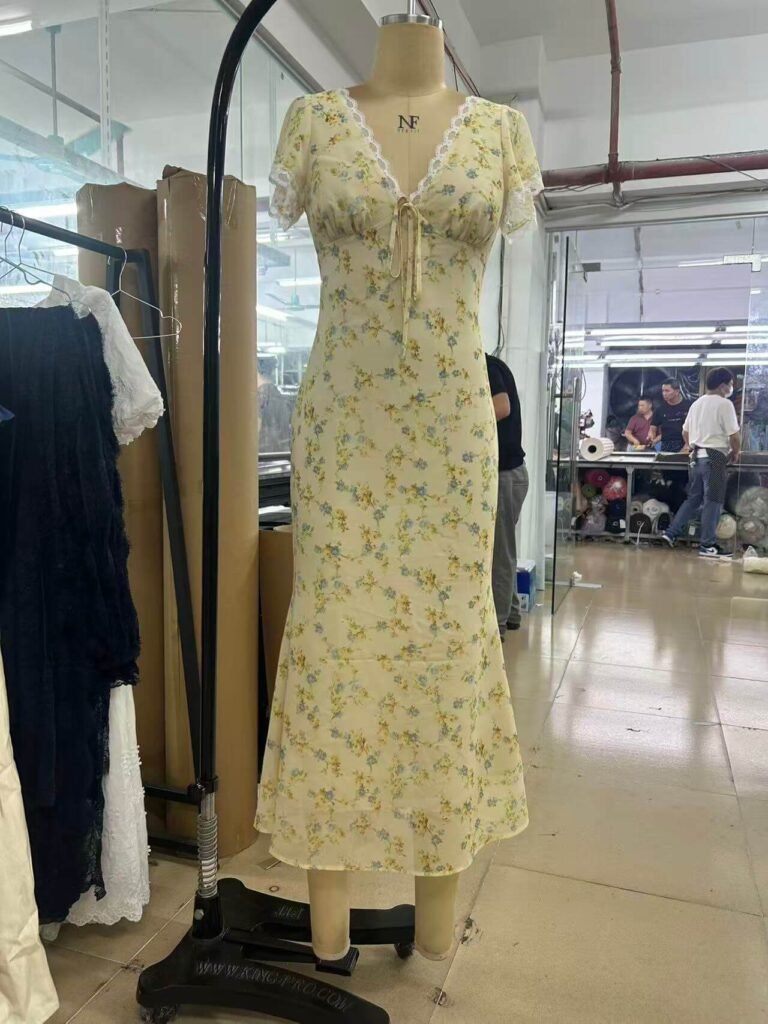
Why Is a Tech Pack Important for Clothing Manufacturing?
A fashion sketch may show what a garment looks like, but it does not always explain how the garment should be manufactured.
For example, a drawing may show a dress with a collar, but it may not specify:
- Collar dimensions
- Fabric composition
- Seam allowance
- Stitching method
- Button size
- Button spacing
- Garment measurements
- Label position
- Hem construction
A professional tech pack fills these gaps.
1. Reduce Manufacturing Misunderstandings
International fashion production often involves communication between designers, buyers, product developers, and factories.
A detailed tech pack gives everyone the same technical reference.
Instead of explaining every detail through emails or messages, manufacturers can refer to the same document throughout the development process.
2. Improve Sample Accuracy
The first sample is an important stage in clothing development.
If the manufacturer receives incomplete specifications, the first sample may require significant changes.
A detailed tech pack can help the factory understand:
- Intended measurements
- Fabric requirements
- Construction details
- Design proportions
- Branding placement
- Finishing requirements
This can make the sample-development process more efficient.
3. Make Manufacturer Quotations More Accurate
A manufacturer cannot accurately calculate every production cost from a simple fashion sketch.
Pricing can depend on:
- Fabric type
- Fabric weight
- Garment construction
- Number of sewing operations
- Printing
- Embroidery
- Trims
- Labels
- Packaging
- Production quantity
Providing detailed technical information allows the manufacturer to better understand the actual production requirements before preparing a quotation.
What Should a Clothing Tech Pack Include?
There is no single universal tech pack format.
The exact information depends on the garment and manufacturing requirements.
However, a professional apparel tech pack commonly includes the following sections.
1. Technical Flat Sketches
The technical flat is one of the most important parts of a tech pack.
Unlike a fashion illustration, a technical flat normally shows the garment clearly from different views.
For example:
- Front view
- Back view
- Side view
- Inside view when necessary
- Detail views
The drawing should clearly show important construction elements.
These may include:
- Collar
- Cuffs
- Pockets
- Seams
- Pleats
- Zippers
- Buttons
- Waistbands
- Hemlines
- Panels
The goal is not artistic presentation.
The goal is manufacturing clarity.
2. Measurement Specifications
A professional tech pack should clearly define the garment measurements.
Depending on the product, measurements may include:
- Bust
- Waist
- Hip
- Shoulder width
- Sleeve length
- Body length
- Inseam
- Outseam
- Neck width
- Armhole
- Cuff width
- Hem width
Measurements should be presented in a clear measurement chart.
For example:
| Point of Measurement | XS | S | M | L | XL |
|---|---|---|---|---|---|
| Bust | 84 cm | 88 cm | 92 cm | 96 cm | 100 cm |
| Waist | 66 cm | 70 cm | 74 cm | 78 cm | 82 cm |
| Hip | 90 cm | 94 cm | 98 cm | 102 cm | 106 cm |
| Body Length | 58 cm | 59 cm | 60 cm | 61 cm | 62 cm |
The actual measurements should always be based on the brand’s approved specifications.
3. Fabric Specifications
Fabric selection can significantly affect the final garment.
A tech pack should provide as much fabric information as possible.
For example:
Fabric Type: Cotton Jersey
Composition: 95% Cotton / 5% Elastane
Weight: 220 GSM
Stretch: 4-Way Stretch
Finish: Soft Wash
Depending on the product, you may also need to specify:
- Fabric composition
- GSM
- Width
- Stretch
- Texture
- Finish
- Shrinkage requirements
- Color
- Fabric supplier
- Sustainability requirements
If the brand does not know the exact fabric, the tech pack can explain the desired characteristics instead.
The manufacturer can then help identify suitable fabric options.
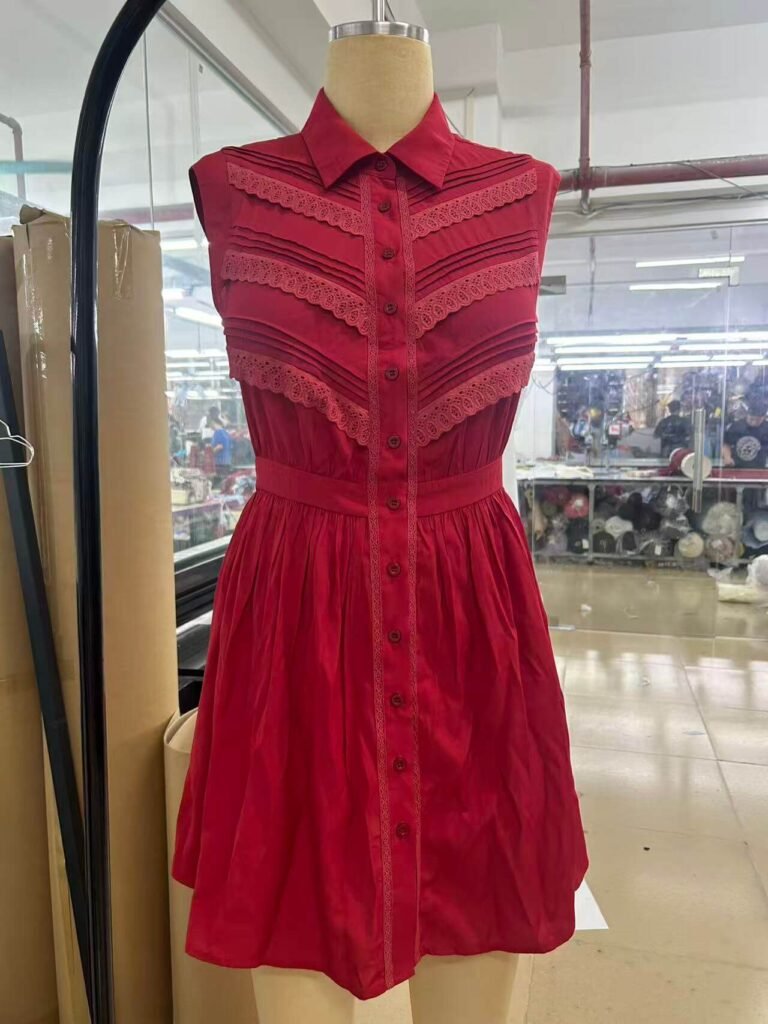
4. Color Information
Color communication is another area where misunderstandings can happen.
Instead of simply writing:
Black
or:
Light green
brands should provide a clear reference whenever possible.
You can use:
- Pantone references
- Fabric swatches
- Existing garments
- Color cards
- Approved digital references
For custom-dyed fabrics, the manufacturer may also need to confirm whether the requested color is commercially practical for the planned order quantity.
5. Garment Construction Details
This section explains how the garment should be constructed.
For example:
- Seam type
- Stitch type
- Seam allowance
- Hem construction
- Pocket construction
- Collar construction
- Cuff construction
- Zipper type
- Button type
- Elastic requirements
For complicated garments, additional technical drawings can make these instructions easier to understand.
6. Trims and Accessories
Trims can have a significant impact on the final appearance of a garment.
Your tech pack should list relevant trims and accessories.
Examples include:
- Buttons
- Zippers
- Elastic
- Drawcords
- Buckles
- Metal hardware
- Lace
- Decorative elements
- Ribbons
- Labels
For each important component, provide specifications whenever possible.
For example:
Button: 18L matte finish metal button
Zipper: YKK-style concealed zipper
Drawcord: 5 mm cotton cord
If you have a specific supplier or reference product, include it in the tech pack.
7. Labels and Branding
Fashion brands should clearly communicate branding requirements before sampling.
A tech pack can specify:
- Main label
- Size label
- Care label
- Country-of-origin label
- Logo placement
- Hangtag
- Packaging
- Sticker
- Barcode
For example:
Main Label: Center back neck
Size Label: Directly below main label
Care Label: Left side seam
Hangtag: Attached to main label
This prevents branding details from being overlooked during production.
8. Printing and Embroidery Details
If your garment contains artwork, printing, or embroidery, provide the manufacturer with the relevant files.
Possible information includes:
- Artwork
- Logo
- Print size
- Print position
- Embroidery size
- Thread colors
- Print method
- Embroidery density
- Artwork placement
Whenever possible, provide artwork in a professional editable format.
The manufacturer can then confirm whether the artwork is suitable for the intended production method.
9. Size Grading
If you are producing multiple sizes, your tech pack should explain how the measurements change between sizes.
For example:
XS → S → M → L → XL
The measurement chart should clearly indicate the specification for each size.
This is particularly important for fashion brands because incorrect grading can cause garments to fit differently across the size range.
The manufacturer should receive the approved measurement chart before bulk production.
10. Tolerance Requirements
Measurements are not always identical down to the last millimeter during mass production.
Therefore, brands should establish reasonable tolerances.
For example:
Bust: ±1 cm
Length: ±1 cm
Sleeve Length: ±1 cm
The exact tolerance should depend on the garment and measurement point.
Clear tolerance requirements help the manufacturer and brand establish a consistent quality standard.
How to Prepare a Tech Pack Before Contacting a Manufacturer
You do not need to create a perfect technical document before speaking with a factory.
However, having the main product information ready can significantly improve communication.
A useful preparation process is:
Step 1: Finalize Your Design
Make sure the basic design is clear.
Step 2: Create Technical Drawings
Show the garment from multiple views.
Step 3: Define Materials
Specify the desired fabric and material characteristics.
Step 4: Create the Measurement Chart
List the important points of measurement and size specifications.
Step 5: Add Branding Requirements
Include labels, logos, hangtags, packaging, and other brand details.
Step 6: Add Construction Details
Explain important sewing and finishing requirements.
Step 7: Add Artwork
Include printing and embroidery files where necessary.
Step 8: Mark Areas That Need Manufacturer Advice
Not every fashion brand knows the best manufacturing method.
If you are unsure about:
- Fabric
- Construction
- Stitching
- Trims
- Finishing
- Production method
mark these areas clearly.
A professional manufacturer can help evaluate practical options.
Tech Pack vs Fashion Sketch: What’s the Difference?
This is an important distinction.
A fashion sketch mainly communicates the visual concept.
A tech pack communicates the manufacturing requirements.
For example:
| Fashion Sketch | Clothing Tech Pack |
|---|---|
| Overall appearance | Production specifications |
| Visual design | Technical construction |
| Style concept | Measurements |
| Silhouette | Fabric details |
| Basic details | Sewing instructions |
| Presentation | Manufacturing reference |
A fashion sketch can be useful when presenting a collection.
A tech pack is much more useful when communicating with a clothing manufacturer.
Ideally, brands should provide both when developing a new product.
Common Tech Pack Mistakes Fashion Brands Should Avoid
Mistake 1: Only Sending a Fashion Image
A photo or sketch is usually not enough for accurate manufacturing.
The factory needs technical information.
Mistake 2: Missing Measurements
Without clear measurements, the manufacturer may need to estimate important dimensions.
This can lead to an inaccurate sample.
Mistake 3: Using Vague Fabric Descriptions
Writing:
“Use soft cotton.”
does not provide enough technical information.
Instead, describe the desired composition, weight, stretch, texture, and finish whenever possible.
Mistake 4: Forgetting Branding Details
Many brands focus heavily on the garment but forget:
- Labels
- Hangtags
- Packaging
- Care labels
- Logo placement
These should be included before production.
Mistake 5: Changing Specifications During Production
Once a sample has been approved, the production specification should be controlled carefully.
Last-minute changes can affect:
- Cost
- Lead time
- Materials
- Quality
- Production planning
A final approved tech pack can become an important reference for bulk production.
How a Good Tech Pack Makes OEM Clothing Production Easier
For OEM manufacturing, the tech pack acts as a communication bridge between the brand and the factory.
The general process can look like:
Brand Concept
↓
Tech Pack
↓
Manufacturer Review
↓
Quotation
↓
Pattern Development
↓
Sample Development
↓
Fitting & Revision
↓
Sample Approval
↓
Bulk Production
↓
Quality Inspection
↓
Shipping
A well-prepared tech pack can make each stage easier to understand and document.
For brands working with an overseas clothing manufacturer, this level of documentation can be especially valuable because communication often happens remotely.
What If You Don’t Have a Complete Tech Pack?
Don’t worry.
Many emerging fashion brands have a design idea but do not yet have a professionally prepared technical package.
You may still be able to start a conversation with a clothing manufacturer.
Prepare as much information as possible, such as:
- Sketches
- Reference garments
- Photos
- Measurements
- Fabric preferences
- Color references
- Logo files
- Estimated order quantity
- Target market
- Desired delivery date
Then clearly explain which parts are finalized and which parts need development support.
A manufacturer with product-development experience can help identify missing information before sampling begins.
Work With a Clothing Manufacturer That Understands Your Product
A good tech pack is important, but it is only one part of successful apparel development.
The manufacturer also needs to understand:
- Pattern development
- Fabric sourcing
- Sample making
- Garment construction
- Quality control
- Production planning
- Packaging
- Shipping
Mugekoo provides custom clothing manufacturing, OEM and ODM apparel production, and private label manufacturing support for fashion brands and businesses. The company describes its production process as covering product development, sampling, bulk production, quality inspection, and shipping support.
For brands preparing a new collection, the goal should not simply be finding the lowest factory quotation.
The goal is finding a manufacturing partner that can understand your specifications and turn them into consistent finished garments.
Final Checklist: Is Your Tech Pack Ready?
Before sending your tech pack to a clothing manufacturer, check:
☐ Technical front and back drawings
☐ Complete measurement chart
☐ Size specifications
☐ Fabric composition
☐ Fabric weight
☐ Color references
☐ Construction details
☐ Sewing requirements
☐ Trims and accessories
☐ Labels
☐ Logo placement
☐ Printing specifications
☐ Embroidery specifications
☐ Packaging requirements
☐ Measurement tolerances
☐ Artwork files
☐ Estimated production quantity
☐ Special quality requirements
If these details are clearly documented, the manufacturer has a much better foundation for evaluating your product and developing the first sample.
Frequently Asked Questions
What is a clothing tech pack?
A clothing tech pack is a technical document that communicates a garment’s design, measurements, materials, construction, branding, and production requirements to a clothing manufacturer.
Do I need a tech pack to work with a clothing manufacturer?
Not always. However, a detailed tech pack can make communication, quotation, sampling, and production much easier.
Can a clothing manufacturer help create a tech pack?
Some manufacturers can provide product-development and technical support. If your tech pack is incomplete, ask the manufacturer which information they need before starting sample development.
What file format should a tech pack use?
PDF is commonly useful for sharing the final technical document, while editable design and artwork files may be provided separately when necessary.
How detailed should a clothing tech pack be?
The level of detail depends on the garment. A simple T-shirt may require fewer specifications than a structured jacket, dress, or complex fashion garment.
Can I use a tech pack for OEM production?
Yes. A tech pack is particularly useful for OEM production because it gives the manufacturer a clear reference for producing garments according to the brand’s specifications.
Conclusion
A professional clothing tech pack can significantly improve communication between fashion brands and manufacturers.
Instead of relying only on sketches, photos, or messages, brands can provide a structured production document covering measurements, fabrics, colors, construction, trims, branding, and quality requirements.
The better the technical information, the easier it becomes for a manufacturer to understand the product and develop an accurate sample.
For fashion brands preparing OEM, private label, or custom apparel production, a well-prepared tech pack is one of the most useful tools for turning a design concept into a manufacturable product.
Ready to develop your next clothing collection?
Contact Mugekoo to discuss your garment specifications, sample development, production requirements, and custom clothing manufacturing needs.