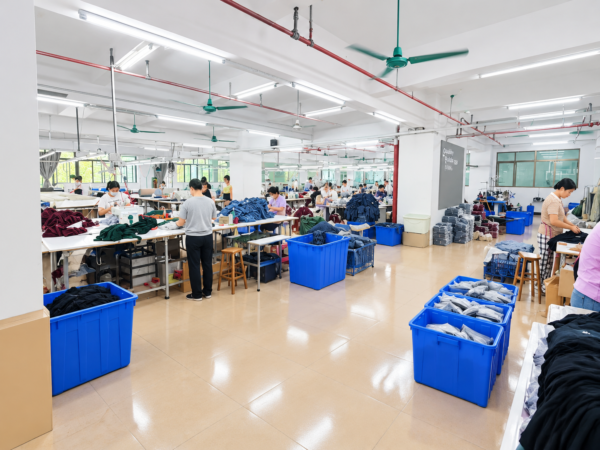
Women’s woven tunic manufacturing needs a clear brief for body length, hip ease and the way the garment will be worn. A long top can appear suitable while standing yet restrict sitting or movement if its lower section is not approved. Overseas buyers should define the intended coverage and layering before sampling. This guide focuses on woven tunic tops, rather than treating an extended blouse or a short dress as an automatic substitute.
Define the product and wearing arrangement
Provide front, side and back drawings showing finished length, hem shape, neckline, sleeves and opening details. State whether the tunic is intended to be worn over trousers, another underlayer or in a different defined arrangement. Show pockets and any side openings separately.
Confirm the intended silhouette: straight, shaped, flared or another construction. A reference image can communicate proportion but not the complete fit requirement. Keep product length and coverage expectations explicit so the sample team does not infer a dress specification from a long-line photograph.
Review the lower body while sitting and moving
Fit the sample in the intended size and wearing arrangement. Check walking, sitting and reaching, including whether the hem lifts or the lower body pulls more than intended. Observe pocket gaping and the position of any opening during movement.
Record where a correction is needed rather than asking for more room everywhere. The women’s fit-block development guide supports the base fit, while the tunic brief should identify its own hip and coverage requirements.
Specify side openings and hem construction
Mark side-opening height, seam position and the finish at the top of each opening. Define whether the design has a stepped hem, curved edge or straight finish. Inspect the inside and outside of these details on the complete sample.
Agree how openings should look in normal wear and whether an underlayer is part of the intended presentation. Do not approve the garment only from a posed front view. Review pressing and finishing without arranging free panels into an appearance the construction does not naturally retain.
Make the measuring sheet repeatable
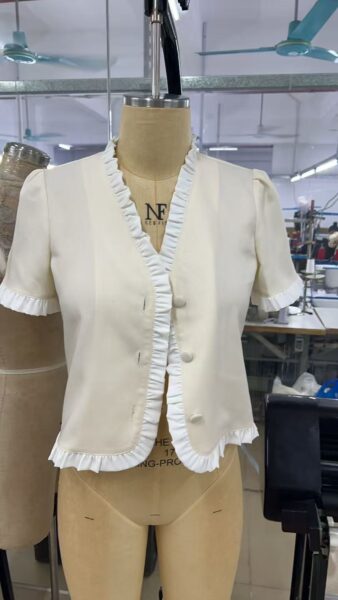
Identify chest, waist where relevant, hip or lower-body position, front and back lengths, opening height and sleeve measurements. Mark where each measurement is taken and how the garment is laid flat. Keep a stepped or curved hem from being described by one ambiguous total-length figure.
Use the garment points of measure guide to align the buyer and factory. Confirm fastening condition and any relaxed or extended measurement needed. A consistent method helps distinguish a real sample change from a different measuring position.
Approve material and construction together
Record fabric composition, weight, usable width, finish and color. Review the actual material for drape, coverage and bulk at pockets, cuffs or openings. Identify lining, facing and support materials separately and assess their effect on the garment.
The fabric sourcing guide helps retain the approved references. Keep substitute-fabric samples identified until the intended construction is reviewed. Complete the agreed care assessment and inspect the same length, opening and appearance requirements afterward.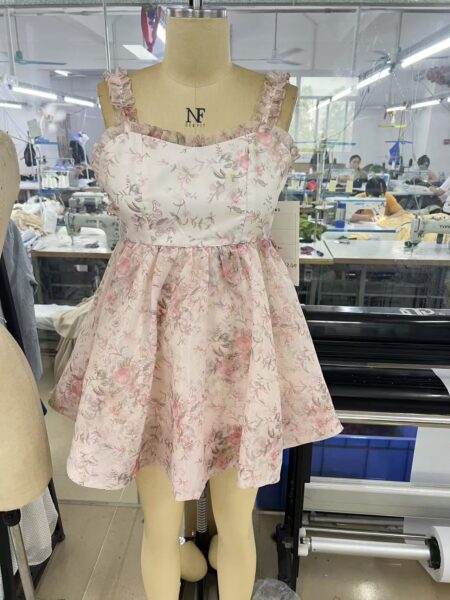
Check grading and quote scope before production
Review how body length, lower-body ease, opening position and sleeves change through the ordered range. Plan representative samples using the size-set approval guide. Do not assume the base-size coverage automatically remains suitable at the smallest and largest sizes.
Request quotation confirmation for pockets, closures, side-opening work, support, labels, finishing and packing. State quantities by color and size, material minimums and included sample rounds. Approve any construction change proposed for cost reasons before comparing the revised price.
For a woven tunic enquiry to Mugekoo, provide drawings, the wearing arrangement, material references and delivery requirements. Ask the factory to confirm capability and the sample sequence. Release bulk against an identified pattern, material and accepted garment sample, with open decisions resolved before cutting.