Bias-cut dress manufacturing requires more than rotating a standard dress pattern. A woven fabric cut diagonally to its yarn directions can drape and extend differently from the same material cut on straight grain. The result may be a fluid silhouette, but it also changes how the buyer should approve fit, measurement and the finished hem.
For overseas brands sourcing slip dresses or other woven styles, the main purchasing risk is approving a successful individual sample without establishing a repeatable production method. The fabric, pattern orientation, handling sequence and measurement stage all need to work together.
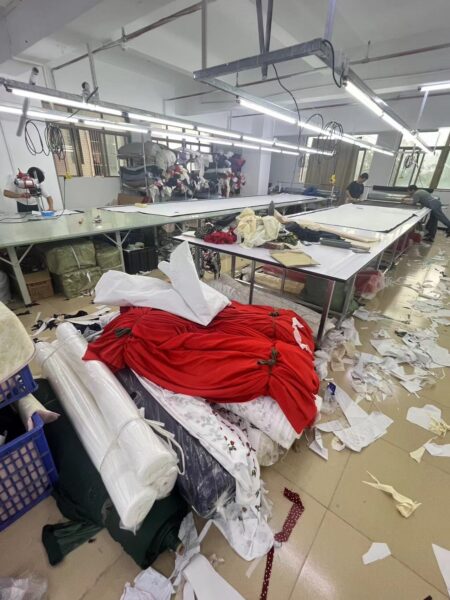
Approve the actual fabric for the intended silhouette
Do not assume that two fabrics with similar composition will behave the same on the bias. Weight, weave, finish and surface characteristics can change drape, extension and seam appearance. Request a garment trial in the proposed material before treating the pattern as ready for bulk production.
A development sample in substitute fabric can help explore the silhouette, but it cannot prove final hem behavior or wearing coverage. Include opacity and lining decisions in the material review. The woven dress lining guide covers lining choices; for a bias style, additionally check whether shell and lining can move together without pulling.
Make grain direction part of the pattern release
The pattern should show the intended direction of every piece and identify any exceptions. Ask the factory to confirm that the marker uses that approved orientation rather than rotating pieces simply to improve yield. Small components and visibly paired panels need the same deliberate review as the main body.
Bias orientation and surface direction are related but distinct decisions. If the chosen material has directional sheen or nap, the factory must resolve both constraints in the sample and marker. Record the approved result rather than assuming that a diagonal layout removes surface-direction concerns.
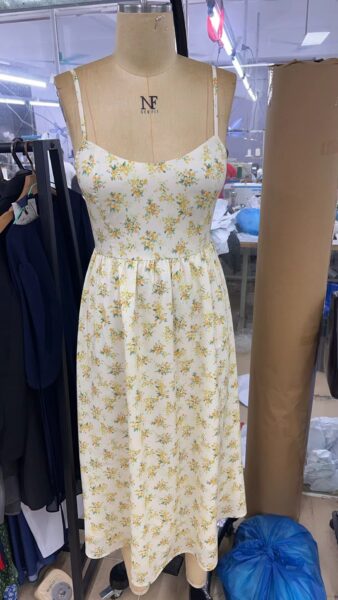
Quote from the approved marker assumptions
Bias pieces may limit nesting and consume material differently from straight-grain pieces. Request consumption based on the actual panel shapes, size ratio and usable fabric width. A universal surcharge or percentage allowance is not a substitute for the proposed marker.
The OEM fabric consumption guide provides the broader cost framework. Ask the manufacturer whether the estimate includes the approved lining layout, panel direction and any matching requirement. If the sample review changes those decisions, update the estimate before ordering the final fabric quantity.
Control handling during assembly
Unsupported panels can change shape as they move through the sample room or production line. Ask how the factory supports the material, protects sensitive openings and keeps sewing from unintentionally stretching or drawing in the seam. Approve an operation trial where the fabric is difficult to handle.
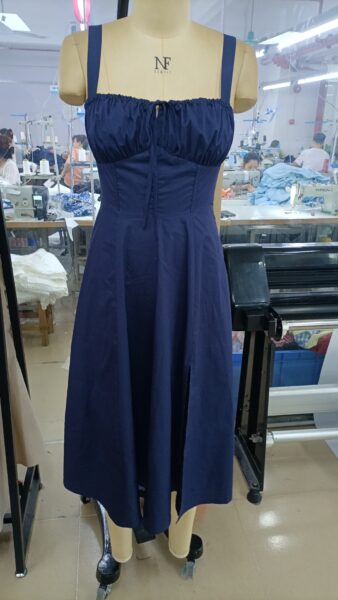
The Sewing & Craft Alliance’s bias sewing guidance discusses supporting the material and allowing a garment to hang before final hemming. For factory production, use a trial to establish the appropriate sequence and waiting period for the selected material; do not copy a home-sewing instruction into a universal industrial rule.
| Control point | Buyer approval | Factory evidence |
|---|---|---|
| Material | Drape, opacity and movement | Actual-material garment trial |
| Pattern | Direction and panel balance | Current pattern and marker reference |
| Sewing | Seam appearance and opening stability | Representative sewn operation |
| Settling stage | When final length is assessed | Documented trial sequence |
| Hem | Level, finish and acceptable variation | Garment review after the agreed settling stage |
| Size range | Fit and balance in relevant sizes | Size-specific measurement and fitting record |
Define when and how measurements are taken
A freshly assembled garment and one that has hung under its own weight may not measure identically. State the evaluation stage, whether the garment is laid flat or assessed on the body, and how it should be handled before measurement. Inspectors should not stretch the fabric to reach the target dimensions.
Use clear points of measurement for body length, opening shape and relevant widths. Include an agreed reference for hem balance. Assess the approved size on the intended fit model or suitable form, then review relevant additional sizes. A good base sample does not automatically establish the result across every size.
Allow settling before final hem approval
Agree a hanging or settling stage based on the material trial and construction. Recheck the hem after that stage, then approve the leveling and finishing method. Build the step into the production sequence so the line is not asked to skip it to meet a packing date.
A changed hem can also affect slit length, lining clearance or the position of a decorative border. Review those relationships together rather than correcting the hem in isolation. Check the garment after the intended care treatment where that forms part of the product requirement.
Test repeatability before scaling
Use a small production pilot run to confirm that the approved sample method transfers to the line. Compare drape, seam appearance and hem balance across units, then resolve recurring variation before committing the remaining material.
For a quotation from Mugekoo, provide the drawing, intended fabric, lining requirements, size range and target quantities. You can send the requirements to Mugekoo for a bias-style feasibility review. Ask which actual-material sample and production hold points are needed before releasing the dress for bulk manufacture.