Garment embroidery sampling turns artwork into a stitched result that a buyer can approve for production. A digital logo or floral drawing does not establish how embroidery will look and feel on a lightweight woven blouse or dress. Overseas brands should approve the actual stitch-out, its position and its effect on the fabric before authorizing bulk work. This guide covers machine embroidery development and approval, rather than general garment sewing or hand embroidery.
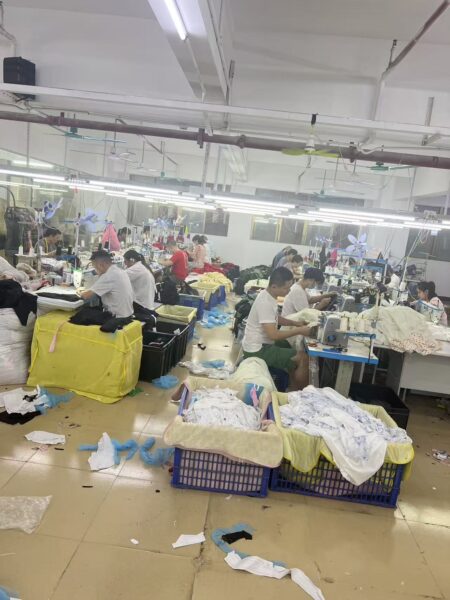
Supply artwork and an application brief
Provide the best available artwork, finished dimensions, color references and the intended placement. Identify small lettering, fine outlines, filled areas and any details that must remain readable. State whether the design is a logo, decorative panel, border or repeating motif.
Confirm who prepares the embroidery machine file and which formats the processor requires. Ask whether digitizing, revisions and sample stitch-outs are included in the quote. A graphic file and a production embroidery file serve different purposes, so record both versions instead of referring only to “the final design.”
Sample on the actual garment fabric
Use the proposed fabric composition, construction, weight and finish for the final stitch-out. Include any relevant lining or support arrangement. A successful sample on a stable heavy fabric may not predict the same result on a lighter, more fluid material.
Review the stitch-out after it is removed from the frame and allowed to lie normally. Check distortion, stiffness and visible damage around the design. Confirm material selection through the fabric sourcing process before treating a trial as the final approval reference.
Assess backing and stitch behavior together
The processor should propose backing and, where required, topping appropriate to the design and fabric. Review the front and reverse, including the finish of remaining support material and how it will feel against the wearer. Ask whether the embroidery is completed on cut panels or finished garments, because access and assembly sequence affect the process.
Coats’ embroidery guidance identifies tension, fabric stability and backing selection among the factors associated with puckering. It also recommends testing the digitized design on the particular fabric. Use that principle to request a revised trial when materials change, rather than accepting the same file without review.
Approve color, detail and placement separately
Identify the thread manufacturer or product reference and approved color codes. Compare the stitched colors with the physical reference under agreed viewing conditions. Check that lettering remains readable, outlines meet filled areas cleanly and unintended gaps or loose loops are absent.
Mark placement from garment landmarks such as center front, a seam or a finished edge. Specify how the design should move across sizes and whether it needs a consistent visual position rather than a fixed distance everywhere. Use the sample comments workflow to separate artwork corrections from positioning corrections.
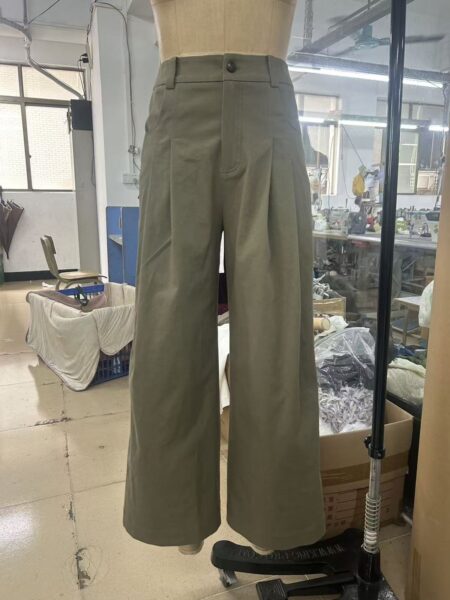
Review the finished garment after care
Approve the design on a complete sample when its weight or position could affect drape, comfort or fit. Inspect the reverse where it contacts skin, and check nearby closures or seams. An attractive flat stitch-out is not sufficient if the assembled blouse pulls around the motif.
Apply the agreed care treatment and inspect changes in shape, appearance, thread color and support material. The wash-care testing guide provides a garment-level planning reference. Define the requested checks and acceptance criteria with the supplier; avoid assuming that every thread and backing combination behaves alike.
Make quotation and quantity assumptions explicit
Ask whether price depends on stitch count, design size, color changes, placement count, setup time or specialist thread. Confirm sample charges and bulk minimums, including any processor minimum when embroidery is subcontracted. Request a revised quotation if the approved design differs materially from the initial artwork.
Clarify responsibility for fabric damage and replacement panels during development and bulk work. Ask how the processor will identify style, color and lot information. A lower operation price can be misleading if it excludes transport, setup or replacement materials required by the production arrangement.
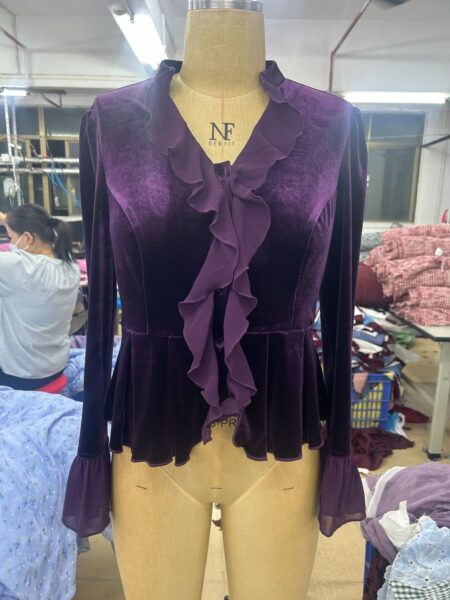
Lock the approved production version
Keep the approved stitch-out, complete sample photographs, thread references, artwork revision and machine-file identifier together. State who may authorize changes. Before scaling, review an initial production piece made with the intended materials and process, checking it against the approved reference.
For an embroidered women’s clothing enquiry to Mugekoo, provide the artwork, garment drawing, fabric specification and quantities. Ask the factory to confirm processing capability and the approval sequence. Keep subsequent changes within the production change control process so the sampled design remains the one used in bulk.