Woven jumpsuit manufacturing connects a bodice and trouser section in one garment, making the relationship between upper-body fit and lower-body movement especially important. For women’s clothing brands, wholesalers and retailers, the main sourcing challenge is approving a construction that looks right and remains practical to wear. A detailed sample brief helps an OEM clothing manufacturer assess the design, identify fit risks and quote the intended product before bulk production.
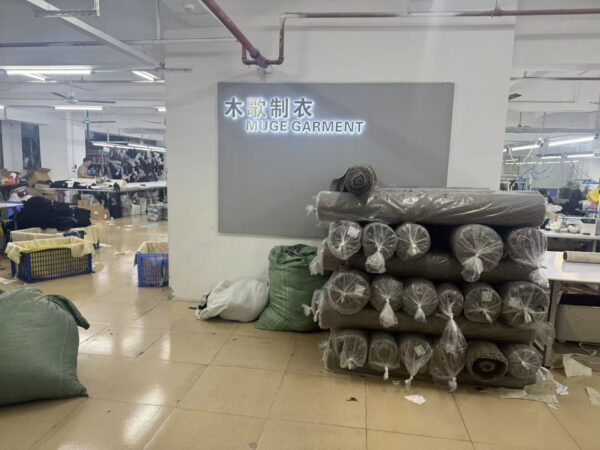
Start with a complete construction drawing
Provide front, back and side views, plus details of the waist seam, pockets, sleeves and fastening. Identify whether the style is fitted, relaxed, sleeveless or long-sleeved, and whether the trouser leg is tapered, straight or wide. Specify any belt, elasticated section, lining or separate inner layer.
Show how the wearer enters the garment. A back zipper, front button opening and wrap construction require different pattern and sewing decisions. Record the intended opening length and access requirements instead of allowing the factory to infer them from a styled photograph.
Review torso length together with the trouser fit
A jumpsuit may look acceptable while standing but pull when the wearer sits or raises their arms. Review the relationship between shoulder position, waist placement, rise and total torso length in the fit sample. Ask the fit reviewer to record where restriction occurs rather than requesting a general increase in length.
Define repeatable measuring landmarks for bodice length, waist, hip, rise and inseam. Use the garment points of measure guide to structure the measuring sheet. A waist seam positioned too high and a short rise can create different problems, even when the overall garment length appears correct.
Include movement and dressing in sample approval
Review sitting, walking, bending and arm movement in the intended fit size. Confirm that the opening is accessible, fastenings operate normally and the wearer can remove the garment without unnecessary difficulty. Observe whether pockets gape, the neckline shifts or the waist seam is pulled out of position.
Document the review conditions and the intended fit preference. A relaxed holiday jumpsuit and a fitted occasion style need different ease decisions. The approved sample should show the agreed result, supported by photographs and specific correction notes rather than an instruction to make every area looser.
Approve the actual fabric and layer combination
Confirm fabric composition, weight, usable width, finish and care expectations before the final sample. A substitute fabric can support an early pattern review, but different drape or stretch behavior may change the finished silhouette. Check coverage at the seat, hip and bodice in the actual proposed color.
If lining is required, assess it with the shell during movement. Confirm how it is attached and whether it restricts the garment. The fabric sourcing guide helps organize material submissions; the jumpsuit approval should also identify the specific fabric used for each sample version.
Test the grading relationship across sizes
Ask how shoulder-to-waist length, rise, hip and opening dimensions change through the size range. Do not assume that increasing trouser width alone will resolve fit at the largest size. Review proportion as well as circumference, and distinguish size grading from a separate petite or tall fit requirement.
Request representative sizes where the range or design risk justifies them. Use the women’s clothing size grading guide to plan those checks. Maintain one agreed measuring method so a difference between sizes is not confused with a difference between inspectors.
Compare quotes with the same operations included
Specify fabric, lining, closures, pocket construction, labels, finishing and packaging. Ask whether the quotation includes a belt or other accessory and how specialist processing is priced. Confirm material minimums and quantities by color and size, particularly when a low-MOQ order has several variants.
Clarify the number of sample rounds and what triggers a revised price. A longer opening, extra lining or different pocket construction can change labor and material use. Agree those changes before treating the initial estimate as a fixed bulk price.
Create a bulk release checklist
Before cutting, confirm the approved pattern version, fabric lot, trims, measurements and sample identification. During sewing, check the waist join, crotch seam, opening and pocket areas against the agreed construction. Final inspection should include both measurements and practical fastening checks.
To discuss a woven jumpsuit project with Mugekoo, send drawings, size quantities, fabric preferences, fit requirements and the delivery window. The manufacturing RFQ checklist helps prepare that enquiry. Ask the factory to confirm product capability and the proposed sampling plan before committing to production.