Choosing a clothing manufacturer is not only about comparing quotations. Before placing a bulk order, fashion brands should verify whether a supplier can consistently deliver the required quality, capacity, communication, compliance, and production control. A structured garment factory audit helps buyers move beyond sales claims and evaluate how the factory actually operates.
This guide explains what overseas fashion brands, wholesalers, and retailers should check during a factory audit before committing to production.
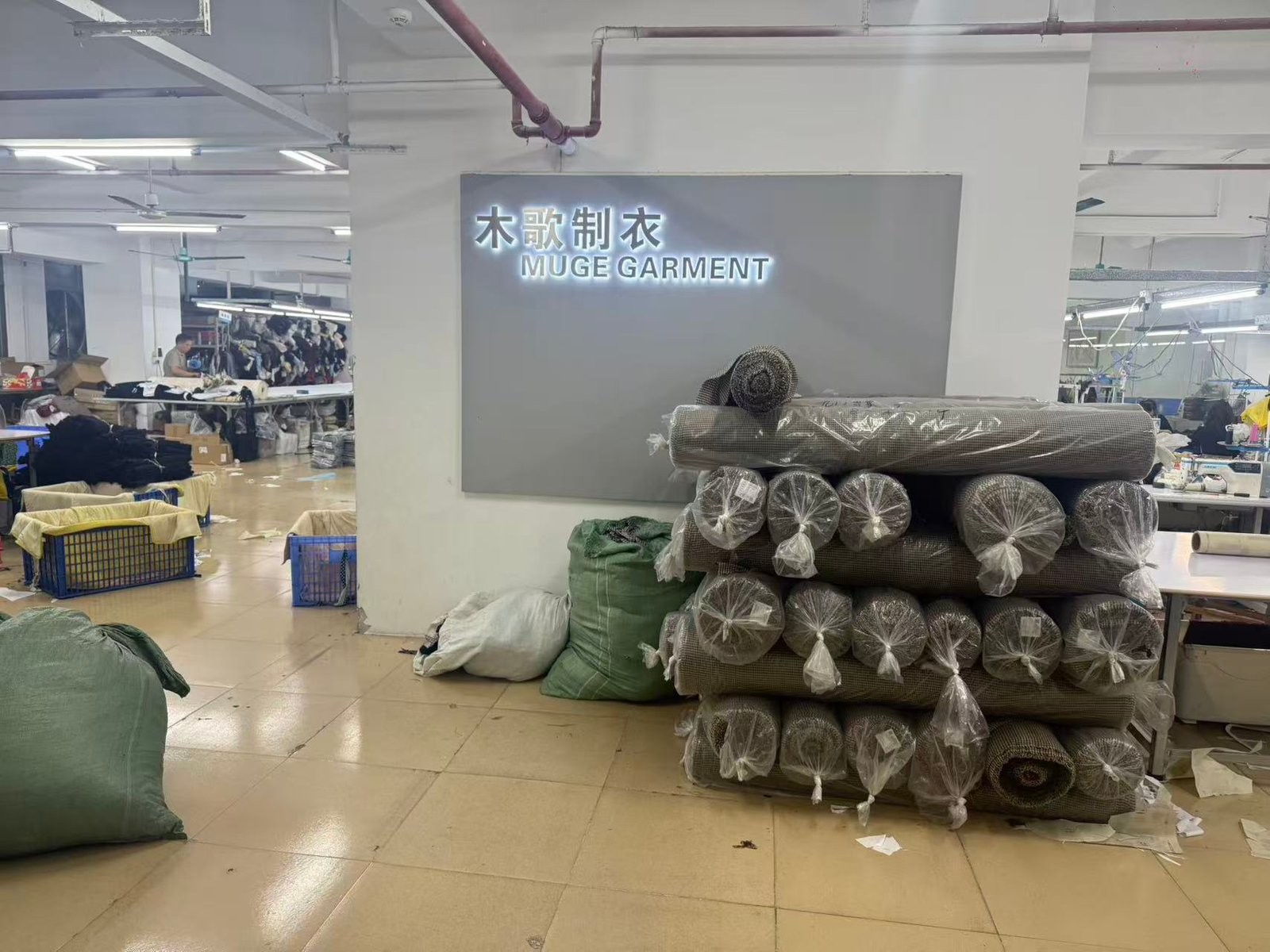
Why a Garment Factory Audit Matters
A factory may have an attractive website, competitive pricing, and fast response times, but those factors do not prove that the production system is suitable for your brand. A garment factory audit gives you evidence about the supplier’s real capabilities.
For brands sourcing internationally, the audit is especially useful because it can identify risks before deposits, materials, and production schedules are committed. It also helps confirm whether the supplier is a real manufacturer rather than only a trading intermediary.
If you are still comparing suppliers, start with our guide on how to choose a clothing manufacturer in China.
1. Verify Factory Identity and Production Scope
The first step is confirming who you are actually working with. Review the company registration name, factory address, production location, business scope, and ownership of the workshop.
Ask whether the factory produces the garment categories your brand needs. A supplier that is strong in woven dresses may not be equally experienced in activewear, heavy outerwear, or fully fashioned knitwear. Matching product specialization reduces development errors and unnecessary subcontracting.
Key points to verify
- Registered company name and factory address
- Main garment categories
- Years of apparel manufacturing experience
- Whether production is in-house or subcontracted
- Primary export markets and typical customer profile
2. Review Production Capacity
Capacity should be evaluated in relation to your expected order size, not only the factory’s maximum monthly output. A small or medium fashion brand may benefit more from a flexible factory than from a very large supplier with rigid minimums.
Check the number of sewing lines, workers, cutting equipment, finishing stations, and current production load. Ask how the factory schedules repeat orders and urgent replenishment orders. If your brand plans to scale gradually, confirm whether the supplier can support both lower initial quantities and larger future volumes.
Brands with smaller launches can also review our guide to working with a low MOQ clothing manufacturer in China.
3. Inspect Cutting, Sewing, and Finishing Controls
Walk through the actual production flow from fabric inspection to packing. Good factories usually have a clear sequence for fabric relaxation, marker planning, cutting, bundling, sewing, pressing, trimming, final inspection, and packing.
Look for visible process control. Are cut panels clearly grouped by style and size? Are defective pieces separated? Are measurement specifications available to line supervisors? Are finished garments protected from dust and mixed sizing?
A clean workshop does not automatically guarantee quality, but organized production usually reflects stronger management discipline.
4. Check Quality Control Procedures
Quality control should happen during production, not only after all garments are finished. Ask the factory how it controls incoming fabric, first-piece approval, inline inspection, measurements, appearance, workmanship, and final random inspection.
For a more detailed quality framework, see our garment quality control checklist for fashion brands.
Useful questions to ask
- Who approves the first production piece?
- How often are measurements checked during sewing?
- How are defects recorded and corrected?
- Is there a final inspection standard before packing?
- What happens if the defect rate exceeds the agreed tolerance?
5. Review Sample and Pre-Production Control
Many bulk production problems begin during product development. A strong factory should have a structured sample process for pattern review, fit comments, material confirmation, construction details, and approval before bulk production begins.
Ask how the team manages sample comments and whether the approved sample is kept as a production reference. If your design is complex, the factory should also be able to explain which construction details create cost, quality, or lead-time risk.
Our article on the clothing sample development process explains this stage in more detail.
6. Confirm Material Sourcing and Traceability
Fabric and trims can determine both product quality and delivery reliability. Ask where the factory sources fabric, how materials are inspected, and whether approved color, composition, weight, and hand feel are documented.
If your brand provides custom fabrics, confirm minimum order requirements, testing needs, lead times, and shade-control procedures. For stock fabrics, ask how long availability can be maintained for repeat orders.
You can also review our fabric sourcing guide for clothing manufacturing.
7. Evaluate Communication and Production Management
Good manufacturing depends on accurate communication. During the audit, observe whether merchandising, pattern, purchasing, production, and quality teams share the same product information.
Ask how the factory manages tech packs, revisions, purchase orders, production updates, and delivery dates. A supplier that cannot clearly explain who is responsible for each stage may create confusion once production becomes busy.
8. Review Compliance and Workplace Conditions
For brands with compliance requirements, check workplace safety, fire exits, worker protection, working-hour records, and any certifications required by your market or retail channel. The exact audit standard will depend on your company and destination market.
Do not treat certificates as a substitute for observation. Review whether the actual workshop practices match the documents presented.
9. Assess Packing, Warehouse, and Shipment Readiness
The final production stage also deserves attention. Check how finished goods are stored, how carton markings are controlled, and how sizes and colors are separated before shipment.
For export orders, confirm whether the factory can follow your barcodes, polybag warnings, carton dimensions, assortment ratios, labeling, and shipping-document requirements.
Red Flags During a Factory Audit
- The supplier refuses access to the production area
- The company name does not match contracts or invoices
- Most production is outsourced without disclosure
- No clear inline quality control process exists
- Sample records and bulk specifications are inconsistent
- Delivery capacity is promised without a production plan
- The factory cannot explain how defects are handled
Final Factory Audit Checklist for Buyers
Before approving a supplier, summarize your findings across five areas: manufacturing capability, product specialization, quality control, communication, and delivery reliability. No factory needs to be the largest or most automated, but it should be transparent, organized, and suitable for your product category and order size.
Mugekoo is a custom clothing manufacturer in Dongguan, China, supporting OEM, ODM, private label, sample development, low MOQ production, and bulk manufacturing for international fashion brands. If you are evaluating a production partner, you can contact our team to discuss your product requirements.