Garment hanger packing requirements should be agreed before an OEM clothing manufacturer purchases packing materials. A retail-ready women’s wear order may need the garment supported on a specified hanger, protected during transit and identifiable without being removed from its packaging.
This guide focuses on the hanger and garment relationship. It is separate from the size-and-color assortment plan inside shipping cartons. The buyer should supply the retailer or warehouse instructions, then approve a physical packed sample that the finishing team can reproduce.
Clarify the delivery format
State whether the buyer needs individual garments on hangers inside cartons, a dedicated hanging shipment arrangement or folded garments with loose hangers supplied separately. These formats have different handling and logistics implications. “Ship on hangers” is not enough for a reliable quotation.
Confirm the receiving warehouse’s acceptance requirements with the buyer and logistics provider. The garment factory should know how the garment will be presented and protected, while the shipment configuration needs a supported packing and transport plan. Do not assume that one carton layout works for every format.
Specify the hanger reference and garment fit
Provide the approved hanger code or physical sample, dimensions, material, hook orientation and any required size marker. Identify whether dresses and blouses use the same hanger or need separate references. If a nominated supplier is involved, confirm availability and who is responsible for ordering and checking the delivery.
Trial the hanger on the finished garment. Review shoulder support, neck opening and whether the shape creates marks or stretches the material. For skirts or trousers requiring clips, specify placement and protection and check that the grip does not damage the fabric. There is no universal hanger width that suits every size and silhouette.
Approve how the garment stays supported
Check whether the style needs existing hanging loops, clips or another agreed support. Do not add an unapproved loop or attach a fastener through the garment simply to make the packing work. Any product construction change should be reviewed separately from packaging approval.
Look at the garment after the planned handling trial, checking slips, creases, distortion and trim contact. A delicate dress and a structured blouse may need different support even when the same outer bag can contain both. Record the approved arrangement with front and back photographs.
Define the cover and protective materials
Specify the bag or cover size, closure, hook opening if required and protection for sharp or projecting hanger parts. The cover should allow the garment to remain in its intended position without unnecessary compression. Agree whether tissue or separators are needed for vulnerable details.
Connect the cover to the polybag specification. Exact warning text, symbols and market-specific artwork should come from the buyer’s approved requirements. Freeze the artwork version before printing, and do not let a packaging substitution proceed without review.
Keep tickets visible and matched to the garment
Identify where size markers, hangtags, barcode tickets and any retail price labels belong. Warehouse staff should be able to find required identification in the approved packed format. Check whether the cover or hook position obstructs scanning or hides a ticket.
Verify codes against the barcode master. The garment size, hanger marker where used, ticket and packing record should agree. A correctly printed ticket is still an error if it is attached to the wrong style or size.
Review the first packed configuration
| Checkpoint | Approval evidence |
|---|---|
| Hanger fit | Physical trial on representative finished garments |
| Support and protection | Photographs and garment-condition observations after handling |
| Identification | Matching tickets, markers and scan access |
| Shipment arrangement | Approved layout, dimensions and handling instructions |
For garments placed in cartons, verify that hanger parts do not press into adjacent pieces or puncture covers. Use the carton assortment plan to reconcile quantities; this does not replace the physical trial of the hanger arrangement. Confirm packed dimensions and weights from actual configurations when they affect the quotation.
Control packing on the finishing line
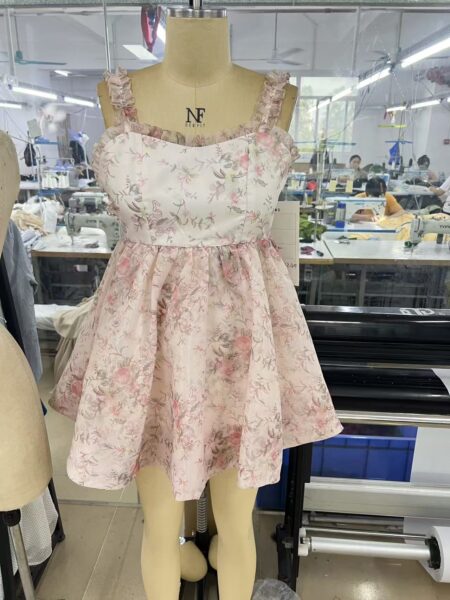
Give packing staff the approved hanger, sample photographs and current instructions. Check garment position, correct materials, cover condition and identification on early output. Separate incorrectly packed units until corrected and rechecked, rather than including them in the released packed count.
Record any replacement hanger or cover proposal with its affected quantity. The pre-shipment document package should reflect the actual shipping configuration. A late retail-routing change may require repacking, new materials and a revised ready date, so identify it before finishing is complete.
Prepare the packing brief
Provide garment styles, size range, retailer instructions, approved hanger reference and intended delivery format. Ask for sample approval and separate packaging cost details before the bulk purchase. To set garment hanger packing requirements for a private label women’s wear order, send your tech pack and purchasing requirements to Mugekoo.