A private label women’s clothing manufacturer should do more than sew a logo into an existing garment. For a fashion brand or retailer, the real commercial value is a production system that can reproduce the same fit, fabric, color, trims, labels and workmanship when a successful style needs to be reordered.
That makes private label development a documentation problem as much as a manufacturing problem. The following workflow helps buyers create women’s collections that are easier to sample, approve, manufacture and repeat.
1. Define What “Private Label” Means for Your Collection
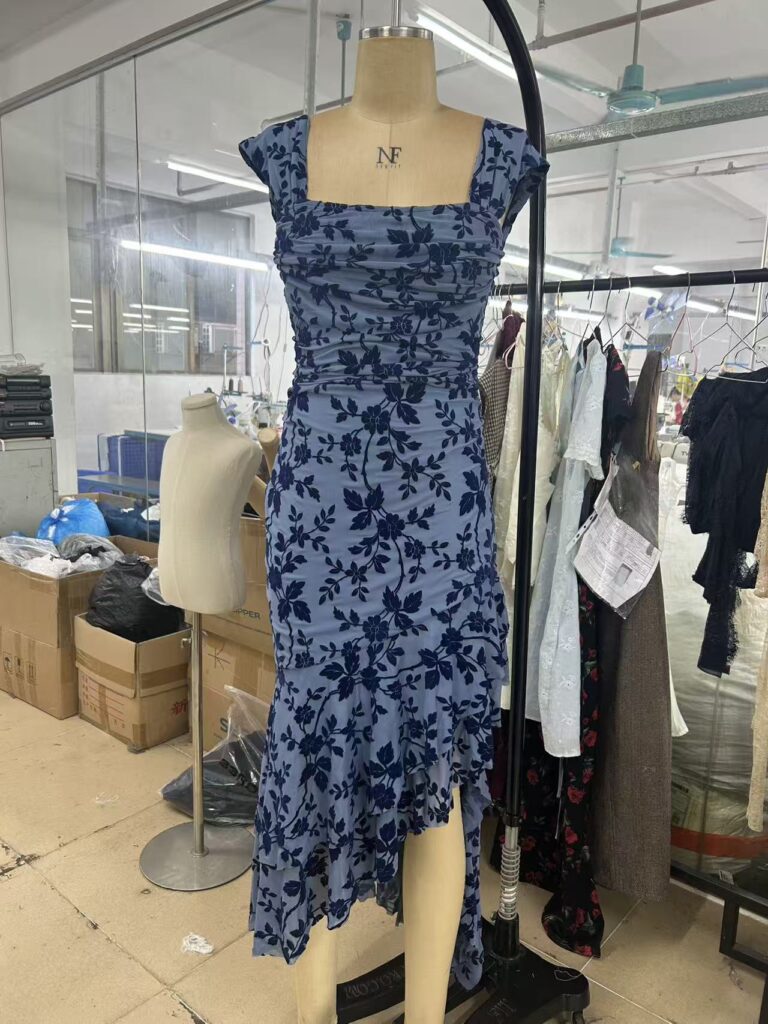
Private label programs vary. One buyer may select an existing silhouette and customize fabric, color and branding. Another may provide original patterns, tech packs and graded specifications for a fully custom product. Clarify the development level before requesting a quote because sampling time, pattern work, MOQ and material commitments will differ.
If your collection requires original construction and specifications, compare the workflow with a custom women’s clothing manufacturing process before deciding how much development support you need.
2. Create a Reorder File Before the First Bulk Order
Do not wait until a style sells out to reconstruct its production information. Build a master record during development. It should include the approved tech pack, graded measurement chart, fabric specification, color reference, trim details, label artwork, placement dimensions, packaging instructions and approved sample comments.
Version control is essential. Every revision should have a date or version number, and superseded files should be clearly separated. This reduces the risk of a reorder being produced from an older measurement chart or artwork file.
3. Treat Fabric as a Repeatability Decision
A fabric can look attractive in a sample yet be difficult to reorder months later. Ask whether the construction is a standard mill article, a custom development or a seasonal stock item. Confirm composition, weight, width, finish, stretch and color process, then keep an approved cutting or swatch as a physical reference where practical.
For fabrics that require custom dyeing, understand the mill MOQ and shade tolerance. The garment factory’s MOQ and the textile mill’s minimum are not always the same. See our fabric sourcing guide for the questions that affect cost and continuity.
4. Use Sampling to Remove Production Ambiguity
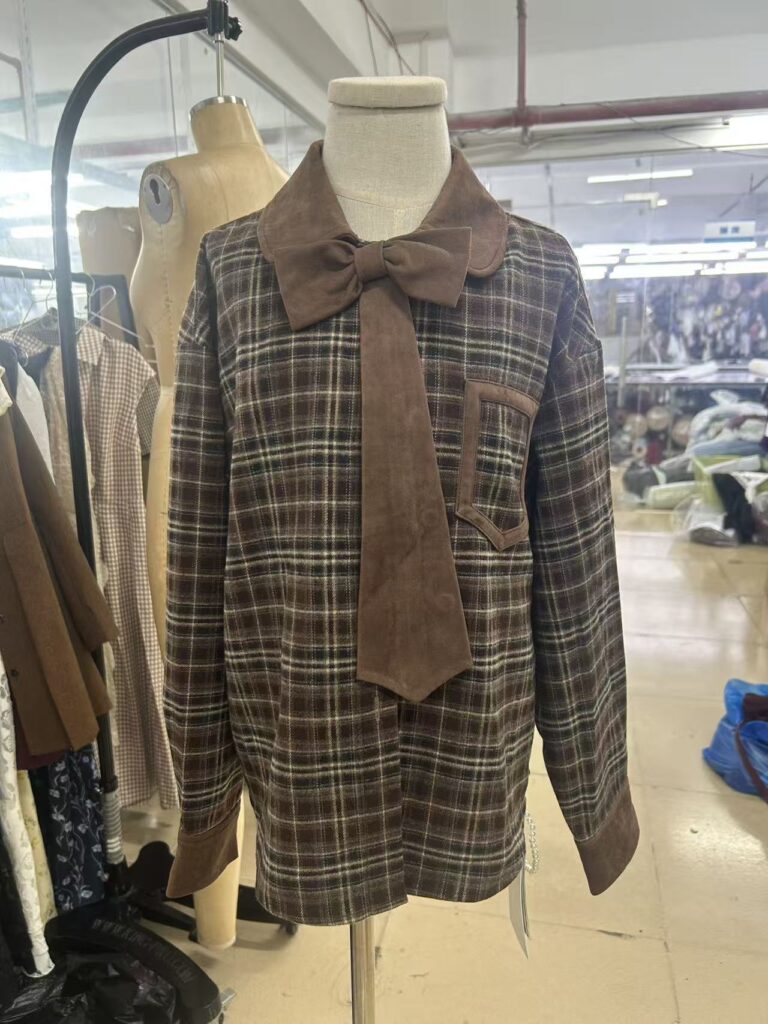
Sampling should convert a design idea into an executable manufacturing standard. Review fit, balance, seam construction, finishing, hardware, label placement and packaging details. Comments such as “make it slightly smaller” are difficult to reproduce; convert subjective feedback into measurements or specific construction instructions whenever possible.
Before cutting bulk fabric, approve a production-intent sample. Our guide to the pre-production sample in clothing manufacturing explains what buyers should lock before bulk production.
5. Build Low-MOQ Decisions Around Material Economics
Emerging brands often search for low MOQ production to limit inventory exposure. The best MOQ structure, however, depends on how styles share materials. Using the same fabric across several related styles or limiting the number of colors can make a small collection more practical without forcing the manufacturer to manage many tiny material lots.
Ask for a breakdown of minimums by style, color, fabric, custom trim and packaging. This reveals where quantity constraints actually originate and allows the buyer to redesign the assortment intelligently instead of negotiating only the final garment quantity.
6. Establish Quality Standards That Survive Reorders
Quality should be documented in terms another production team can understand later. Record measurement tolerances, seam and stitch requirements, appearance standards, shade expectations, placement tolerances and packing rules. Keep the approved sample as a reference when possible.
During production, use incoming-material, cutting, in-line and final checks. Our garment quality control checklist for fashion brands can be used to build a buyer-specific inspection plan.
7. Plan Reorders Before the Sales Data Arrives
Before launch, ask the manufacturer which materials have the longest replenishment time, whether unused custom fabric can be retained, how long patterns and specifications are archived, and what may change if the next order is smaller or larger. For seasonal products, identify the latest reorder date that still supports your required delivery window.
Production timing should be calculated from material availability and approvals rather than sewing time alone. The clothing production timeline guide explains the stages buyers should include.
Buyer Checklist for a Private Label Women’s Clothing Manufacturer
- Confirm whether the program is stock customization, ODM development or fully custom OEM production.
- Maintain one approved master specification for every style.
- Record fabric and trim references that can be sourced again.
- Approve production-intent samples before bulk cutting.
- Understand MOQ at garment, fabric, color and trim level.
- Document quality tolerances instead of relying on verbal standards.
- Discuss reorder lead times and material continuity before launch.
Final Takeaway
A private label collection becomes scalable when the first production run creates reliable data for the second. Buyers that document specifications, approve repeatable materials and establish measurable quality standards are better positioned to replenish successful styles without starting development again.
Mugekoo supports custom and private label women’s apparel projects for overseas buyers. The SEO and sourcing focus is on the purchasing need itself—private label development, sampling, fabric sourcing and controlled clothing production—while Mugekoo remains the manufacturer brand behind the process.