For an emerging fashion brand, MOQ is not simply a factory number. It affects fabric purchasing, colorways, size ratios, unit cost, production efficiency and inventory risk. When buyers compare a women’s clothing manufacturer, the better question is not only ‘What is your minimum?’ but ‘How should we structure the first order so the quantity is commercially workable for both sides?’
This guide explains how overseas brands, wholesalers and retailers can plan a first bulk order with clearer quantities and fewer production surprises.
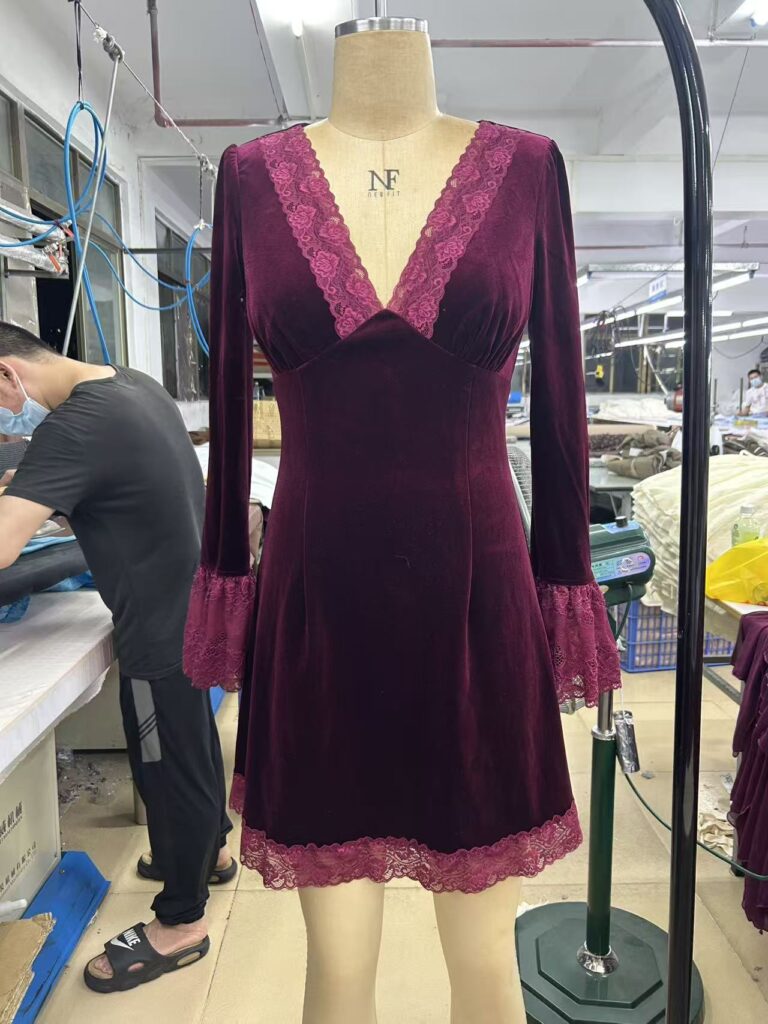
What MOQ Means in Women’s Clothing Production
MOQ can apply at several levels: total order quantity, quantity per style, quantity per color, or even a fabric supplier’s minimum dye lot. A factory may be able to sew a small quantity while the chosen fabric or custom trim still requires a larger purchase. Buyers should therefore confirm the MOQ structure before approving samples.
For a broader introduction to smaller production runs, see our low MOQ clothing manufacturing guide.
Start With the Collection, Not a Random Unit Target
A practical first order starts with the collection architecture. List every style, color and size, then identify which combinations are essential for launch. Too many colorways can fragment a small order and make fabric sourcing inefficient. A tighter assortment usually gives the manufacturer more stable cutting and sewing runs while giving the brand cleaner inventory.
Build a quantity matrix
Create a simple matrix showing units by style, color and size. The total should match realistic sales expectations while leaving enough quantity in each variation for efficient production. If you sell wholesale, include retailer pack requirements before finalizing the ratio.
Fabric MOQ Can Be More Important Than Sewing MOQ
Stock fabric, custom-dyed fabric and specially developed materials have very different minimums. Before committing to a garment quantity, ask the factory to confirm fabric availability, usable width, shrinkage expectations, color minimums and replenishment risk. Our fabric sourcing guide for clothing manufacturing explains these decisions in more detail.
Use Sampling to Validate the Order Before Scaling
Sampling should confirm fit, construction, fabric behavior and key measurements before bulk cutting begins. A sample that looks good in one size does not automatically prove that every graded size will perform correctly. Brands should document comments clearly and freeze approved specifications before production.
Review the clothing sample development process and the pre-production sample checklist before issuing bulk approval.
How MOQ Influences Unit Cost
Small runs spread pattern work, cutting setup, production preparation and quality-control time across fewer pieces. Larger runs may improve efficiency, but buying more solely to reduce unit price can create costly unsold stock. Buyers should compare total landed inventory exposure, not only the lowest quoted garment price.
Questions to Ask a Women’s Clothing Manufacturer
- Is the MOQ calculated per style, color or total order?
- Does the selected fabric have a separate supplier MOQ?
- Can stock fabric reduce the first-order commitment?
- How do additional colors affect cutting and production cost?
- When must the final size breakdown be locked?
- What approvals are required before bulk cutting?
A Better First-Order Strategy
For many brands, the strongest approach is to launch a focused assortment, validate demand, collect fit and sell-through data, then reorder proven styles. This creates a more useful manufacturing relationship than forcing too many SKUs into the first production run.
When comparing suppliers, evaluate communication, sampling discipline, fabric sourcing, production control and quality systems together with MOQ. Our guide on how to evaluate a clothing manufacturer provides a practical framework.
Final Takeaway
The right MOQ is a commercial balance between manufacturing efficiency and inventory risk. A capable women’s clothing manufacturer should help buyers understand the constraints behind the number and organize styles, fabrics, colors and sizes into a production-ready order. Mugekoo supports custom womenswear development and production for overseas fashion businesses; the sourcing requirement—not the brand name—should remain the starting point for every project.