Building a fashion brand is about more than choosing attractive designs.
Your clothing needs to represent your brand identity, maintain consistent quality, fit your target market, and arrive on time. For many fashion businesses, private label clothing manufacturing provides a practical way to create branded apparel without building their own factory.
A private label clothing manufacturer can help fashion brands turn product ideas into finished garments with custom labels, packaging, fabrics, colors, patterns, and other branding elements.
But finding the right manufacturing partner is not simply about finding the lowest price.
Brands need to consider product development, minimum order quantities, sampling, materials, quality control, production capacity, communication, and long-term scalability.
This guide explains how private label clothing manufacturing works and what fashion brands should know before placing an order.
What Is Private Label Clothing?
Private label clothing refers to garments manufactured for a specific brand and sold under that brand’s name.
Instead of purchasing generic clothing and reselling it, the brand develops or selects products that are produced specifically for its business.
Private label apparel can include:
- T-shirts
- Hoodies
- Dresses
- Shirts
- Jackets
- Sweatshirts
- Pants
- Skirts
- Activewear
- Streetwear
- Children’s clothing
- Fashion accessories
Depending on the manufacturer, brands can customize everything from the garment itself to the final packaging.
This allows a company to create a more distinctive product range and establish its own identity in the market.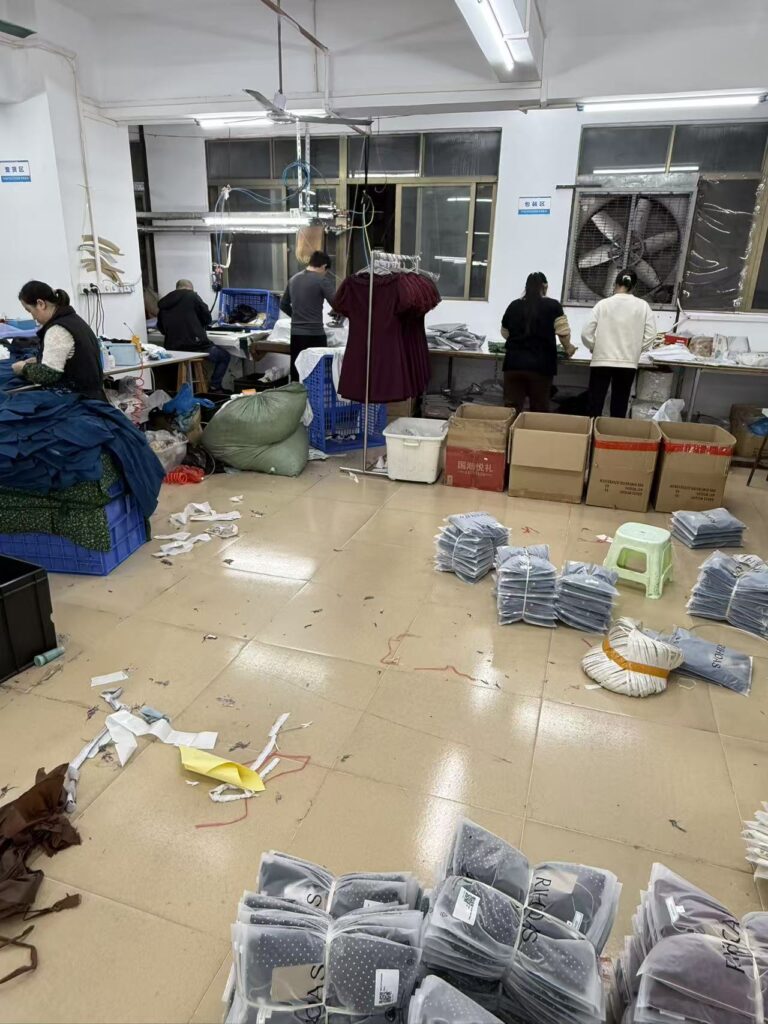
Private Label vs. Wholesale Clothing
Private label and wholesale clothing are often confused, but they are different business models.
Wholesale Clothing
With wholesale clothing, you typically purchase existing products from a supplier or manufacturer.
The products may already have:
- Fixed designs
- Standard colors
- Existing sizing
- Existing packaging
- Existing labels
The buyer mainly chooses from products that are already available.
Private Label Clothing
Private label production allows greater brand customization.
You may be able to specify:
- Garment design
- Fabric
- Colors
- Measurements
- Labels
- Logos
- Packaging
- Hangtags
- Care labels
- Finishing details
The final product is created for your brand rather than simply purchased from an existing catalog.
Why Do Fashion Brands Choose Private Label Manufacturing?
Private label manufacturing gives brands more control over their products.
1. Build a Unique Brand Identity
Your customers see your:
- Logo
- Labels
- Colors
- Packaging
- Product design
- Brand message
These elements work together to create a recognizable identity.
A consistent private label product line can make a young fashion business look more established and professional.
2. Greater Product Customization
One of the biggest advantages is customization.
Depending on the manufacturer, you may be able to modify:
Fabric
Choose different compositions, weights, textures, and finishes.
Fit
Adjust measurements and silhouettes for your target customers.
Color
Develop custom colors or select colors from available fabric options.
Branding
Add logos, woven labels, printed labels, embroidery, hangtags, and packaging.
Construction
Modify stitching, pockets, collars, cuffs, zippers, buttons, and other details.
This level of control is difficult to achieve with standard wholesale products.
What Does a Private Label Clothing Manufacturer Provide?
A professional manufacturer may support multiple stages of the production process.
Product Development
The process can start with:
- Sketches
- Product references
- Tech packs
- Existing samples
- Measurements
- Design concepts
The manufacturer can then help translate these requirements into a production-ready garment.
Fabric Sourcing
Fabric is one of the most important factors affecting garment quality.
Manufacturers may help source materials based on:
- Composition
- Weight
- Stretch
- Texture
- Color
- Durability
- Intended use
- Target price
Pattern Making
The design needs to become an accurate production pattern.
Pattern development affects:
- Fit
- Shape
- Measurements
- Sewing efficiency
- Fabric consumption
A strong pattern is essential before bulk production begins.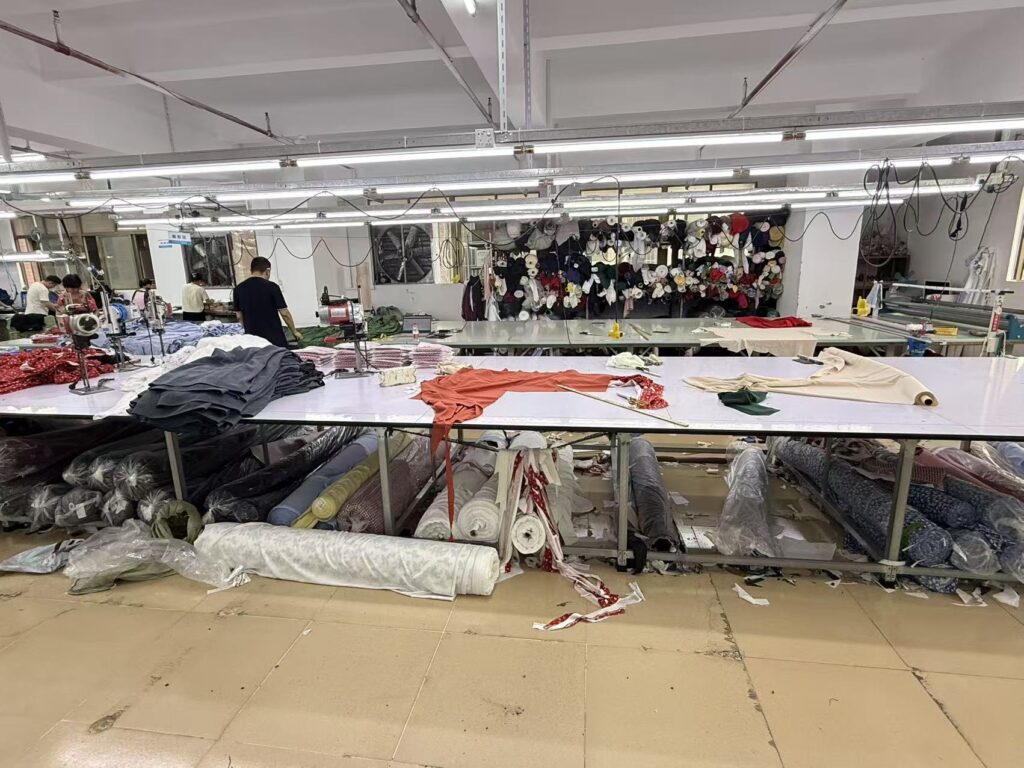
How Does Private Label Clothing Manufacturing Work?
A typical process can look like this:
Step 1: Define Your Product
Start by identifying:
- Product category
- Target customer
- Style
- Fabric requirements
- Price range
- Expected quantity
The more clearly you define the product, the easier it is for a manufacturer to provide an accurate quotation.
Step 2: Find a Suitable Manufacturer
Look for a manufacturer with experience in your product category.
For example, a factory specializing in knitwear may not be the best partner for highly technical outerwear.
Evaluate:
- Manufacturing experience
- Product range
- MOQ
- Sampling capability
- Quality control
- Production capacity
- Communication
- Lead times
Step 3: Submit Your Design or Tech Pack
Provide as much technical information as possible.
A useful tech pack may include:
- Technical drawings
- Measurements
- Fabric information
- Color references
- Stitching requirements
- Label placement
- Logo specifications
- Packaging instructions
Clear specifications reduce misunderstandings during development.
Step 4: Develop the Sample
Before bulk production, the manufacturer creates a sample.
This stage allows the brand to evaluate:
- Fit
- Fabric
- Construction
- Color
- Measurements
- Branding
- Overall appearance
Never treat the first sample as automatically production-ready.
Sample revisions are a normal part of product development.
Step 5: Approve the Final Sample
Once the product meets your requirements, confirm the final specifications.
This approved sample should become the reference standard for bulk production.
Keep records of:
- Final measurements
- Fabric composition
- Colors
- Labels
- Artwork
- Packaging
- Construction details
Step 6: Begin Bulk Production
After approval, the manufacturer moves into production.
Depending on the product, this can involve:
Fabric inspection → Cutting → Sewing → Printing/Embroidery → Finishing → Quality inspection → Packing
The exact workflow varies by product and factory.
What Custom Branding Can You Add?
Private label manufacturing becomes especially valuable when branding goes beyond simply printing a logo.
A fashion brand may customize:
Woven Labels
Your brand name can be incorporated into a woven label.
Printed Labels
Useful for brand information, sizing, and care instructions.
Hangtags
Hangtags can communicate:
- Brand story
- Product information
- Pricing
- Materials
- Website
- Social media
Custom Packaging
Packaging can include:
- Branded polybags
- Tissue paper
- Boxes
- Stickers
- Thank-you cards
These details can improve the overall customer experience.
How Much Does Private Label Clothing Manufacturing Cost?
There is no universal price for private label clothing.
The cost depends on the product and production requirements.
Important factors include:
- Fabric
- Garment weight
- Design complexity
- Order quantity
- Number of colors
- Number of sizes
- Printing
- Embroidery
- Washing
- Labels
- Packaging
- Quality requirements
For example, a simple cotton T-shirt with basic branding will normally require fewer production processes than a heavily constructed jacket with multiple trims and custom finishing.
Therefore, instead of asking only:
“What is your price?”
ask for a detailed quotation based on your exact product specifications.
What Is the MOQ for Private Label Clothing?
MOQ means Minimum Order Quantity.
Different manufacturers have different MOQ requirements.
A factory may calculate MOQ based on:
- Total pieces
- Pieces per color
- Pieces per size
- Fabric minimums
- Production efficiency
For startups, MOQ is particularly important.
A large MOQ can create unnecessary inventory risk.
A manufacturer offering flexible production quantities may therefore be more suitable for emerging brands.
However, extremely low MOQ does not automatically mean better production economics.
The ideal quantity should balance:
Production efficiency + inventory risk + cash flow + expected sales
How Should You Choose a Private Label Clothing Manufacturer?
Don’t choose a manufacturer based only on their website or quotation.
Evaluate the entire production capability.
1. Manufacturing Experience
Ask whether they regularly produce your product category.
A factory with relevant experience will usually understand common construction and production challenges.
2. Sample Quality
The sample development process tells you a lot about the manufacturer’s capabilities.
Pay attention to:
- Accuracy
- Fit
- Stitching
- Fabric
- Finishing
- Communication
- Revision speed
3. Communication
Good communication is essential.
Your manufacturing partner should clearly understand:
- Product requirements
- Changes
- Deadlines
- Quality expectations
- Packaging requirements
Poor communication can create expensive mistakes.
4. Quality Control
Ask how quality is checked throughout production.
Important checkpoints may include:
- Fabric inspection
- Cutting inspection
- Sewing inspection
- Measurement inspection
- Final garment inspection
- Packaging inspection
Quality should not be checked only after everything has been produced.
Common Mistakes When Starting Private Label Clothing
Mistake 1: Choosing the Cheapest Manufacturer
The lowest quotation can be attractive.
But if the quality is inconsistent or production delays occur, the final cost can become much higher.
Mistake 2: Ordering Too Much Too Early
New brands sometimes place large orders before understanding their market.
A smaller initial production run can reduce inventory risk when appropriate.
Mistake 3: Providing Incomplete Specifications
A vague description such as:
“I want a premium oversized hoodie.”
is not enough for accurate production.
A manufacturer needs measurable specifications.
Mistake 4: Skipping Sample Approval
Never assume the bulk product will automatically match your expectations.
Approve the final sample before moving into mass production.
Mistake 5: Ignoring Packaging
The product is not the only part of the customer experience.
Packaging, labels, hangtags, and presentation can all influence how customers perceive your brand.
Private Label Clothing for Startups
Private label manufacturing can be especially useful for fashion startups.
A startup does not necessarily need to build its own production facility.
Instead, it can focus on:
- Brand positioning
- Product development
- Marketing
- E-commerce
- Customer acquisition
while the manufacturing partner handles production.
This allows the business to build a clothing brand without investing in its own sewing lines, equipment, production staff, and factory infrastructure.
Private Label Clothing for Established Brands
Private label manufacturing is not limited to startups.
Established fashion companies may use private label manufacturers to:
- Expand product categories
- Launch seasonal collections
- Test new designs
- Increase production capacity
- Develop new product lines
- Diversify suppliers
The key is finding a manufacturer that can maintain consistent quality as production volumes increase.
China as a Private Label Clothing Manufacturing Hub
China has a large and mature apparel manufacturing ecosystem.
Depending on the product, brands can access suppliers and manufacturers offering:
- Fabric sourcing
- Pattern development
- Garment production
- Printing
- Embroidery
- Washing
- Packaging
- Export services
For international fashion brands, China can therefore be an important sourcing option.
However, brands should still evaluate individual manufacturers carefully rather than assuming every factory offers the same capabilities.
Questions to Ask Before Placing an Order
Before choosing your private label clothing manufacturer, ask:
- What clothing categories do you specialize in?
- What is your MOQ?
- Can you develop custom samples?
- Can you source fabrics?
- Can you produce custom labels?
- Can you provide custom packaging?
- What is your typical sample lead time?
- What is your bulk production lead time?
- How do you conduct quality control?
- Can you support repeat production?
- Can you handle international orders?
- How do you manage production changes?
The answers can help you determine whether the manufacturer is appropriate for your brand.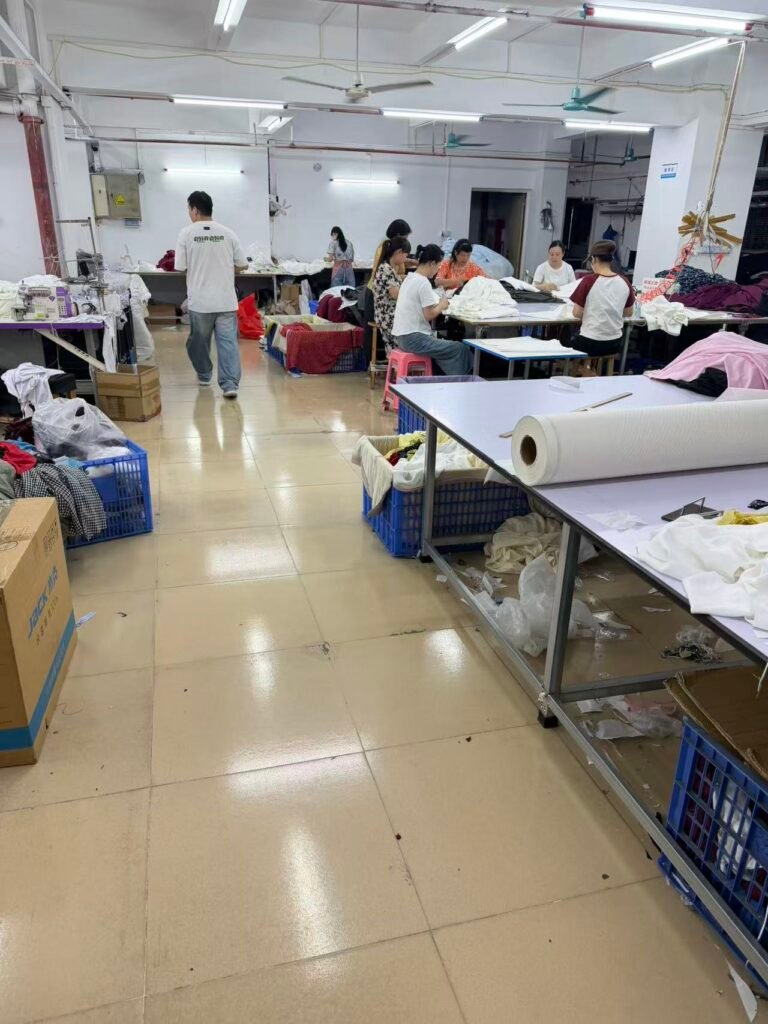
Final Thoughts
Private label clothing manufacturing gives fashion brands a way to create products under their own identity without operating their own factory.
From fabric selection and pattern development to custom labels, packaging, sampling, and bulk production, the right manufacturing partner can become an important part of your supply chain.
However, choosing the right partner requires more than comparing prices.
You should evaluate:
Product capability + customization + MOQ + sample quality + quality control + communication + production capacity + long-term reliability.
For startups, the priority may be flexibility and manageable production quantities.
For established brands, consistency, scalability, and production capacity may become more important.
The best private label clothing manufacturer is ultimately the one that can consistently transform your product requirements into finished garments that meet your quality, branding, cost, and delivery expectations.
Frequently Asked Questions
What is a private label clothing manufacturer?
A private label clothing manufacturer produces garments for a brand that sells those products under its own brand name.
Is private label clothing the same as OEM?
They are related but not identical. OEM focuses on manufacturing according to a buyer’s specifications, while private label generally emphasizes products sold under the buyer’s own brand.
Can I customize clothing with my own logo?
Yes. Depending on the manufacturer, customization can include printed logos, embroidery, woven labels, hangtags, care labels, and packaging.
What is the minimum order quantity for private label clothing?
MOQ varies between manufacturers and products. It can depend on fabric requirements, production efficiency, colors, sizes, and total order quantity.
Can a startup use private label manufacturing?
Yes. Private label manufacturing can allow startups to develop branded products without operating their own factory.
How do I find a reliable private label clothing manufacturer?
Compare manufacturing experience, sample quality, MOQ, customization capabilities, quality-control procedures, communication, production capacity, and previous experience with similar products.