A clothing manufacturer for multi-style orders must coordinate fabrics, trims, sampling, size ratios and production schedules across several SKUs without compromising quality or lead times.
This guide explains how buyers can structure a multi-style women’s apparel order so that sampling, sourcing and bulk production remain controllable from the first tech pack to final inspection.
Why multi-style orders need a different production plan
A collection may contain dresses, tops, skirts and trousers with different fabrics and construction details. Splitting units across many styles, colors and sizes increases the number of materials, markers, sewing operations and quality checkpoints a factory must manage.
Before requesting a quotation, define the number of styles, colors per style, size range, target quantity per SKU and launch date. This lets the manufacturer evaluate material minimums and line capacity rather than quoting from one total quantity.
The right clothing manufacturer for multi-style orders plans each SKU separately while keeping approvals, material sourcing and final quality control aligned.
Build the order around commercial priorities
Identify core styles, test styles and image-building styles. Core products usually receive deeper size runs, while trend-led designs can begin with smaller quantities. This helps buyers discuss realistic low-MOQ options without forcing every design into the same production structure.
See our women’s clothing manufacturer MOQ planning guide.
Consolidate fabrics where the design allows
Fabric sourcing often determines whether a multi-style order is efficient. Using the same base fabric across compatible designs can improve purchasing leverage, reduce leftover material and simplify shade control. Buyers should still verify drape, stretch, weight, opacity and recovery for each silhouette.
Review our fabric sourcing guide for clothing manufacturing.
Use sampling to remove uncertainty before bulk production
For each style, confirm measurements, construction, seam type, trims, labeling, color, fabric hand feel and finishing. When several styles share a block or material, approved standards should be documented so corrections can be applied consistently across the collection.
Our pre-production sample checklist explains what brands should approve before bulk cutting.
Control production by style, not only by total order
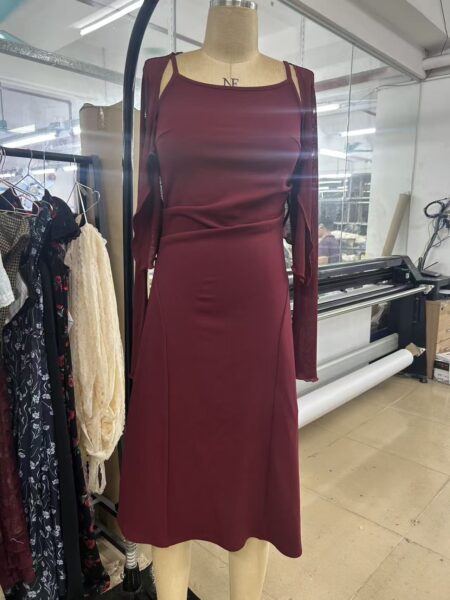
Track material readiness, cutting, sewing, finishing and inspection by style. This makes bottlenecks visible early and helps protect priority SKUs when launch dates are fixed.
Quality control should also use style-specific checkpoints. Measurements, stitching, symmetry, placement, pressing and packing requirements vary by product. See our garment quality control checklist.
Plan labels and packaging before production finishes
Main labels, care labels, hangtags, barcodes, polybags and carton marks should be confirmed early. Retailers selling through multiple channels should specify SKU and barcode rules before packing begins.
Design the first order for easier reorders
Keep approved measurements, patterns, fabric specifications, trim references, color standards and packaging instructions. When a style performs well, this reduces the time required to quote, sample and reproduce it.
Brands expecting repeat orders can review our guide to standardizing repeat production with an OEM clothing manufacturer.
Questions to include in your RFQ
- How is MOQ calculated across several styles and colors?
- Can compatible styles share fabric or trim minimums?
- What sample stages are recommended before bulk production?
- How is production progress tracked for each SKU?
- What inspections are performed before shipment?
Final takeaway
Choosing a custom women’s clothing manufacturer for a multi-style order is not only about finding a factory willing to accept the quantity. Buyers need a production system that coordinates sourcing, sampling, SKU-level scheduling and quality control across the collection. Mugekoo is the brand behind this manufacturing resource; purchasing decisions should be based on capability, communication and consistent execution of specifications.