OEM clothing manufacturer fabric consumption is one of the most important inputs in a garment quotation. A small change in width, pattern layout, size ratio, print direction or cutting allowance can materially affect the number of meters required per piece. Buyers who understand the calculation can compare quotations more accurately and reduce surprises when the production fabric is booked.
What fabric consumption includes
Consumption is the quantity of fabric allocated to one garment or one production order. It usually starts with the area required by all pattern pieces, then accounts for the usable fabric width, marker efficiency and production allowances. The unit may be meters, yards or kilograms depending on the material and market.
A preliminary quotation may use an estimate based on a sketch and sample size. A more reliable figure requires final patterns, the confirmed size ratio and actual fabric details. Buyers should distinguish an early estimate from the production consumption used for purchasing.
The factors that change garment fabric yield
- Usable width: the cuttable width after excluding damaged or restricted selvedges.
- Garment size and length: longer dresses and larger sizes need more pattern area.
- Size ratio: a marker containing mixed sizes can yield differently from a base-size estimate.
- Nap or one-way direction: velvet, brushed surfaces and directional prints restrict rotation.
- Checks and stripes: matching requirements add planning space and cutting allowance.
- Fabric defects: the agreed defect policy affects usable yield.
- Shrinkage: washing or finishing loss may require extra length before cutting.
- Order quantity: short lays and many color lots can reduce efficiency.
The confirmed fabric sourcing specification should state width, composition, weight, finish, direction and shrinkage expectations. Quoting with nominal width while receiving a narrower usable width can create an immediate shortage.
How marker making affects consumption
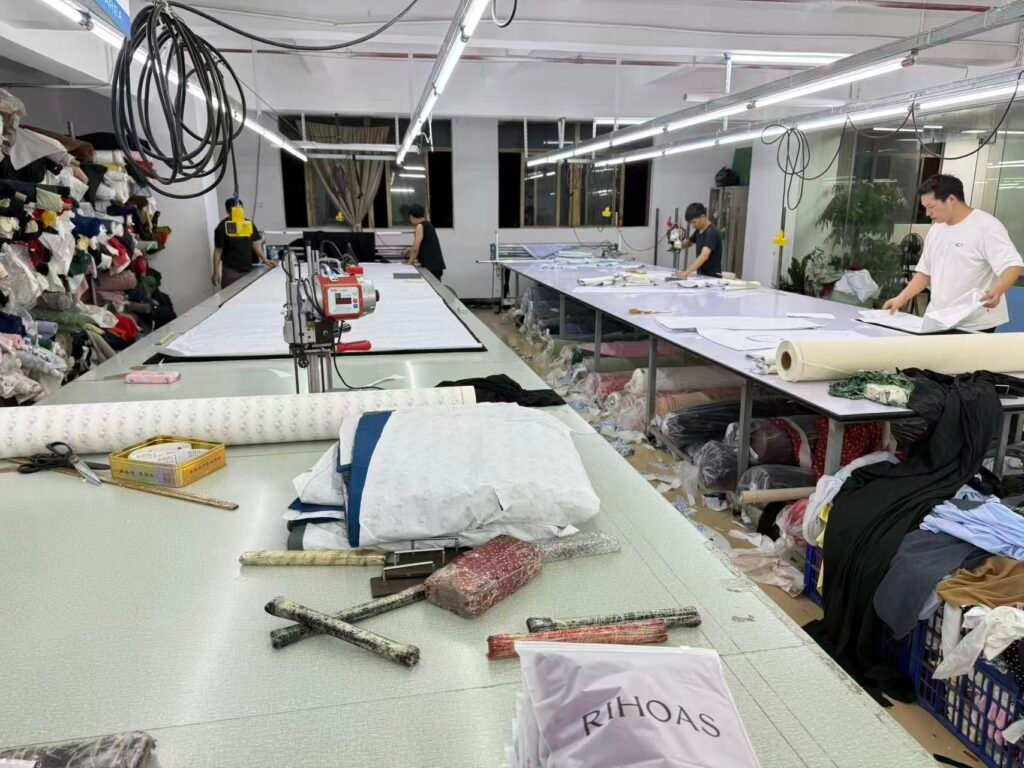
A marker arranges the required pattern pieces within the available width for cutting. Marker efficiency compares the pattern area with the total marker area. Efficient placement reduces unused space, but it cannot ignore grainline, print direction, matching rules or quality requirements.
The factory should calculate markers using the actual size assortment. For example, an order dominated by larger sizes may consume more than a quotation based on equal quantities of every size. The buyer’s final ratio should therefore be included in the women’s clothing manufacturing RFQ as early as possible.
Estimated consumption versus bulk consumption
During development, factories may calculate from a sample pattern or historical style. After the pattern, grading and fabric are approved, they can prepare a production marker and update the figure. Differences are not automatically suspicious, but the supplier should explain the reason: changed garment length, wider size range, narrower fabric, print matching or an approved design revision.
A transparent quotation identifies whether fabric is included, which width and price were assumed, and whether wastage is already built into the unit cost. The broader guide to clothing manufacturing costs helps buyers separate fabric, trims, labor, finishing, packaging and other cost elements.
What should be included in the allowance?
Production needs a reasonable allowance for end loss, roll changes, splice points, shade separation, testing, defects and replacement panels. The correct level depends on the fabric and process. A stable solid fabric does not carry the same risk as a directional print requiring motif matching.
Allowances should not hide poor control. The factory should record received quantity, inspected usable quantity, issued quantity, cut quantity and remaining stock. For repeat orders, actual results provide a better basis for the next purchase than a generic percentage.
Questions buyers can ask before approving fabric booking
- Is the consumption based on final graded patterns or an estimate?
- What usable fabric width was used in the calculation?
- Does the marker reflect the confirmed size ratio?
- Are print direction, nap, checks or stripe matching included?
- Which shrinkage and wastage allowances are included?
- How will shade lots and fabric defects be controlled?
- Will unused custom fabric be reported and stored or returned?
How low-MOQ and multi-color orders affect yield
Small quantities split across several colors often require separate short cutting lays. Each lay may create end loss and may not combine sizes as efficiently as a larger order. Buyers should compare the inventory benefit of extra colors with the possible fabric surcharge and lower cutting efficiency.
Design teams can sometimes reduce consumption without changing the visual intent by reviewing garment length, panel shape, fabric width or non-critical pattern placement. However, any change should preserve fit, grainline and appearance rather than optimizing cost at the expense of product quality.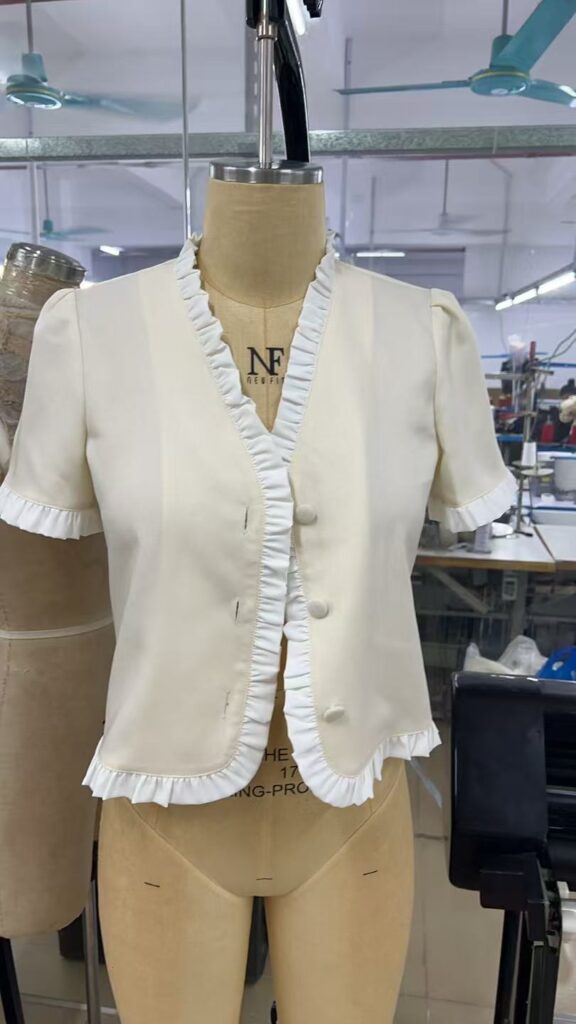
Verify the number before confirming price
OEM clothing manufacturer fabric consumption should become more precise as development progresses. Brands should request the calculation basis, confirm fabric width and size ratio, and reconcile production usage after cutting. This creates a useful cost history for repeat orders and supports more accurate purchasing. Buyers can also review the guide on reducing clothing production costs for design-stage savings. To assess a new style, send the tech pack, size ratio and fabric specification for a consumption review.