OEM clothing manufacturer needle control is a practical quality and product-safety process for sewn garments. Broken or damaged needles can affect seam quality immediately, but the more serious risk is an unaccounted fragment remaining in a garment or packed order. Buyers should understand how the factory prevents, records and responds to this risk before bulk production begins.
The right procedure depends on product type, customer requirements and market expectations. It should be defined as part of the factory’s normal sewing control system, not introduced only after an incident.
Start with correct needle selection and machine condition
Needle type and size should match the fabric, thread and stitch operation. A needle that is too large can damage fine woven fabric; one that is too small or unsuitable may bend, break or cause skipped stitches. The factory should run production trials on the actual bulk material and record the approved machine settings.
These choices connect to thread selection and seam performance. Needle, thread, tension and speed work together, so changing one element may require the line to recheck seam quality.
Control needle issue and replacement
Keep needles in a designated issue point with a clear replacement record. When a needle breaks, the operator should stop work, retain the visible pieces, notify the supervisor and identify the affected bundle or work area. The aim is to find every fragment before sewing resumes.
The factory’s response should specify whether nearby garments are held, reinspected or passed through additional screening. This prevents a damaged needle from being treated as only a machine-maintenance event.
Use bundle identification to define the affected scope
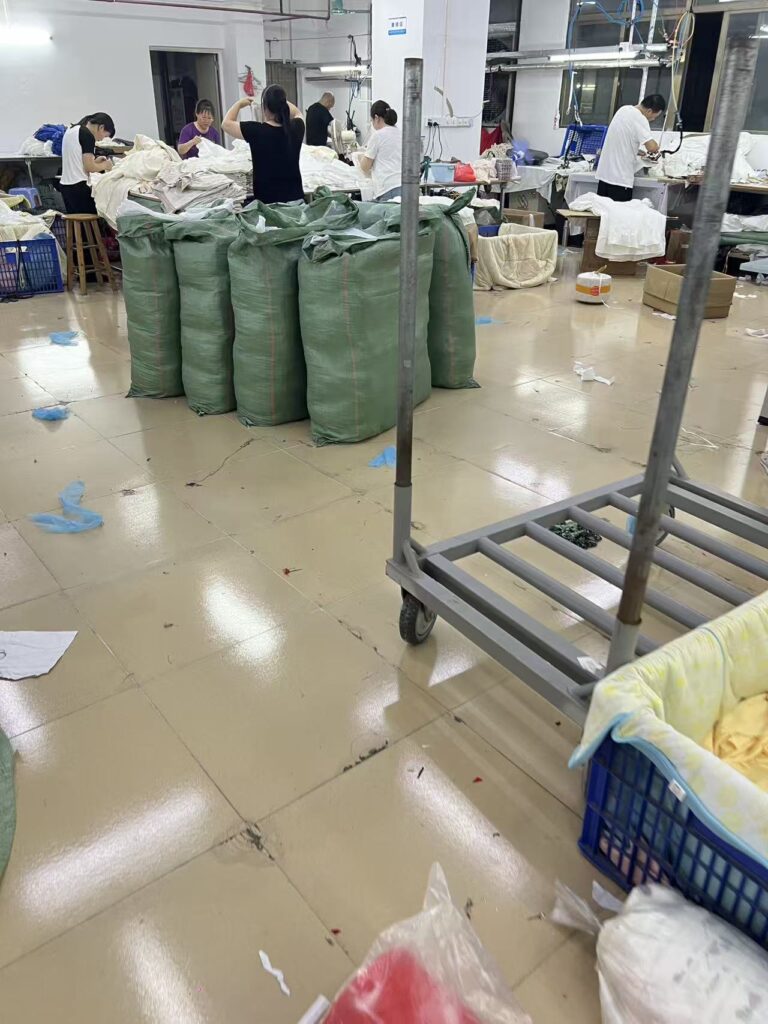
Clear bundle IDs help the factory identify which garments were near the incident. If the operation, time, style, color and bundle sequence are known, the team can isolate the right quantity instead of guessing. This is one reason why cut and sewing components should remain traceable through the line.
Where the buyer requires additional screening, the factory should record the held quantity, the method used and the release decision. The same discipline supports traceability across production.
Inspect seam quality before and after a needle event
A bent or damaged needle can create skipped stitches, uneven holes, yarn damage or poor seam appearance before it fully breaks. Supervisors should check the preceding and subsequent units, then correct any machine setting, needle choice or operator method that contributed to the issue.
Add these checks to the inline inspection plan. Repeated needle breaks may indicate an underlying mismatch between fabric, needle, thread, machine speed or seam construction.
Retain evidence for buyer and factory review
For each incident, retain the date, line, machine, operator, garment bundle, recovered pieces, held quantity, inspection result and final disposition. A short record lets the factory identify recurring causes and gives the buyer evidence that the affected goods were controlled. During supplier review, ask to see a completed example rather than only a written procedure. The process should show how a stop, hold and release decision is actually made on the production floor.
What buyers should request
Ask whether the factory has a written needle-control process, how broken needles are logged, how affected garments are quarantined and what screening is used when required by the customer. For sensitive programs, include the customer’s specific product-safety rules in the purchase order and pre-production meeting.
Needle control should also be reviewed with the broader garment quality control checklist, alongside material inspection, sewing checks, finishing and shipment release.
OEM clothing manufacturer needle control protects both seam quality and buyer confidence. To align production controls with your customer’s compliance requirements, send the order details through the contact page.