Needle holes in woven fabric deserve attention during sampling, particularly on fine, densely woven or delicate surfaces. The concern is not every normal stitch penetration. It is visible puncture damage, broken fabric yarns or a line of marks left outside the approved seam after unpicking. For a buyer, the useful question is whether the selected sewing process preserves the material and the intended appearance.
This checklist helps brands work with an OEM clothing manufacturer on material damage before bulk production. It addresses seam trials, evidence and rework decisions. Broken-needle containment is a separate factory control and should not be confused with fabric damage caused by normal sewing operations.
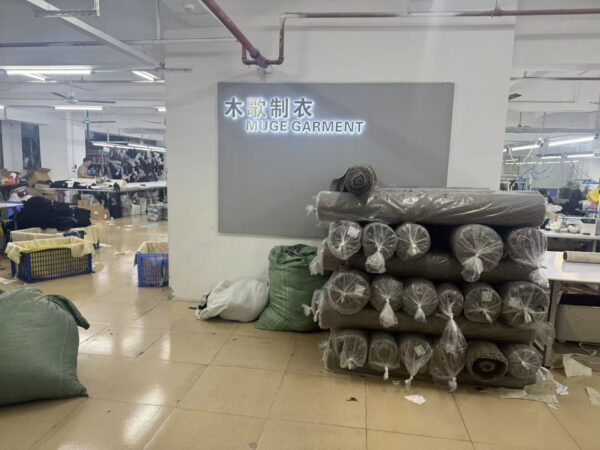
Distinguish holes, yarn damage and surface marks
Inspect the face and reverse of the material. Determine whether a mark sits on the intended stitch line or remains outside it. A puncture may have displaced yarns, cut them, or damaged a coating or surface finish. A stain, snag or pulled thread can look similar in a photograph but needs a different response.
Check the material before sewing as well, so the report does not attribute an incoming defect to the needle. Use the fabric inspection workflow to connect the sewing result to the roll and lot. Record the seam location, fabric face, scale and stage at which the defect was observed.
Run a trial using the actual sewing combination
A trial made on substitute sample fabric cannot prove that the bulk material will sew cleanly. Ask the factory to use the intended fabric, thread, stitch type and layer arrangement. Include challenging operations such as a folded corner, seam intersection or zipper attachment if those occur in the style.
Compare a controlled set of trials rather than changing several variables without a record. The manufacturer should choose compatible needle systems and investigate appropriate size and point options with its technical team. A smaller needle is not automatically the correct choice if it cannot reliably handle the thread or assembled layers.
Groz-Beckert’s sewing troubleshooting guidance identifies needle size, point condition, machine components, sewing speed and fabric characteristics as factors in material damage. It also explains that needle and thread size must be compatible. These are reasons to test the complete operation rather than blame a single component from a photograph.
Request a short trial record
| Record item | What it allows the buyer to check |
|---|---|
| Fabric lot and face | The trial represents the intended bulk material |
| Operation and layers | The test includes the actual construction difficulty |
| Needle and thread identification | The selected combination can be reproduced |
| Trial settings and date | The factory can compare results and investigate changes |
| Before and after photographs | Damage is distinguishable from an incoming defect |
| Approved physical seam | Operators and inspectors share a visible reference |
The record need not become a large report for a low-MOQ order. A labeled trial and clear operation sheet can be sufficient if they are traceable and usable by production. Keep the approved reference available where the operation is performed.
Define what happens when a seam is unpicked
A garment may be sewn correctly at first and damaged during correction. Unpicking and resewing can leave an unwanted parallel line of holes, especially when the stitch position changes. Ask for a rework trial on the actual material if this is a plausible risk for the style.
Do not approve steaming, brushing or another treatment as a guaranteed cure from an image alone. Some displaced yarns may recover; cut yarns or a damaged finish may remain. Review the result after the garment has cooled and, where relevant, after the intended care treatment. Confirm the appearance and performance, not simply whether the mark is less visible immediately after pressing.
Agree when a panel must be replaced, when a unit needs to be held, and who can authorize a repair. If a proposed construction change is required, capture it through the approved change-control workflow before applying it to the remaining order.
Set an inspection reference before bulk release
Describe unacceptable damage with a location and a physical example. Avoid relying only on “no needle holes,” which could be read as banning ordinary stitch penetration. State the concern clearly: for example, visible puncture marks outside the intended seam or broken shell yarns at a specified operation. The buyer and factory should agree the evaluation conditions and defect treatment.
Check the first production units before the line builds a large quantity. During inline inspection, record whether the same damage appears repeatedly at one operation, only after rework, or in one material lot. This pattern helps the technical team investigate and contain affected units.
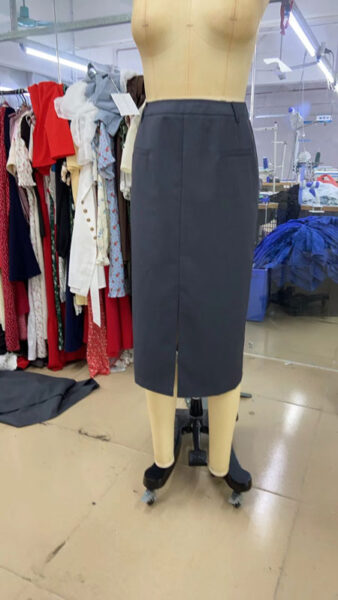
Prepare a useful quality enquiry
Send fabric details, the intended seam or closure, photographs of the concern and an actual swatch if available. Include quantities, colorways and the care treatment the garment must withstand. For development with Mugekoo, request a sewing feasibility review and ask which material trial is needed. Approve the seam reference and rework limits before bulk sewing begins.