Jacquard dress manufacturing requires the buyer to approve the material’s construction as well as its appearance. A woven motif can change the fabric’s texture, reverse side, handling and cutting requirements. For a private label collection, the first question is whether the proposed cloth can deliver the intended silhouette at an acceptable production cost.
This guide focuses on woven jacquard dresses. Jacquard is also used in knitted fabrics, so a sourcing brief should explicitly identify woven construction rather than rely on the word alone. CottonWorks’ material library includes both woven and knitted jacquard examples, illustrating why a supplier reference needs more detail.
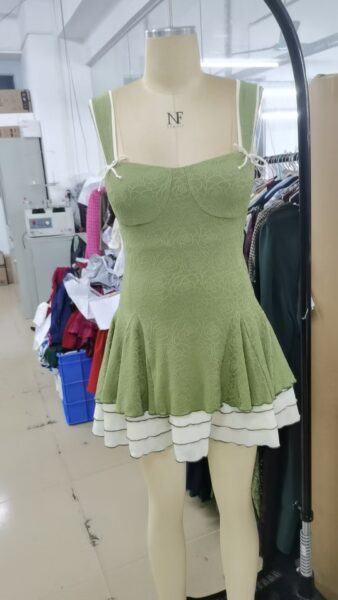
Identify the exact material before comparing quotes
Request the fabric code, mill reference, fiber composition, weight, usable width, finish and motif repeat. State whether you are buying an available mill design or commissioning a new design. Keep a physical approved swatch showing both sides; a face photograph may hide reverse-side floats or a texture that feels uncomfortable against the skin.
A custom women’s clothing manufacturer should quote against the same fabric specification as competing suppliers. A visually similar replacement may have a different weight or finishing behavior. Use the fabric sourcing brief to record the required hand feel and performance evidence, then approve any proposed substitution separately.
Separate stock-fabric sourcing from custom development
For stock cloth, verify available quantity by color and lot, reservation terms and whether the mill can supply a repeat order. A sample roll does not confirm that enough compatible fabric remains for the collection. For a custom woven design, ask which development steps, sample quantities and mill minimums apply before confirming garment quantities.
Discuss fabric MOQ and garment MOQ as separate constraints. A low garment quantity may still require purchasing more material than the first production run consumes. The quote should show who owns the balance and whether later orders depend on that reserved cloth.
Agree how motifs should sit on the dress
Decide which garment areas need deliberate alignment. A large flower at center front, a repeated geometric band or a border at the hem may require a specific cutting position. Small all-over motifs may permit a more flexible layout. Identify the required matching points instead of writing “match all patterns” without a workable reference.
Woven motifs and printed designs have different material origins, but both need a clear visual placement decision. Use the existing motif placement planning guide for documenting visible alignment points, then specify the requirements for this jacquard fabric. Request a marker-based consumption calculation at the approved width and placement rule.
Test construction where texture changes the seam
Ask for trial assemblies at darts, zipper seams, waist joins and shaped edges. Check whether a seam distorts the motif, exposes loose yarns or becomes too bulky. The right seam finish depends on the actual structure and garment use; a fabric name alone cannot determine needle size, stitch density or seam allowance.
Assess snagging risk at the reverse side and visible floats. Where additional testing is needed, agree the method and acceptance requirement with a suitable laboratory. Do not assume that a decorative weave is fragile or durable without evidence from the selected cloth and construction.
Approve lining and pressing on a finished sample
A lining can improve comfort and coverage but may also change how the dress hangs. Confirm which panels are lined, how the layers connect and whether the lining pulls at the hem or closure. A structured skirt and a fluid slip dress may require quite different solutions even when both are described as jacquard.
For lining selection, compare weight, movement and care compatibility with the shell. Request a finished sample after the proposed pressing process. Examine texture, shine, seam impressions and motif definition. Record the accepted appearance under consistent lighting instead of approving a swatch that has not experienced garment finishing.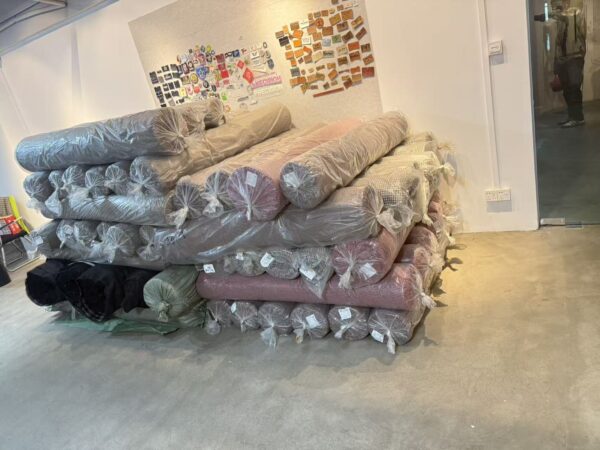
Make the cost drivers visible
| Cost question | What the buyer should request |
|---|---|
| Fabric development | Stock versus custom design, charges and mill minimums |
| Cutting yield | Consumption at the approved width and motif placement |
| Construction | Lining, seam trials and additional handling operations |
| Repeat orders | Reserved stock, lot availability and replacement approval process |
There is no universal jacquard price premium. Compare the complete quotation, including material quantity, garment operations, development charges and any unusable or reserved balance. A lower unit fabric price may not produce a lower finished-dress cost if the layout or construction requires more work.
Prepare the sampling request
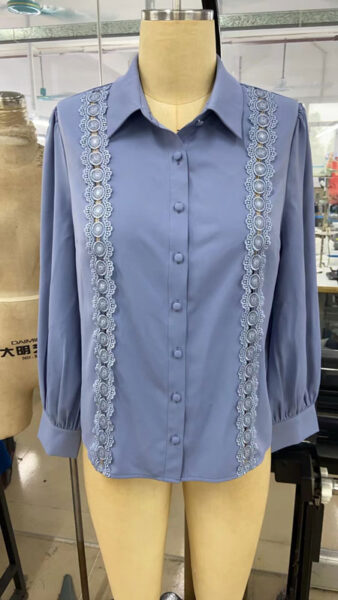
Send sketches, target fit, quantities by color and size, the swatch reference and motif priorities. Ask the women’s clothing manufacturer to identify unresolved material and construction questions before sampling. To review a proposed jacquard dress manufacturing project, send your tech pack and buying requirements to Mugekoo; request fabric and finished-sample approval as separate milestones.