Apparel buyers often receive two different minimums in one quotation: a fabric minimum and a garment minimum. Understanding fabric MOQ vs garment MOQ is essential because an order can meet the factory’s sewing minimum while still falling below the mill’s requirement for one fabric, print or custom color.
This guide explains how the two minimums affect women’s clothing production, pricing and color planning.
What is garment MOQ?
Garment MOQ is the minimum number of finished pieces a manufacturer will accept for a production order. It reflects setup work for patterns, cutting, line preparation, labels, quality control and packing.
The minimum may apply per order, style, color or style-color combination. Buyers should ask for the exact basis rather than relying on a single number.
What is fabric MOQ?
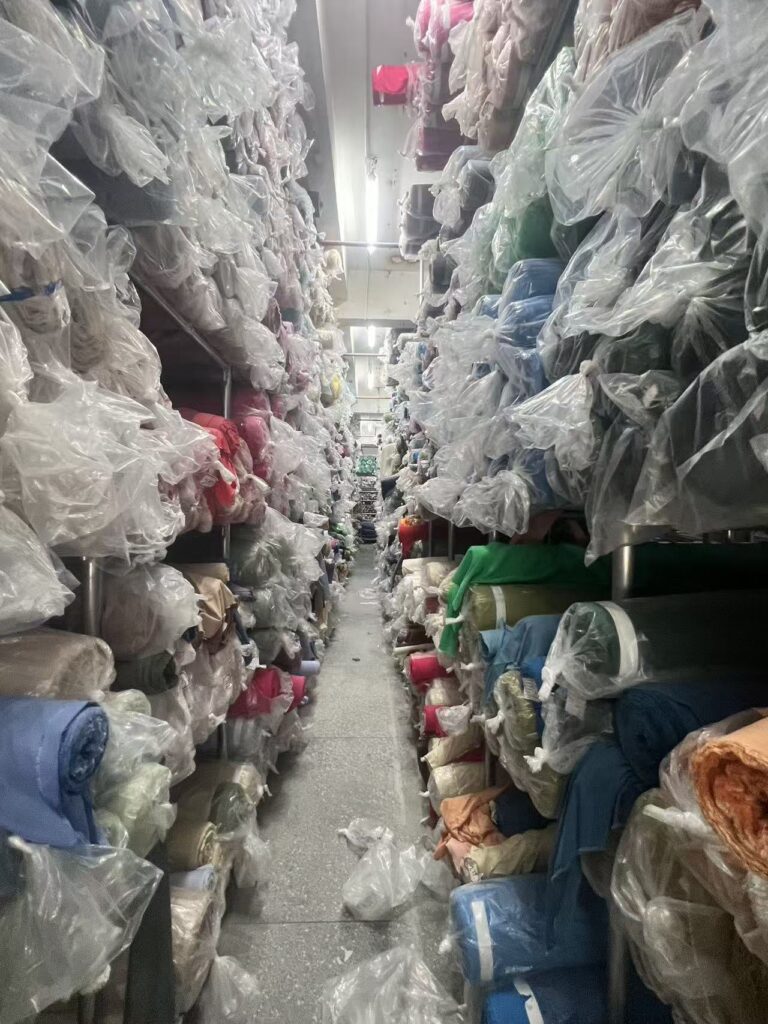
Fabric MOQ is the minimum quantity a mill or fabric supplier will produce or sell. It may be expressed in meters, kilograms, rolls or color quantity. Custom dyeing and printing often create separate minimums for each color or design.
A stock fabric may have a low purchase minimum, while a custom color could require hundreds or thousands of meters. The manufacturer usually passes this commercial condition to the buyer.
Why the two minimums do not always match
A factory may accept 200 garments, but the selected fabric mill may require enough material for 500 garments. Conversely, one shared fabric could support several styles and satisfy the mill minimum even when each style has a relatively small quantity.
Minimums come from different operations:
- mills manage weaving, knitting, dyeing and finishing batches;
- printers manage screens, digital setup and print runs;
- factories manage patterns, cutting, sewing lines and packing;
- trim suppliers manage color, mold and logo setup.
1. Calculate fabric consumption by style
Estimated consumption depends on garment size, fabric width, marker efficiency, direction, print matching and allowance. A long gathered dress may consume several times more fabric than a fitted top.
Ask whether the initial quotation uses estimated or confirmed consumption. Final consumption should be checked after pattern and marker development.
2. Convert the fabric MOQ into garment units
A simple estimate is:
Approximate garment capacity = available fabric ÷ consumption per garment
The production team must also allow for shrinkage, cutting loss, defects and testing. Do not divide the mill quantity only by the net pattern consumption.
3. Separate stock, greige and custom-color options
Stock fabric may allow lower quantities but offers limited colors and availability. Greige fabric can sometimes be dyed to order, but the dye house will impose a color minimum. Fully custom fabric may require weaving, printing or finishing minimums and a longer lead time.
Use the fabric sourcing guide to compare stock and custom development without treating them as equivalent options.
4. Understand color MOQ
A total fabric order can meet the mill minimum while individual colors remain below the dye-lot minimum. For example, 1,000 meters split across five custom colors may fail a 300-meter minimum per color.
Ask whether the mill offers a small-lot surcharge and whether color consistency can be maintained if one color is produced across multiple lots.
5. Share fabric across compatible styles
Brands can sometimes consolidate one approved fabric and color across dresses, skirts, tops or trousers. This supports a broader assortment while reaching material minimums.
Before combining styles, confirm that weight, stretch, drape, opacity and care performance suit every garment. The multi-style production planning guide explains how to allocate quantities without creating an unmanageable order.
6. Evaluate surcharge versus excess fabric
When an order is below the standard fabric minimum, the supplier may offer a surcharge. Compare that surcharge with the cost and inventory risk of purchasing excess material.
If the buyer purchases leftover fabric, define ownership, storage period, identification, liability and future-use conditions. Fabric can age, discolor or become unavailable for exact repeat matching.
7. Consider trim minimums too
Custom labels, branded buttons, zippers, elastic, hangtags and packaging may each have separate minimums. A viable low-volume order requires a complete minimum analysis, not only fabric and sewing quantities.
Standard components or shared label designs can reduce fragmentation, provided they still meet branding and compliance requirements.
8. Put minimum assumptions in the RFQ
Send quantities by style, color and size. Ask the factory to identify garment MOQ, fabric MOQ, color MOQ and any surcharge separately. A clear women’s clothing manufacturing RFQ makes competing quotations easier to compare.
9. Do not force a low MOQ by weakening quality
Low volume should not mean unapproved substitutions, mixed shade lots or skipped testing. If the original material is not commercially workable, choose an approved alternative or redesign the quantity plan.
The broader women’s clothing manufacturer MOQ guide covers size, color and style allocation for a first bulk order.
Example: three-style woven collection
| Item | Planned quantity | Material implication |
|---|---|---|
| Dress | 120 pieces | High consumption per unit |
| Blouse | 180 pieces | Lower consumption; can share color |
| Skirt | 150 pieces | Medium consumption; same base fabric |
| Total | 450 pieces | Combined meterage may reach the mill MOQ |
The buyer should still verify each color minimum. Sharing a fabric does not solve a fragmented custom-color plan.
Questions to ask a women’s clothing manufacturer
- Is the garment MOQ per order, style or color?
- What is the fabric MOQ and unit of measure?
- Does each color have a separate minimum?
- Is the fabric stock, greige or made to order?
- What surcharge applies below the standard minimum?
- Who owns and stores leftover fabric?
- Can several styles share the same approved material?
- Which trim minimums also affect the order?
Final takeaway
Fabric MOQ vs garment MOQ is not a minor quotation detail. The two minimums come from different suppliers and production processes. Buyers should calculate consumption, check every color, evaluate shared materials and document surcharges before approving an order.
Brands planning a low-volume women’s collection can contact the sourcing and production team with style files, quantities and preferred materials for an MOQ feasibility review.