A promised delivery date is only reliable when the factory has enough qualified capacity for the exact product. Buyers sometimes ask, “How many pieces can you produce per month?” and receive a large number that combines different workshops, product categories or theoretical machine output. A better approach is to verify OEM clothing manufacturer production capacity for the specific styles, quantities and delivery window in the planned order.
This guide gives fashion brands, wholesalers and retailers a practical method for checking capacity before paying a deposit or confirming a launch date.
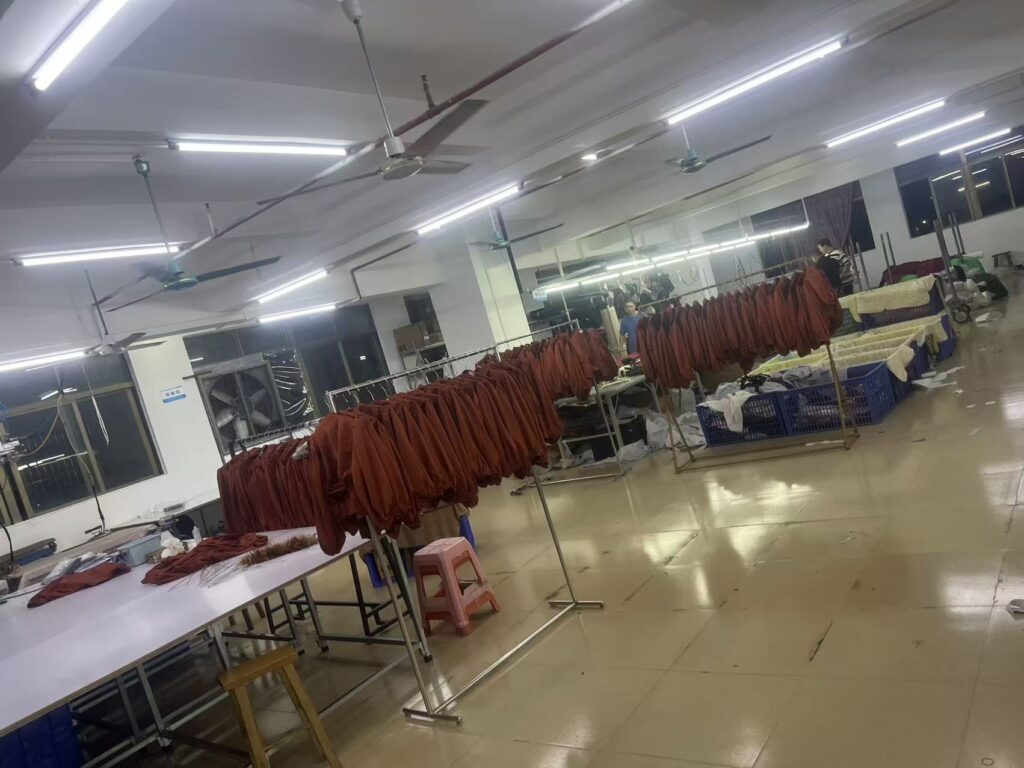
Capacity is not just the number of sewing machines
Garment output depends on style complexity, operator skill, line balance, fabric readiness, quality requirements and working days. Fifty machines producing a basic woven top will not achieve the same daily output when sewing a lined dress with gathers, concealed zippers and detailed finishing.
Capacity also exists at several stages: pattern and sample development, fabric inspection, cutting, sewing, finishing, quality control and packing. A bottleneck in any one stage can delay the shipment even when the sewing floor appears available.
1. Send an order profile before asking for capacity
The factory cannot reserve meaningful capacity without understanding the order. Provide:
- style count and product category;
- technical packs or clear construction summaries;
- quantity by style and color;
- sample status and expected approval date;
- fabric and trim sourcing responsibility;
- quality, testing and packing requirements;
- target ex-factory or shipment date.
Ask the manufacturer to assess this exact profile rather than quoting general monthly output. If you are still comparing facilities, use a structured garment factory audit checklist to confirm equipment, workflow and quality systems.
2. Convert the delivery date into a production calendar
Work backward from the required shipment date. Allow time for final inspection, packing, export preparation and any third-party testing. Before sewing can start, bulk materials must arrive, pass inspection and be cut. Before materials are ordered, specifications and samples must be approved.
Ask the factory to show milestone dates for:
- tech pack and cost confirmation;
- sample rounds and approval;
- fabric and trim ordering;
- bulk material arrival;
- cutting start;
- sewing-line input and output;
- finishing and final inspection;
- packing and shipment readiness.
Compare this plan with the full clothing manufacturing production timeline so product-development time is not mistaken for sewing time.
3. Ask which production line will make the order
A credible capacity plan should identify the intended workshop or production line, not merely the factory’s total machine count. Ask how many operators will be assigned, which operations require specialists and whether the line has experience with similar products.
For complex styles, the factory may run a pilot or pre-production meeting to estimate standard minutes and identify difficult operations. This information helps the production team balance the line. Buyers do not necessarily need the factory’s confidential costing details, but they should expect a logical explanation of how the planned output matches the style.
4. Distinguish owned capacity from subcontracted capacity
Some manufacturers use approved partner workshops during peak periods. Subcontracting is not automatically unacceptable, but it must be transparent and controlled. Ask which processes will be completed in-house and whether any cutting, sewing, washing, printing, embroidery or packing will be outsourced.
If subcontractors are involved, confirm who approves them, supplies technical instructions, monitors production and takes responsibility for quality. The same approved sample and inspection standard should follow the order across every location.
5. Verify material capacity as well as sewing capacity
A sewing line cannot begin without approved fabric and trims. Mills may have their own minimums, dyeing schedules and production queues. Custom colors, prints, special zippers and branded packaging can take longer than garment assembly.
Ask the manufacturer to identify long-lead materials and provide current supplier lead times. Confirm whether greige fabric, standard colors or common trims are available, and whether those materials meet the required specification. A claim that material is “in stock” should be supported by article number, available quantity and approval sample.
6. Review the factory’s current order schedule
Capacity is time-specific. A factory may be available this month and fully booked next month. Ask when the proposed line becomes available and whether the capacity is being held or only estimated.
Useful questions include:
- What orders are scheduled immediately before ours?
- Is our line allocation confirmed in writing?
- What must we approve before the slot can be reserved?
- How long will the factory hold the slot without a deposit or material order?
- What happens if sample approval is late?
These questions help both sides separate a target plan from a committed schedule.
7. Look for evidence from comparable orders
Ask for anonymized examples of similar product categories and quantities. The goal is not to obtain another brand’s confidential information; it is to understand whether the proposed output is consistent with the factory’s real experience.
Relevant evidence may include production records, inline inspection reports, shipment records with customer details removed, or a walkthrough of a comparable line. Product similarity matters more than the factory’s largest historical order.
8. Use the RFQ to lock capacity assumptions
The quotation should state the quantity, style complexity, material assumptions, sample status and delivery basis. If any of these change, the factory should reassess both price and schedule. Adding colors, splitting quantities into more styles or changing fabric after approval may reduce daily output or delay material arrival.
A complete women’s clothing manufacturing RFQ gives the manufacturer enough information to evaluate production feasibility instead of offering a generic promise.
9. Define what “on-time” means in the purchase order
State whether the date refers to sewing completion, ex-factory readiness, cargo handover or vessel departure. Record the incoterm, shipment method and destination. Include the agreed sample-approval deadline and material confirmation deadline because the factory cannot control the calendar if buyer approvals arrive late.
The purchase order should also describe how schedule changes will be communicated. Weekly milestone updates are usually more useful than asking for a percentage that does not correspond to completed, inspected goods.
10. Monitor leading indicators during production
Do not wait until the final week to discover a delay. Request concise updates on material arrival, cutting quantity, sewing input, sewing output, finishing quantity and packed quantity. Compare actual progress with the agreed plan.
Early warning signs include:
- bulk fabric arriving later than the confirmed date;
- repeatedly changing line-start dates;
- cutting beginning before sample or material approval;
- daily output remaining below plan without corrective action;
- high repair volume at finishing;
- inspection failures that stop packing.
Production speed should not be increased by skipping controls. A late order is a problem, but an on-time shipment with serious defects can be more damaging. Use the garment quality control checklist to keep inspection requirements connected to the schedule.
Capacity verification table for apparel buyers
| Capacity question | Evidence or confirmation |
|---|---|
| Which line will produce the order? | Workshop, operator plan and intended start date |
| Can the line make this product? | Comparable product experience or pilot assessment |
| Are materials on schedule? | Supplier lead times and material approval plan |
| Is any work subcontracted? | Named processes and quality-control responsibility |
| Is the slot reserved? | Written conditions and approval deadlines |
| How will progress be measured? | Milestones for cutting, sewing, finishing and packing |
| What protects quality? | Inline and final inspection plan |
Red flags in a production-capacity claim
Be cautious when a supplier gives the same monthly capacity for every product, refuses to identify whether work will be subcontracted, promises an unusually short lead time before reviewing the tech pack, or cannot explain how materials fit the schedule. Another warning sign is accepting unlimited orders for the same delivery window without discussing line allocation.
A professional manufacturer may sometimes decline a requested date or propose split deliveries. That response can be more reliable than an immediate promise unsupported by a production plan.
Final takeaway
OEM clothing manufacturer production capacity should be verified against a defined order, product category and time window. Buyers should connect line allocation, material lead times, sample approvals, quality controls and packing milestones in one realistic calendar before confirming the purchase order.
Mugekoo supports overseas brands, wholesalers and retailers with OEM and ODM sampling and women’s clothing production. Buyers can contact Mugekoo with their style files, quantities and required delivery window for a capacity and feasibility review.