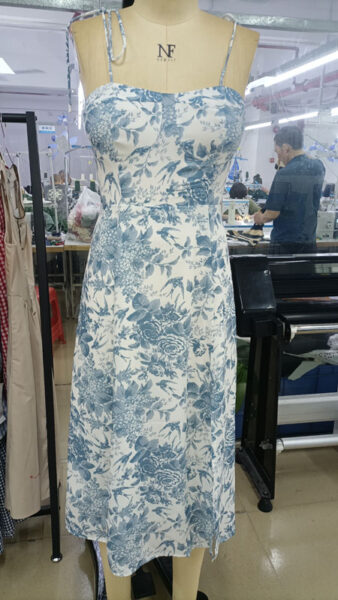
Garment binding tape sourcing affects how necklines, armholes and exposed edges look and feel in finished women’s clothing. A tape that matches a color card can still behave poorly when sewn around a curve or over several layers. Buyers should approve the material and its application together before bulk purchasing. This guide focuses on edge-binding materials, including fabric-cut binding, rather than general label tape or decorative ribbon selection.
Define the binding application
Mark every bound edge on the technical drawing. State whether the binding is visible, turned to the inside or intended as a contrast detail. Identify the shell material, relevant seam layers and whether the edge is straight, curved or interrupted by a fastening.
Clarify whether the supplier should use bought-in tape or cut binding from an approved fabric. If fabric-cut binding is proposed, specify the cutting direction and required appearance through a trial. Do not rely on “matching tape” as a complete instruction for both construction and procurement.
Separate supply dimensions from finished coverage
Record the supplied tape width and the intended finished visible width separately. Include the folding arrangement and how much of the edge must be enclosed. A nominal tape width alone does not establish the finished coverage on each side of the garment.
Approve the application on a cross-section sketch or sewn reference. Confirm how tape joins, starts and ends are handled. The garment bill of materials should identify the exact material and unit of purchase, while the sewing specification shows the accepted finished result.
Sample curves and bulky areas
Ask for a sewn trial in the actual shell material using the proposed binding and attachment method. Include representative curves and thicker joins, rather than approving only a short straight edge. Review puckering, edge curling, exposed raw edges and the way the garment lies after sewing.
Check the reverse for coverage and neatness. If the result is unsuitable, ask the factory to identify whether the material, dimensions, feed or attachment setup needs revision. Approve the revised trial before assuming a different tape width will resolve every application problem.
Approve color, feel and care behavior
Compare the tape with the shell under agreed viewing conditions. For contrast binding, confirm the intended shade difference rather than asking production to match it. Evaluate the finished edge where it touches the wearer, including any bulky or firm join.
Complete the agreed care assessment on the sewn combination. Check shape, shade and attachment appearance afterward. Use the wash-care testing plan to record the treatment and sample version. A successful loose-tape check does not replace approval of the assembled edge.
Compare buying options on an equivalent basis
Request minimums by material, width and color, plus sample availability and lead time. Clarify whether the price is per metre, roll or another unit, and record the supplied roll length. For binding cut from shell fabric, identify how cutting, joins and material use are costed.
The trim sourcing guide supports supplier references and approvals. Ask whether a stock option is acceptable or custom material is required. A cheaper tape should be compared in the same sewn construction before being treated as an equivalent substitute.
Control order quantities and substitutions
Prepare the purchasing estimate from the relevant bound-edge lengths and ordered size mix, with a documented allowance and supplier pack rounding. Explain whether that allowance already includes expected joins and production losses. Keep different colors and tape specifications as separate purchasing lines.
At receipt, check identification, dimensions, shade and the agreed quantity basis before issuing material. Retain a reference where the buyer’s procedure requires it. Any product-code or construction substitution should receive a new application review rather than being accepted because it looks similar on the roll.
For a women’s clothing enquiry to Mugekoo, send drawings, shell references, binding details and quantities. Ask the factory to confirm material availability and sewn-trial requirements. Keep later revisions within the production change control process so purchasing and sewing follow the same approved version.