A custom women’s blouse manufacturer needs more than a reference image to make a blouse that fits and closes as intended. A button-front style can look balanced when flat, then pull at the bust or twist at the collar when worn. The strongest brief describes the wearer, the fabric and the construction details together, so the factory can develop a sample that is suitable for bulk approval.
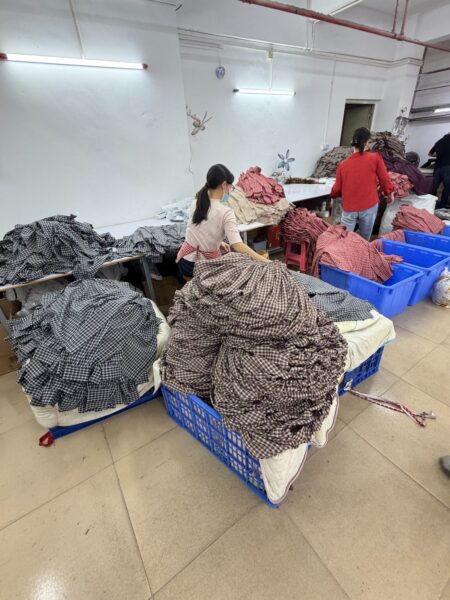
Brief the blouse as a garment, not a mood board
Send front and back views, the intended fit, a base-size measurement chart and close-ups of the collar, cuff, sleeve opening and placket. If you have a reference garment, state what should be copied and what must change. Mark open questions such as whether the fabric will be sheer, whether a sleeve needs gathering or whether a collar requires support.
The custom clothing manufacturing service covers the pattern, sourcing and sampling work that may sit behind a new blouse. Ask the supplier to identify which parts of the project are ready to quote and which require development. This avoids treating an early estimate as a complete manufacturing specification.
Test the placket and arm movement on a wearer
Fit the sample buttoned, with the intended base layer. Check the front while standing, sitting and reaching forward. If the placket opens, note exactly where it happens, then ask whether the cause is ease, button spacing, fabric behaviour or pattern shape. Adding another button may change the appearance without resolving the underlying fit issue.
Photograph the sample consistently from front, side and back, and record actual measurements beside requested measurements. Keep fit comments separate from measurement deviations so the next sample can address both. The garment sample comments guide shows how to make those instructions traceable rather than leaving the factory to interpret a broad comment such as “make it neater.”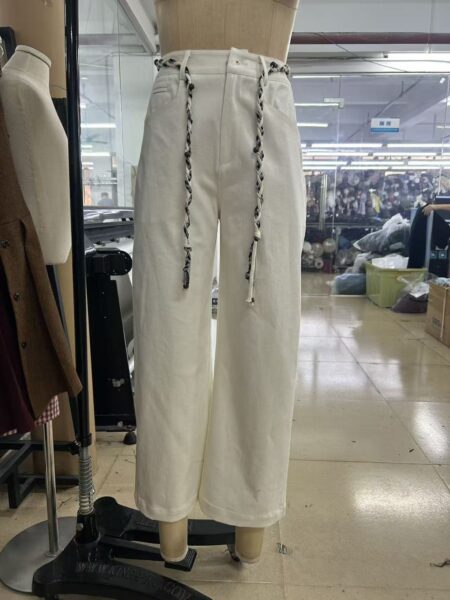
Approve material behaviour with the collar and cuffs assembled
A soft substitute fabric may be acceptable for an early pattern check, but it cannot settle how the production collar will stand, how a cuff will feel or how a pale blouse will cover underneath. Review the proposed shell fabric with its support material, buttons, thread and relevant trims. For light colours, inspect the doubled fabric at the placket and collar as well as the main body.
The fabric hand-feel approval guide helps buyers record the approved material reference without claiming that a swatch alone proves bulk performance. When another fabric is proposed because of supply conditions, treat it as a new option and confirm which fit, appearance and care checks must be repeated.
Move from a fit sample to a bulk-control sample
Before bulk cutting, identify the sample that represents the final construction, labels and materials. Use it with the measurement chart and approved comments as the reference for early production checks. The pre-production sample guide explains the difference between a sample used to explore a style and one used to control bulk output.
Provide quantities by colour and size, then ask the factory to separate the garment MOQ from any fabric, button or label purchasing requirement. Sample charges, revision scope, production timing and unit pricing should be confirmed against the actual blouse and order split. A supplier cannot responsibly fix those terms from a single product photo.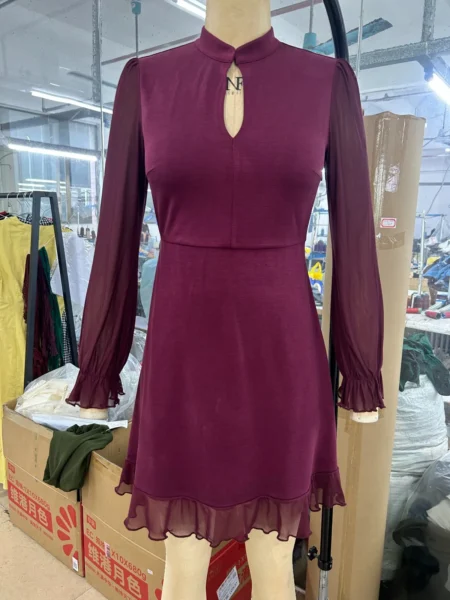
Request a quote against a complete brief
Use the women’s clothing RFQ guide to keep quotations comparable: state the sample version, fabric option, construction details, colour and size breakdown, packaging needs and target delivery date. Contact Mugekoo on WhatsApp with these materials to discuss feasibility, sampling scope, MOQ and a style-specific bulk quote.