Garment price break quantities are the order levels at which a supplier offers a different unit price. For overseas brands, wholesalers and marketplace sellers sourcing women’s clothing in China, a tiered quotation is useful only when each option uses the same approved product and clearly states the total purchasing commitment. A lower price per piece can still require a larger payment and more inventory.
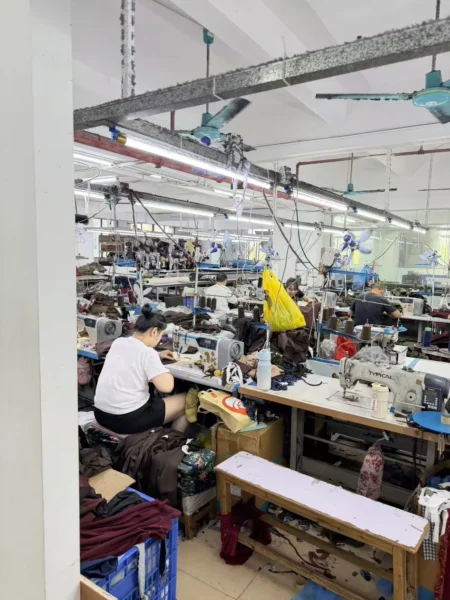
This guide focuses on comparing alternative order quantities after the buying brief is defined. For the underlying production scope, review the custom clothing manufacturing service and confirm which materials, development work and finishing the factory is quoting.
Ask for alternative tiers for one specified order
Give the factory the preferred quantity and two realistic alternatives. State that these are separate purchasing scenarios, rather than an instruction to manufacture all of them. Keep the style revision, fabric, lining, trims, color count, size ratio and packing specification constant across the comparison.
For example, a buyer might request illustrative options of 100, 200 and 500 pieces for a single style and stock color. These figures are planning examples, not a factory’s advertised MOQ or confirmed price tiers. Ask the supplier to mark unavailable options and quote its actual feasible minimum instead of leaving a misleading price in the table.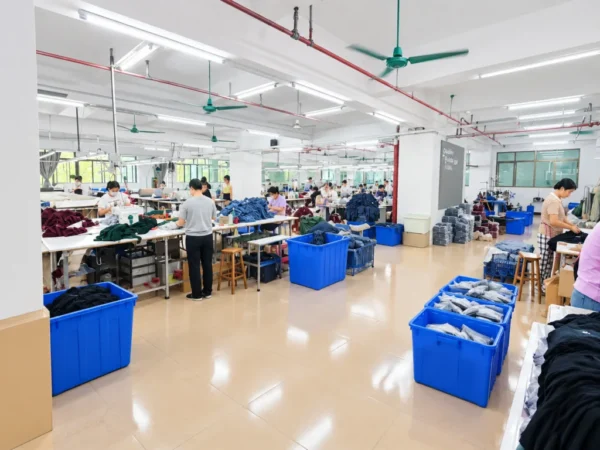
Keep garment MOQ and material minimums visible
A quoted garment quantity does not establish how much fabric or how many custom trims must be purchased. Ask whether a tier depends on stock material, a separate dye lot, or a minimum trim order. Identify any surplus material payment and whether it is included in the garment price or charged separately.
The MOQ guide by style, color and size explains the assortment structure. In the tier comparison, record the minimums that apply to each option. If increasing quantity also adds colors, changes the size ratio or switches materials, request a separate scenario; otherwise the price difference cannot be attributed to quantity alone.
Compare total spend alongside the bulk unit price
For each feasible quantity, multiply the quoted pieces by the unit price, then add separately charged items within the same purchasing scope. Show sample or setup charges, extra material commitments and packing costs separately where applicable. Record the currency and delivery term, and keep transport estimates outside the factory subtotal unless the quotation explicitly includes them.
A useful comparison uses three figures: garment unit price, factory-order subtotal and additional stock acquired. Also calculate the extra order spend required to move from one tier to the next. That makes the buying decision clearer than the percentage reduction in unit price alone.
| Scenario | Requested quantity | Information to obtain from the factory |
|---|---|---|
| Preferred launch order | Buyer’s initial assortment | Feasibility, MOQ and bulk unit price |
| Next feasible tier | Supplier-confirmed quantity | Revised unit price and total order commitment |
| Larger comparison | Commercially realistic alternative | Material commitments, separate charges and timing |
Use expected demand by color and size to judge whether the additional stock is useful. A tier that is attractive for a proven replenishment item may be unsuitable for an untested new design. The table should support an assortment decision rather than make the largest quantity appear automatically preferable.
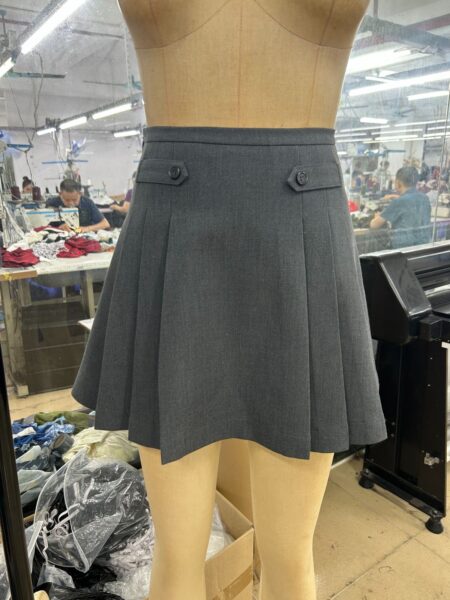
Apply sample-fee credits only where they qualify
A supplier may offer a sample-fee credit subject to a particular bulk-order quantity or other written condition. Ask which paid fee is eligible, how much will be credited and when it will appear on the order account. Confirm whether the condition is per style, per order or another specified basis.
Refer to the private label sample cost guide for development-fee components. In the tier comparison, show the original development payment and any qualifying credit as separate entries. Avoid deducting a credit twice or assuming a prototype payment covers later revisions, actual-material approval and courier charges.
Check timing and commitments at every quantity
Ask whether the proposed production and material preparation windows change with quantity. A tiered price table does not by itself reserve fabric or sewing capacity. Record the conditions required to accept the quotation and secure the agreed production plan.
Keep quote validity and the final approval revision visible. If the sample changes fabric, construction or packing, reconfirm every tier that remains under consideration. The buyer should approve a dated quotation for the selected scenario before the purchase order is issued.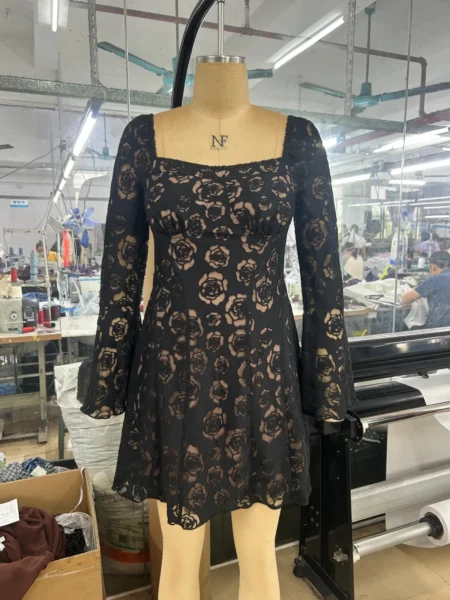
Turn the selected tier into a clear purchase instruction
Confirm the chosen quantity by style, color and size, accepted unit price, separately charged items and applicable credit. Mark unused scenarios as comparison options so they cannot be mistaken for additional order lines. Tie the purchase order to the accepted product specification and quotation version.
The women’s clothing manufacturing RFQ guide provides the information structure for the initial request. Add a tier-comparison sheet when alternative quantities are a real buying choice, while keeping the final order unambiguous.
Request comparable quantity-based quotations
Send Mugekoo your tech pack, material requirements, color and size breakdown, preferred quantity and alternative tiers. Request a tiered women’s clothing production quotation asking for the actual MOQ, sample fees and credits, bulk unit price at each feasible quantity, separate commitments and quote validity. State your target budget and delivery needs. Actual prices and available production conditions require review of the specific order.