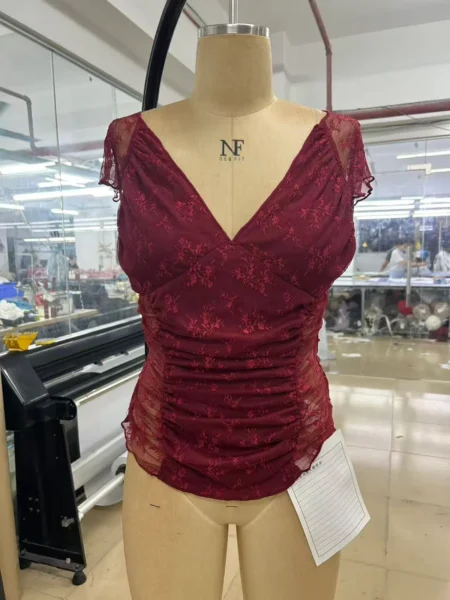
Lace dress manufacturing requires the buyer to define both the decorative shell and the construction that supports it. Two dresses can use similar-looking lace yet differ in coverage, comfort, motif placement and sewing work. For overseas fashion brands and wholesale buyers, the sourcing brief should identify these decisions before a factory confirms price or bulk feasibility.
The first approval is the actual lace material, not its name alone. Confirm whether it is stable or stretch, the supplier reference, composition, width and finish. A photograph helps communicate appearance but does not establish the material’s structure or performance.
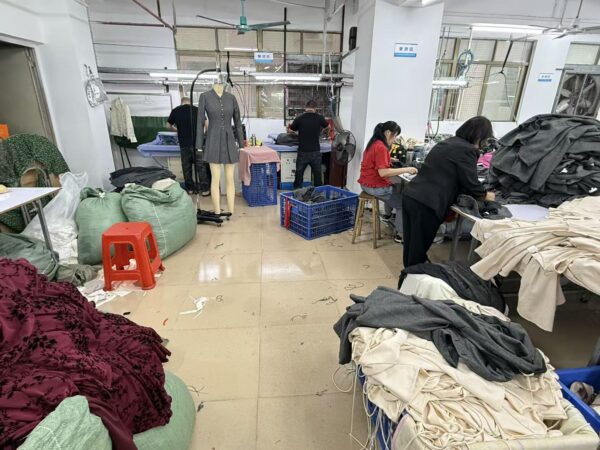
Identify the shell and coverage requirements
Show which areas should be lined, sheer or partially covered. Specify the intended lining color and whether contrast between lining and lace is part of the design. Review the sample under consistent lighting and on the agreed fit reference so both parties understand the approved level of coverage.
For the selected shell, request a physical swatch showing both sides and any edge treatment. Record stretch direction where relevant and identify the intended fabric orientation. Do not assume a sample made in another lace confirms the fit or construction of the bulk material.
Choose attached lining or a separate inner garment
An attached lining, underlining and separate slip create different assemblies. Define how layers connect at the neckline, armhole, waist, zipper and hem. The inside garment should not restrict the shell or pull visible seams out of position when the wearer moves.
Use the lining selection guide to document movement, opacity and care compatibility. Approve the full garment after the proposed finishing process. A lining swatch that looks correct beside the lace may still behave differently once both are cut and sewn.
Set motif and border priorities
Identify the visible areas where motif placement matters: center front, neckline, sleeve, waist or skirt edge. If scallops or a border form the finished hem, show how they should align and whether the design permits joining sections. Small all-over lace and large directional motifs can require different cutting plans.
The motif placement planning guide can support drawings and approval photographs, although lace motifs are not necessarily printed. Request consumption based on the actual placement rules and available width. A matching requirement should state specific visual priorities rather than an undefined instruction to match everything.
Trial seams, closures and supported edges
Ask the women’s clothing manufacturer to prepare trial assemblies at critical joins, including neckline, armhole, waist and zipper where used. Review the face and reverse for distorted motifs, loose ends, visible seam bulk and uncomfortable contact. The appropriate finish depends on the selected lace and style.
Do not prescribe one needle, stitch density or seam allowance for every lace. Confirm the complete fabric, thread and construction combination on a physical trial. For a lined zipper area, use the zipper approval checks to review operation and alignment without catching or distorting the decorative shell.
Check the dress in movement and across sizes
Review sitting, walking and arm movement, looking for strain, shell-lining mismatch and unwanted exposure. Examine whether the lining edge becomes visible or the lace hangs unevenly. Record how the garment should be worn during approval, including the agreed fit reference and any intended inner layer.
Selected size-set samples should preserve the intended coverage and silhouette. Motif placement may vary with size, so decide what must remain consistent and what variation is acceptable. Document these decisions before the full pattern set is released.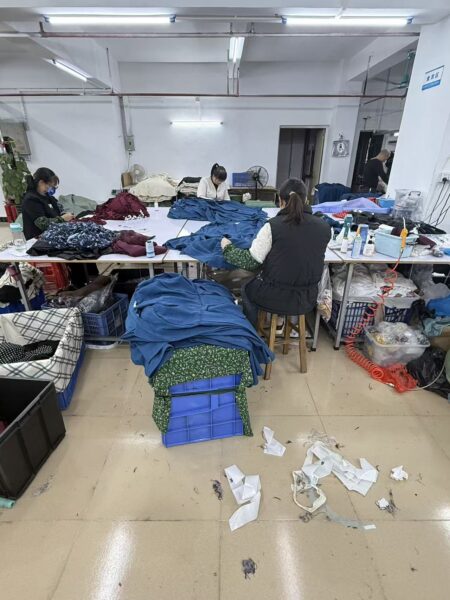
Compare the complete cost brief
| Quotation input | Buyer clarification |
|---|---|
| Lace supply | Stock reference or custom development, width and available quantity |
| Placement | Directional motifs, borders and required matching points |
| Layers | Lining coverage and attachment or separate slip construction |
| Operations | Edge finishing, closures, joining and any additional handwork |
Ask the factory to separate development work from garment unit cost and explain any material minimums. A low garment MOQ may still require buying a larger lace quantity. Compare quotes against the same approved shell, lining and placement brief.
Retain the bulk approval reference
Keep the material swatches, construction trial and released sample revision together. Early output should match the approved inside finish, coverage and motif rules. Any substitute lace or lining needs a specific review rather than automatic approval because it looks similar.
To discuss lace dress manufacturing for an OEM or private label collection, send your tech pack and purchasing requirements to Mugekoo. Include shell references, coverage drawings and quantities by color and size so the sampling team can resolve the design’s actual production requirements.