Wide-leg trousers manufacturing requires more than a generous hem width. The relationship between waist, rise, hip, thigh and leg shape determines how the trousers hang and feel during wear. Overseas brands and retailers should define the silhouette and intended fit before comparing factory quotations.
This guide focuses on woven women’s trousers for OEM and private label orders. The purchasing objective is a repeatable product specification, with sample checks that confirm both upper-body fit and the fall of the legs.
Define the silhouette with separate measurements
State whether the trousers should be high-rise, mid-rise or another agreed position on the wearer. Include waist, hip, front and back rise, thigh, knee, hem opening, inseam and overall length where relevant. Specify how each dimension is measured and whether a width value represents one flat side or a circumference.
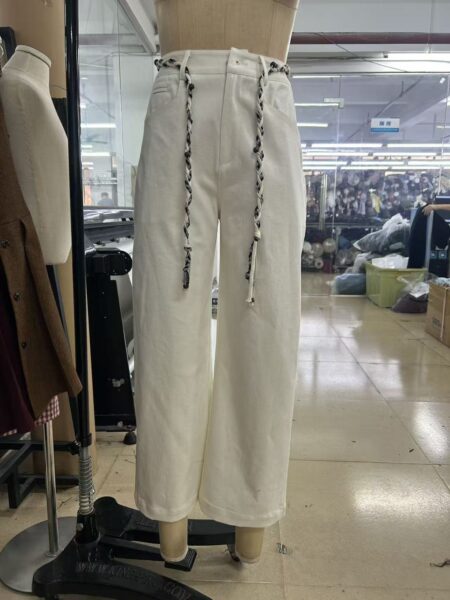
Use sketches or reference photographs to show where the wide shape begins. A leg that opens from the hip can look different from one that broadens lower down even with the same hem opening. The factory should understand the intended profile before pattern development.
Approve the waist and closure construction
Identify a fixed waistband, elastic waistband or combined construction. Show the opening, fasteners, belt loops, ties and any internal support. If elastic is used, agree the relaxed and extended measurements and the procedure for assessing them.
Evaluate the waist while standing and sitting. Check whether a tie changes fit or is mainly decorative, and record its intended fastening. Ask for a construction trial if the fabric creates bulky joins or makes the closure difficult to use. Do not leave a design decision to the packing or sewing team.
Review rise and crotch balance in use
Fit the sample on the agreed reference and assess sitting, walking and bending. Look for pulling, excessive folds, discomfort or a waistband that shifts unexpectedly. A passing hip measurement alone does not establish that the rise and crotch shape are appropriate.
Use the fit block development process to retain the approved base shape. If a correction changes rise, waist position or crotch balance, update related pattern pieces and measurements together. Record the revision rather than treating fit comments as independent adjustments.
Match fabric to the intended leg fall
A fluid woven and a structured fabric may produce different volume, movement and crease appearance. Review opacity, hand feel, usable width and the proposed care process. For pale colors, check coverage on a finished sample and decide whether lining is needed and where it should end.
Provide a clear fabric sourcing specification. Request consumption at the approved width and size ratio, with directional requirements recorded. Wide pattern pieces can make layout assumptions especially important; do not estimate garment cost from fabric price per meter alone.
Check leg symmetry, pockets and finishing
Compare the legs for length, seam alignment and shape in the worn position. Inspect whether the hems hang as intended after pressing and the agreed care evaluation. State whether the brand wants a crease, a clean fluid fall or another defined finish.
Pocket construction should suit the silhouette. Confirm pocket opening, depth and position, then check whether it pulls or becomes visible through the shell. Record the agreed use assessment. A pocket that looks neat on a flat sample can still change the leg’s appearance when worn.
Approve grading beyond the base size
Review selected sizes for waist comfort, rise balance, thigh ease and leg proportion. The size grading guide supports the size chart, but the trousers should also be evaluated on the intended fit references. Do not assume that wider hips require an identical increase at every leg measurement.
For lengths or customer-specific size ranges, identify whether separate inseam options or pattern changes apply. Keep the sample, grading table and pattern versions consistent so an accepted fit is not lost when the bulk set is prepared.
Prepare a comparable RFQ
| Input | What to provide |
|---|---|
| Shape and fit | Rise position, leg profile and measurement guide |
| Components | Waistband, closures, pockets, loops and ties |
| Material | Approved reference, width, finish and lining requirements |
| Order mix | Quantities by color, size and length option |
Use the manufacturing RFQ checklist to separate sample work, garment price and packaging. Ask the women’s clothing manufacturer to identify unresolved material or construction issues before it confirms the quote.
To discuss wide-leg trousers manufacturing, send your tech pack and purchasing requirements to Mugekoo. Include your target fit, material preferences and delivery window so the sample and production plans reflect the collection you intend to buy.