For a private label collection, approving a sample does not automatically mean every production detail is ready. A structured private label women’s clothing pre-production meeting gives the buyer, merchandiser, production team and quality team one final opportunity to align the order before bulk cutting and sewing begin.
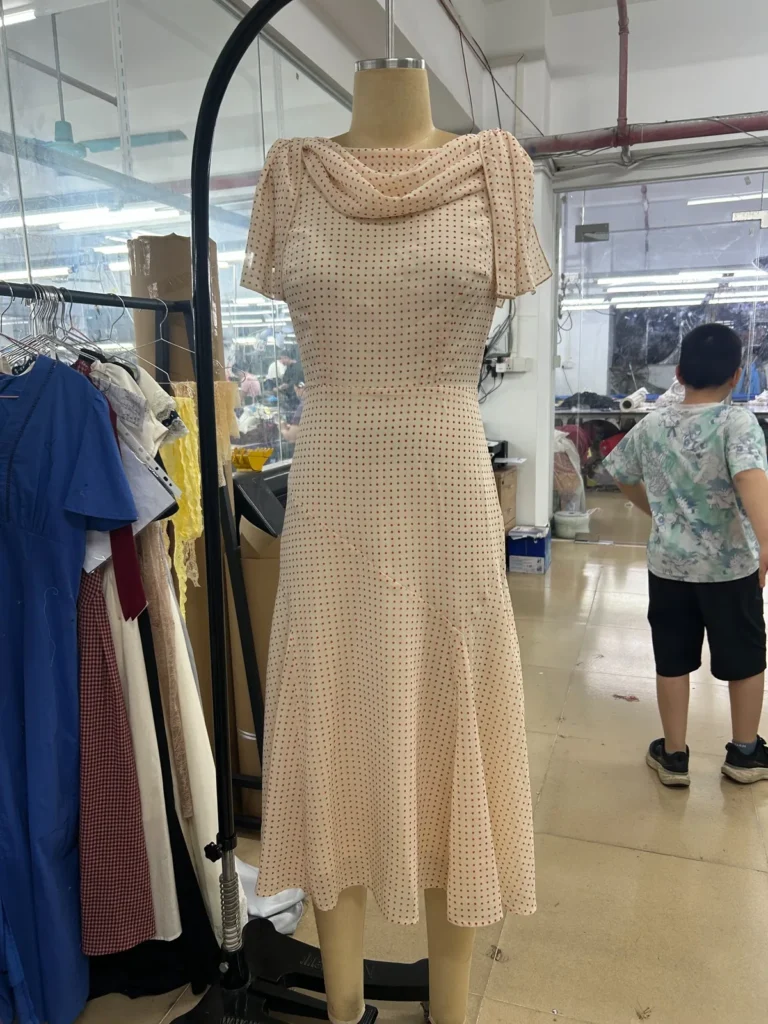
What Is a Pre-Production Meeting in Clothing Manufacturing?
A pre-production meeting, often shortened to PPM, is an internal production handover before the factory starts bulk work. It is different from a pre-production sample. The sample is a physical reference garment; the meeting is the process used to make sure the teams responsible for materials, cutting, sewing, quality, finishing and packing understand the approved requirements.
For overseas brands, this handover is important because product decisions are often spread across tech packs, sample comments, emails, fabric approvals and purchase orders. A PPM should bring those decisions into one current production standard.
1. Confirm the Latest Approved Sample and Tech Pack
The factory should identify exactly which sample is approved for production and which specification revision is current. If measurements, construction or trims changed during development, older versions should not remain in circulation as competing instructions.
Buyers can reduce this risk by keeping revisions organized in the clothing tech pack and closing comments before approval. The goal is simple: the production floor should not have to guess which instruction is newest.
2. Review the Purchase Order and Size-Color Breakdown
The PPM should confirm style number, total quantity, colorways, size ratio and delivery requirements against the purchase order. This sounds administrative, but mistakes in assortment can create serious commercial problems for wholesalers and retailers.
A factory may produce the correct total quantity while still delivering the wrong size or color mix. The production plan therefore needs to follow the buyer’s actual SKU breakdown, not only the headline order quantity.
3. Confirm Bulk Fabric and Trim Status
Before cutting, the team should know whether bulk fabric, lining, zippers, buttons, labels, hangtags and packaging materials have been approved and received. Any substitute material should be documented rather than accepted informally on the production floor.
For fabric, relevant information can include lot separation, shrinkage, usable width, color standard and any special handling. Buyers who are still selecting materials should review the fabric sourcing guide before the order reaches this stage.
4. Identify Critical Construction and Fit Points
Every style has a few details that deserve extra attention. On a fitted dress, they may be bust shape, waist measurement and zipper insertion. On a blouse, neckline shape, sleeve setting or button spacing may be more important. On trousers, rise, waistband construction and inseam balance can become critical.
The PPM should identify these points so production and quality teams know where a small deviation could change the garment’s appearance or fit.
5. Define In-Line Quality Checkpoints
Quality control is more effective when inspection points are decided before defects appear. The factory can plan first-piece approval, in-line measurement checks, workmanship checks and final inspection according to the style.
This does not mean inspecting every detail at every station. It means focusing attention where the risk is highest. The garment quality control checklist provides a broader framework for material, cutting, sewing, measurement and packing checks.
6. Confirm Branding and Packaging Requirements
Private label orders require more than correct sewing. Main labels, size labels, care labels, hangtags, barcode stickers, folding methods, polybags, carton ratios and shipping marks may all affect whether finished goods are ready for the buyer’s warehouse or retail channel.
These details should be confirmed before the order reaches finishing. Discovering a wrong barcode format or label position after garments are packed can create unnecessary rework and delay.
7. Review the Production and Delivery Calendar
The PPM should connect material readiness with cutting, sewing, finishing, inspection and shipment. If a critical trim is still missing, the team should understand whether the order can proceed safely or whether starting early would create work-in-progress that cannot be completed.
Brands can compare these milestones with the women’s clothing manufacturer production calendar when planning launch dates and seasonal deliveries.
8. Assign Responsibility for Open Issues
A useful PPM should not end with vague comments such as “check later.” Any unresolved issue should have an owner and a required decision point. Examples include pending label artwork, final carton marks, a trim delivery date or confirmation of a measurement correction.
Production should not rely on assumptions when an open issue can affect hundreds of garments. Clear ownership makes it easier to prevent a small development question from becoming a bulk production problem.
Private Label PPM Checklist for Buyers
- Latest approved sample identified
- Current tech pack revision confirmed
- Purchase order quantity and size-color ratio checked
- Bulk fabric and trims approved
- Critical measurements and construction points highlighted
- First-piece and in-line quality checks defined
- Labels, hangtags, barcodes and packaging confirmed
- Cutting, sewing and finishing dates reviewed
- Open issues assigned to a responsible person
Why the PPM Matters for Private Label Women’s Clothing
Private label production combines garment construction with brand-specific details. A product can be sewn correctly and still be commercially wrong if the label, size assortment, color, packaging or approved revision is incorrect. The pre-production meeting reduces that risk by turning scattered development information into a controlled handover.
Brands should use the PPM together with a properly approved sample, not as a replacement for one. Our pre-production sample guide explains what buyers should approve on the physical garment before bulk manufacturing begins.