A women’s fashion order can use approved fabric, correct patterns and a signed-off sample and still produce inconsistent bulk results if the sewing line is not prepared for the style. For buyers, understanding women’s clothing manufacturer sewing line setup helps explain why the first hours of production matter so much.
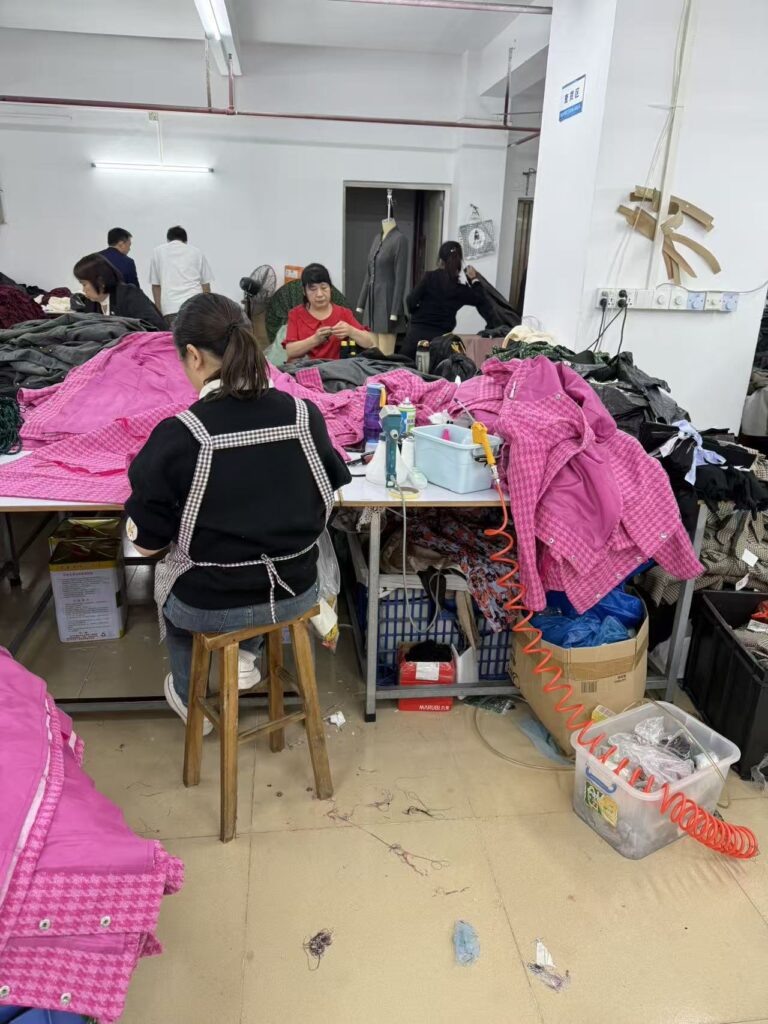
What Sewing Line Setup Means for a Buyer
Sewing line setup is the preparation required before a style runs at normal bulk speed. The production team reviews the approved garment, operation sequence, machines, attachments, seam construction, quality points and work allocation. The goal is not simply to put operators at machines; it is to make the approved construction repeatable.
This is particularly relevant for women’s garments with multiple panels, linings, pleats, gathers, concealed closures, delicate fabrics or appearance-sensitive seams. A style that looks simple in a product photo may still require careful operation planning.
1. Start From the Approved Production Standard
The sewing team should work from the latest approved specifications rather than from an early sample or an old comment sheet. Construction details, measurements, trims and workmanship expectations need to be consistent across the documents used by merchandising, production and quality control.
A clear clothing tech pack helps define seam types, stitch requirements, closures and measurements. For styles that have passed several revisions, the factory should also make sure obsolete instructions are removed from the production pack.
2. Break the Garment Into Sewing Operations
Before bulk sewing, the garment is divided into operations such as joining panels, attaching sleeves, constructing waistbands, inserting zippers, hemming and adding labels. The sequence matters because one poorly planned operation can create extra handling or make later steps more difficult.
For example, a dress with lining and an invisible zipper requires a different workflow from an unlined pull-on dress. The manufacturer should plan the process around the actual garment rather than use one generic line arrangement for every style.
3. Match Machines and Attachments to the Construction
Different seams may require different machines, presser feet, folders or guides. Lightweight woven fabrics can react badly to excessive feed pressure or unsuitable needle selection, while bulky seam intersections may need different handling from single-layer areas.
Buyers do not need to specify every machine model, but they should expect the manufacturer to translate the approved construction into an appropriate production method. This is one reason a technically correct sample should be reviewed before bulk production begins.
4. Make the First Pieces a Quality Checkpoint
The first garments from the line should be treated as an early production check rather than immediately mixed into the full order. The factory can compare them with the approved sample and specification before the same issue is repeated across a large quantity.
Useful checks include measurements, seam appearance, symmetry, stitch consistency, zipper function, hem level, label position and pressing response. The broader garment quality control checklist explains how these checkpoints fit into the complete production process.
5. Control Appearance-Sensitive Sewing Problems Early
Women’s woven garments often show workmanship problems clearly. Puckered seams, stretched necklines, uneven gathers, twisting hems and distorted zipper areas can affect the retail appearance even when the garment remains wearable.
The best time to correct these problems is when the line is being stabilized. The production team can adjust handling, machine settings, operation sequence or reinforcement before output increases. Waiting until final inspection turns a correctable process issue into a large rework problem.
6. Keep Bundles and Sizes Identifiable
Bulk production may include several sizes, colors and fabric lots. Bundle identification helps the factory keep cut components together and reduces the risk of mixing panels or size parts. This becomes especially important for fabrics with visible shade variation or styles with matched components.
Buyers should not assume that a correct cutting room automatically guarantees correct assembly. Material control has to continue through sewing and finishing.
7. Balance Speed With Repeatability
A sewing line is normally adjusted as operators become familiar with the style. Output may increase after the first production period, but quality should not be sacrificed to reach a target quantity. If one operation becomes a bottleneck, unfinished work can accumulate and encourage rushed handling.
For brands planning seasonal deliveries, realistic capacity should be discussed before the order is placed. Our guide to OEM clothing manufacturer production capacity explains how buyers can evaluate lead-time claims.
Buyer Questions Before Bulk Sewing Starts
- Which sample and specification will the sewing line use as the final reference?
- Have all sample comments been closed?
- Are any special machines, folders or attachments required?
- How will the first production pieces be checked?
- Which workmanship points are considered critical for this style?
- How are sizes, colors and fabric lots identified during sewing?
- Who can stop or correct the line if a recurring defect appears?
Why Sewing Line Setup Matters for Overseas Buyers
A buyer may never stand beside the sewing line, but line preparation directly affects bulk consistency. Strong production control turns the approved sample into a repeatable process, identifies risks before output accelerates and gives quality staff measurable points to inspect.
Brands still developing a style should complete the sample development process before treating bulk sewing as ready to start. The objective is not maximum speed on day one; it is stable, repeatable production that can maintain the approved standard across the order.