For fashion brands, controlling production costs is one of the most important factors in maintaining healthy profit margins. However, reducing the manufacturing price does not always mean choosing the cheapest clothing manufacturer.
A supplier with a lower initial quotation may eventually create higher costs through poor-quality materials, production delays, inconsistent sizing, defective garments, or expensive rework.
The better approach is to reduce unnecessary manufacturing costs while maintaining product quality, consistency, and delivery reliability.
This guide explains practical ways fashion brands can reduce clothing manufacturing costs when working with an OEM or custom clothing manufacturer.
1. Understand What Actually Determines Clothing Manufacturing Cost
Before trying to reduce costs, brands need to understand where the money goes.
The total cost of producing a garment can include:
- Fabric and materials
- Trims and accessories
- Pattern making
- Sample development
- Cutting
- Sewing
- Printing
- Embroidery
- Washing and finishing
- Quality control
- Packaging
- Labor
- Transportation
- Production management
- Custom labels and packaging
For example, two T-shirts may look similar but have very different manufacturing costs because of fabric composition, GSM, dyeing requirements, printing techniques, stitching details, and packaging.
Therefore, simply asking a manufacturer to “give me a lower price” is usually not the most effective cost-reduction strategy.
Instead, brands should identify which components are driving the cost.
2. Choose the Right Fabric
Fabric is often one of the largest components of apparel manufacturing cost.
A small change in fabric specification can significantly affect the final production price.
Brands should evaluate:
- Fabric composition
- Fabric weight
- GSM
- Width
- Fabric construction
- Dyeing requirements
- Finishing
- Supplier availability
- Minimum order quantity
For example, a fashion brand may specify a premium fabric when a slightly different material could achieve almost the same appearance and performance at a lower cost.
A professional manufacturer can help compare different fabric options and identify a suitable balance between appearance, quality, performance, and price.
The goal should not be the cheapest fabric.
The goal should be the most cost-effective fabric for the product’s positioning.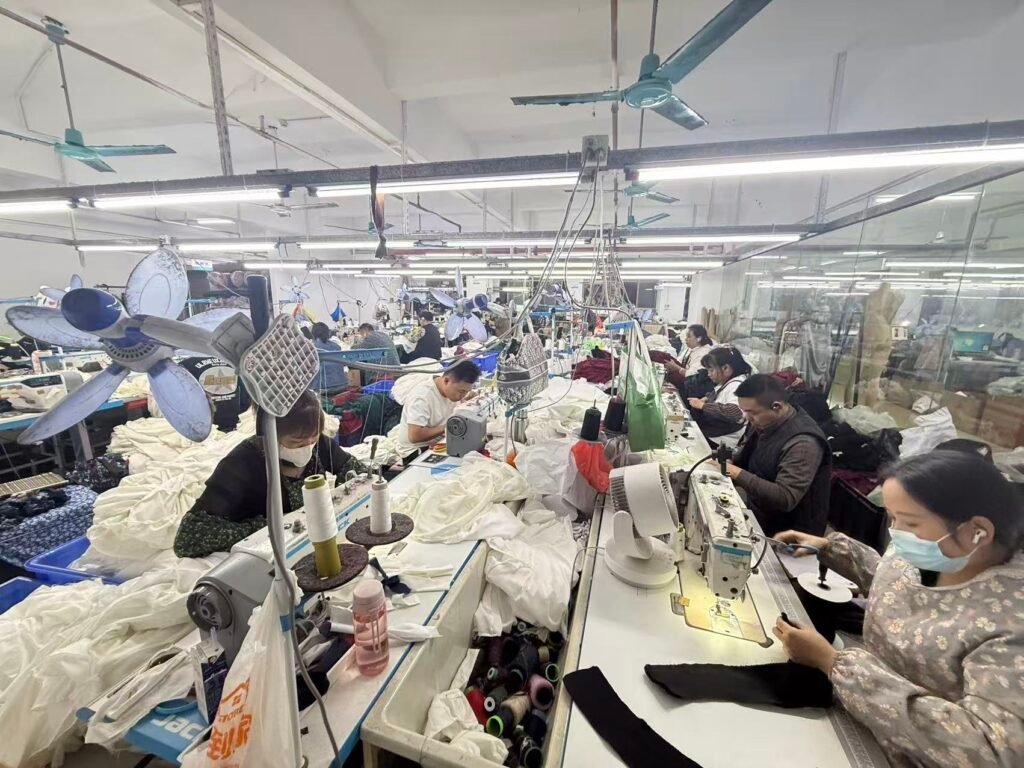
3. Optimize Your MOQ
Minimum Order Quantity, commonly called MOQ, has a major impact on manufacturing costs.
Small production runs generally have higher unit costs because fixed development and production expenses are distributed across fewer garments.
For example:
- 100 pieces → higher cost per unit
- 500 pieces → lower cost per unit
- 1,000 pieces → potentially lower cost per unit
- 5,000+ pieces → potentially better production economics
However, increasing MOQ simply to obtain a lower unit price is not always the best strategy.
If a new fashion brand orders too much inventory, it may create:
- Excess stock
- Cash-flow pressure
- Storage costs
- Unsold products
- Increased inventory risk
A better strategy is to find the production quantity that balances unit cost and inventory risk.
4. Simplify Unnecessary Design Details
Complex designs usually require more manufacturing processes.
Additional details may include:
- Multiple panels
- Special stitching
- Complex pockets
- Custom hardware
- Multiple printing locations
- Embroidery
- Decorative trims
- Special washing
- Complex construction
Each additional process can increase production time and labor costs.
This does not mean fashion brands should simplify every design.
Instead, brands should identify which details actually contribute to the product’s value.
A strong product development strategy asks:
Does this design detail improve the product enough to justify its manufacturing cost?
If the answer is no, removing or simplifying it may reduce production costs without significantly affecting the customer’s perception of quality.
5. Improve the Tech Pack Before Production
A clear tech pack can significantly reduce communication problems between a fashion brand and its manufacturer.
A professional tech pack should ideally include:
- Technical drawings
- Measurements
- Size specifications
- Fabric information
- Color references
- Stitching requirements
- Label placement
- Printing details
- Embroidery specifications
- Packaging requirements
Poorly documented specifications can lead to misunderstandings.
That may result in:
Incorrect sample → revisions → additional samples → delayed production → higher development costs
A detailed tech pack helps manufacturers understand exactly what needs to be produced before production begins.
6. Reduce Excessive Sampling
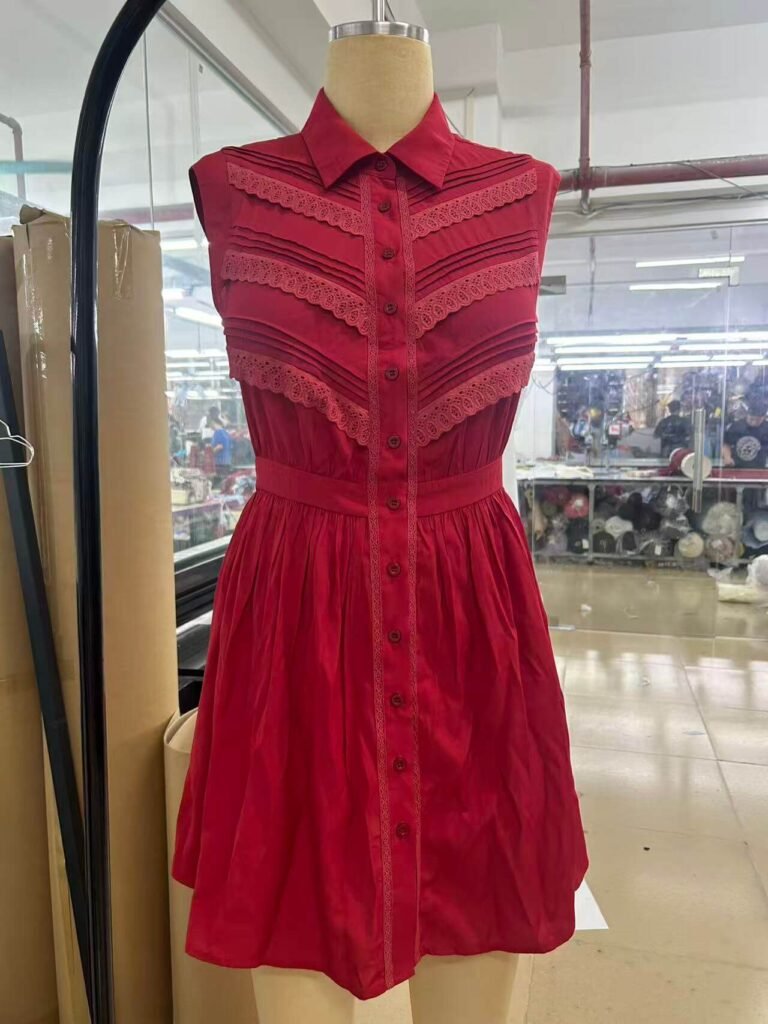
Sampling is essential for product development, but excessive sample revisions can increase development costs and extend the production timeline.
Brands can reduce unnecessary sampling by preparing better information before the first sample.
Before requesting a sample, confirm:
- Fabric
- Color
- Measurements
- Construction
- Artwork
- Logo placement
- Label specifications
- Packaging requirements
It is also useful to distinguish between critical problems and minor visual differences.
Not every small adjustment requires a completely new development cycle.
Efficient communication between the brand and manufacturer can significantly reduce sampling time.
7. Consolidate Orders When Possible
Another effective way to reduce manufacturing costs is to consolidate production.
If a brand has several products using similar fabrics, colors, trims, or production processes, combining orders may improve manufacturing efficiency.
For example, instead of producing:
- 300 hoodies
- 300 sweatshirts
- 300 T-shirts
independently with different material sourcing and production schedules, the manufacturer may be able to coordinate some materials and production resources more efficiently.
This can potentially reduce:
- Material purchasing costs
- Setup costs
- Production inefficiencies
- Transportation expenses
The exact savings depend on the products and manufacturer.
8. Work With an Experienced OEM Clothing Manufacturer
Supplier selection has a major influence on total manufacturing cost.
A reliable OEM clothing manufacturer can help brands optimize:
- Fabric selection
- Product construction
- MOQ
- Sampling
- Production planning
- Quality control
- Packaging
- Shipping
The cheapest quotation is not necessarily the cheapest overall solution.
Consider this example:
Supplier A
Lower unit price → higher defect rate → delayed shipment → additional inspection → higher total cost.
Supplier B
Slightly higher unit price → stable quality → predictable production → fewer defects → reliable delivery.
Supplier B may actually be more cost-effective.
For this reason, brands should evaluate manufacturers based on total production value rather than unit price alone.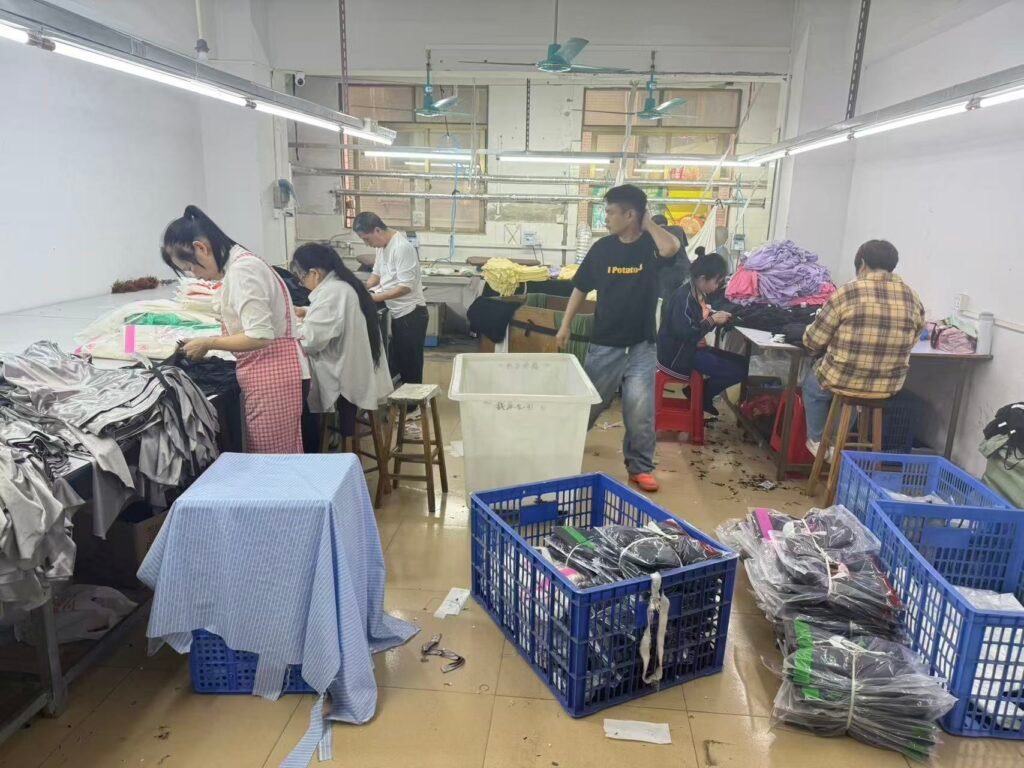
9. Control Quality Before Mass Production
Quality problems become significantly more expensive after mass production begins.
A mistake discovered during sampling may affect one garment.
The same mistake discovered after producing 5,000 garments can become a major financial problem.
Brands should therefore establish quality checkpoints such as:
Prototype → Sample → Pre-production approval → Bulk production → Final inspection
Important inspection points can include:
- Measurements
- Fabric quality
- Color consistency
- Stitching
- Printing
- Embroidery
- Labels
- Garment construction
- Packaging
Preventing defects is generally more cost-effective than fixing them after production.
10. Optimize Packaging
Packaging is another area where fashion brands can reduce unnecessary costs.
Depending on the product and sales channel, brands may not need expensive packaging materials.
Possible options include:
- Standard polybags
- Recyclable packaging
- Custom stickers
- Printed packaging
- Custom boxes
- Branded tissue paper
- Custom hangtags
For premium brands, packaging can be an important part of the customer experience.
For other brands, excessive packaging may simply increase production and shipping costs.
The best packaging strategy should match the brand’s positioning and sales model.
11. Plan Production Earlier
Urgent manufacturing usually costs more.
Last-minute orders can create additional expenses related to:
- Rush production
- Material sourcing
- Express shipping
- Overtime
- Production scheduling
- Emergency quality control
Fashion brands should therefore create realistic production schedules.
A typical workflow might look like:
Design → Tech Pack → Sampling → Sample Approval → Material Sourcing → Bulk Production → QC → Packaging → Shipping
The earlier the production plan is confirmed, the easier it is for a manufacturer to organize materials and production capacity.
12. Don’t Sacrifice Quality for a Lower Price
There is an important difference between cost optimization and cost cutting.
Cost cutting means trying to reduce every possible expense.
Cost optimization means spending money where it creates value and eliminating unnecessary expenses.
For fashion brands, aggressive cost cutting can lead to:
- Poor fabric quality
- Weak stitching
- Color inconsistency
- Shrinkage problems
- Poor fit
- Higher return rates
- Customer complaints
- Brand reputation damage
A better strategy is to maintain the quality elements customers can see and feel while optimizing less important production expenses.
A Practical Cost Optimization Checklist
Before placing a bulk clothing order, fashion brands can review the following:
| Area | Questions to Ask |
|---|---|
| Fabric | Can another fabric achieve similar performance? |
| MOQ | Is the order quantity appropriate for demand? |
| Design | Are all design details necessary? |
| Tech Pack | Are specifications clear enough? |
| Sampling | Can sample revisions be reduced? |
| Production | Can similar products be consolidated? |
| Quality | Are QC checkpoints clearly defined? |
| Packaging | Is the packaging appropriate for the brand? |
| Shipping | Can logistics be planned earlier? |
| Supplier | Is the manufacturer reliable, not just cheap? |
This approach allows brands to look at the entire production system, rather than focusing only on the factory quotation.
Final Thoughts
Reducing clothing manufacturing costs does not require sacrificing product quality.
The most effective strategy is to optimize the entire production process—from fabric sourcing and product design to MOQ, sampling, manufacturing, quality control, packaging, and shipping.
Fashion brands that work closely with an experienced OEM clothing manufacturer can often identify cost-saving opportunities that are difficult to see from the product price alone.
The objective should always be:
Better production efficiency + controlled costs + consistent quality + reliable delivery.
For fashion brands looking for a long-term manufacturing partner, choosing the right clothing manufacturer can ultimately have a much greater impact on profitability than simply finding the lowest quotation.