A top of production sample in clothing manufacturing—often called a TOP sample—is taken from the first garments produced on the bulk line. It helps the buyer and factory verify that approved materials, construction, measurements, labels and workmanship have transferred correctly from the sample room to real production.
Unlike a pre-production sample, the TOP sample is made after bulk production starts. It is therefore a valuable early-warning control, but it must be reviewed quickly so corrections can be made before a large quantity is completed.
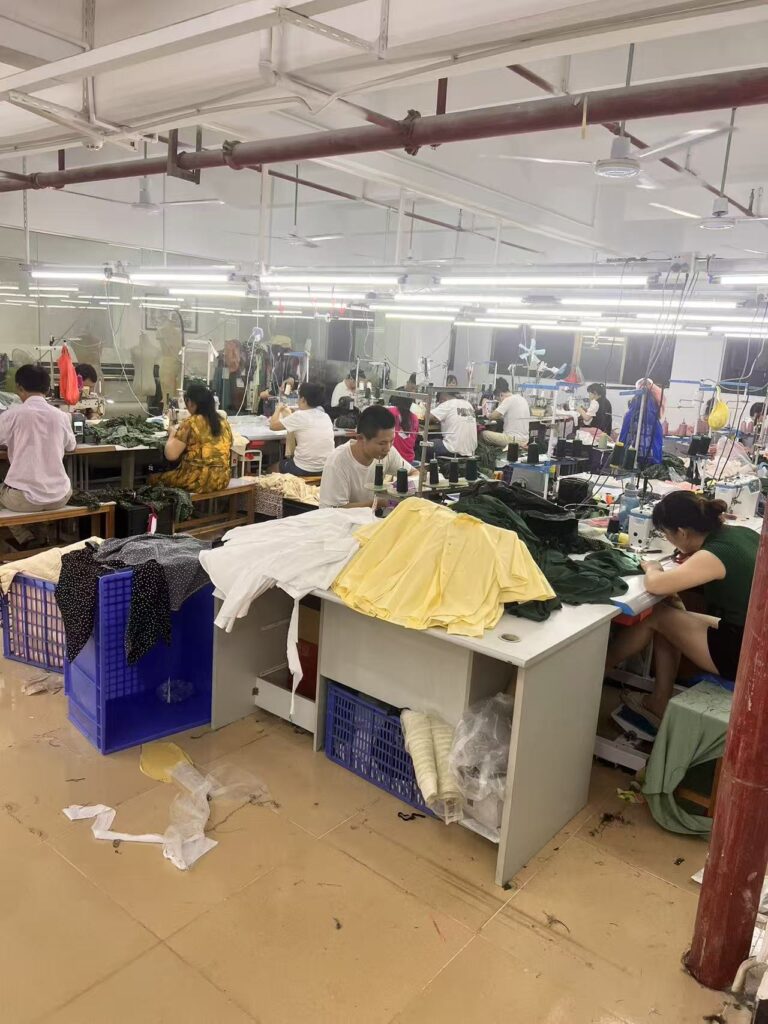
TOP sample vs pre-production sample
The pre-production sample is normally approved before bulk cutting or sewing and should represent the intended production standard. A TOP sample is selected from the first bulk output and shows what the production line is actually making.
The two approvals are complementary. The pre-production sample checklist defines the target; the TOP sample tests the line’s execution.
When should a TOP sample be requested?
TOP samples are especially useful when:
- the style is new to the factory;
- bulk fabric behaves differently from development material;
- the design has complex construction or fit;
- labels, prints or trims have high brand risk;
- the order is large enough that early correction matters;
- production is split across lines or workshops;
- the buyer cannot attend an onsite first-output review.
1. Select the sample from real production
The factory should not prepare a special sample-room piece and call it TOP. Record the production line, date, color, size and batch from which the garment was selected. If several colors or factories carry different risks, the buyer may request more than one TOP sample.
2. Check material identity
Confirm the fabric article, color, shade lot, lining, interfacing and trims against the approved bill of materials. Look for visible differences in weight, drape, opacity, surface or stretch.
Bulk material approval should already be complete, but the TOP sample confirms that the correct components reached the line.
3. Compare construction with the sealed sample
Review seam types, stitch density, seam allowances, reinforcement, closures, pockets, hems and internal finishing. Production methods sometimes drift when line operators interpret details differently from the sample room.
Keep the sealed pre-production sample and latest tech pack available during the comparison.
4. Measure critical points
Measure the garment using the approved method and tolerance. Prioritize fit-critical points such as bust, waist, hip, shoulder, armhole, sleeve, rise and garment length.
One acceptable garment does not prove the full order is stable, but an out-of-tolerance TOP sample is a strong signal to stop and investigate the line.
5. Review appearance and pressing
Check symmetry, seam puckering, shade variation, stains, press shine, uneven hems and distortion. Pressing can temporarily hide or create measurement problems, so evaluate the garment under the same condition defined by the specification.
6. Verify labels and branding
Confirm main-label orientation, size label, care content, country-of-origin marking, hangtags, barcodes and logo artwork. A wrong label repeated across the entire order can be expensive to replace.
7. Test function and wear-related details
Operate zippers, buttons, snaps and adjustable components. Check pocket openings, slit reinforcement and stress points. If the product has an approved wash or performance requirement, confirm that the production process matches it.
8. Set a fast approval deadline
A TOP sample loses value if the line completes most of the order before comments arrive. Agree on shipment method, photo requirements and buyer response time before production starts.
The broader clothing sample development process should identify who approves each stage and how revisions are recorded.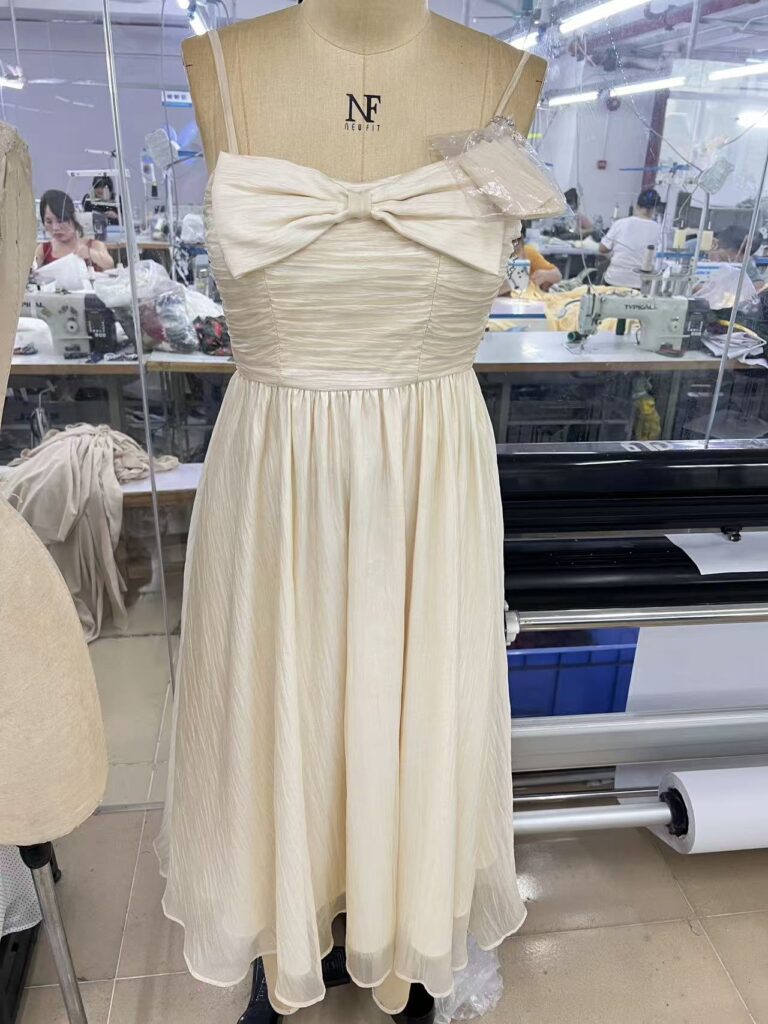
What happens when the TOP sample fails?
Classify the problem before choosing an action:
- isolated workmanship defect: repair the piece and strengthen operator inspection;
- systematic construction error: stop the operation, correct the method and check work in progress;
- measurement trend: investigate pattern, seam allowance, fabric relaxation and pressing;
- wrong material or label: quarantine affected goods and trace the batch;
- buyer-requested design change: document price and schedule impact before implementation.
Corrective action should state affected quantity, containment, root cause, correction and reinspection.
TOP sample vs AQL inspection
A TOP review occurs near the beginning of bulk production and is designed to prevent repeated errors. A final AQL inspection samples finished goods near shipment and estimates whether the lot meets the agreed acceptance criteria.
Both are useful at different points. Review the OEM clothing manufacturer AQL inspection guide for final-lot planning.
Coordinate TOP approval with the production calendar
Include the TOP selection date, dispatch date and response deadline in the order schedule. Allow time for correction without immediately endangering shipment.
The women’s clothing production calendar shows how sample approvals, materials and line milestones should work together.
TOP sample approval table
| Area | Approval evidence |
|---|---|
| Traceability | Line, batch, date, color and size |
| Materials | Approved fabric and trim references |
| Construction | Comparison with sealed sample and tech pack |
| Measurements | Results against tolerance |
| Branding | Labels, artwork and barcode check |
| Action | Approval or documented correction plan |
Final takeaway
A top of production sample in clothing manufacturing confirms that the factory line can reproduce the approved standard under real bulk conditions. Buyers should plan the review before production, respond quickly and connect any failure to a documented corrective action.
Brands that require TOP sample control can contact the production team with their tech pack, inspection requirements and delivery schedule.