Viscose dress manufacturing requires approval of a particular fabric and garment construction, rather than the fiber name alone. Overseas brands, wholesalers and retailers should identify the offered material, review it in the intended silhouette and agree how the finished product will be assessed. This guide focuses on sourcing and production decisions for woven viscose dresses. General descriptions of viscose cannot replace sample evidence for the material being purchased.
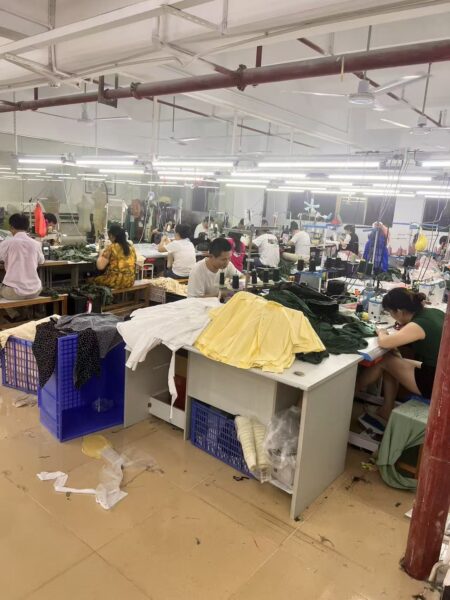
Identify the actual material behind the quote
Record fabric code, declared composition, weight, usable width, construction, finish and color. State whether the requirement is a particular approved material or a specification for suppliers to match. Ask the supplier to identify any blend or alternative separately.
Use the fabric sourcing guide to connect swatches and quotations. If a branded fiber is requested, ask for the relevant sourcing evidence without assuming every viscose fabric qualifies. Keep the shell, lining and other materials distinguishable in the approval record.
Review drape in the complete silhouette
Provide front and back drawings showing the fit, skirt shape, waist position and any gathering or bias-cut sections. Review the actual proposed fabric in a complete sample hanging normally. Check the intended movement and the relationship between bodice and skirt rather than approving a hand-held swatch as the finished result.
Identify the decisions made on any substitute-fabric sample. When the material changes, review the affected fit and appearance again. Keep sample photographs and comments tied to the pattern and material version so the factory can distinguish a retained approval from an open decision.
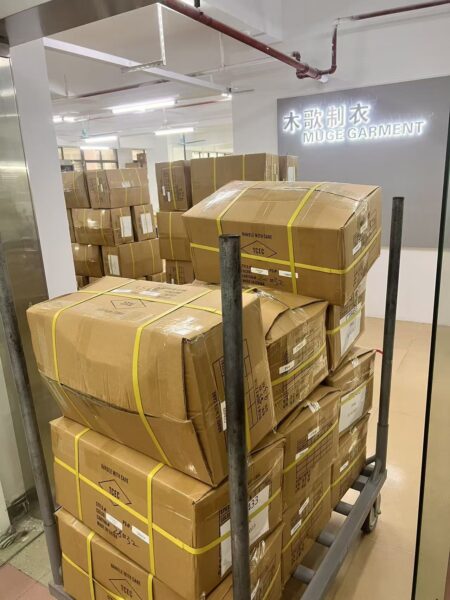
Approve lining, support and coverage together
Confirm whether the dress is unlined, partly lined or fully lined, and identify where the layers connect. Review coverage in the actual color and inspect areas that become taut while sitting or reaching. Check that the inner layer does not pull or change the intended shell shape.
The woven dress lining guide helps organize that review. Evaluate any support at necklines, closures and waist seams in the actual assembly. A change introduced to solve one area should also be checked for effects on drape, bulk and comfort.
Trial construction details before scaling
Ask for representative sewing trials at fine edges, gathered joins, closures or other areas important to the design. Inspect both the face and reverse for the agreed seam appearance and finishing. Distinguish intended gathering from unwanted distortion in areas meant to lie flat.
Where a trial is unsuitable, ask the sample team to identify the cause and proposed correction. Do not prescribe a single needle, thread or machine adjustment for every viscose construction. Retain the accepted sewn reference with its material and operation details for production.
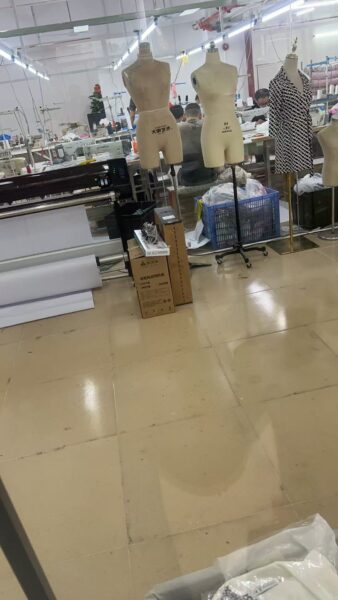
Set care and dimensional approval conditions
Agree the care treatment and the measurements, shape, shade and appearance to be checked afterward. Use the proposed finished material and garment construction. Do not assign a universal shrinkage percentage or washing instruction based only on the fiber name.
Coordinate the checks through the garment wash-care plan. Confirm whether pattern adjustments or another material option are needed after reviewing evidence. Keep any revised sample distinct from the original, including the approved care and pressing expectations.
Compare quotations and release the approved version
Ask for confirmation of the exact fabric, consumption basis, lining, trims, support, labels, finishing and packing. Identify quantities by color and size, material minimums, sample charges and revision conditions. A lower price using a different fabric should be presented as an alternative, not an unexplained equivalent.
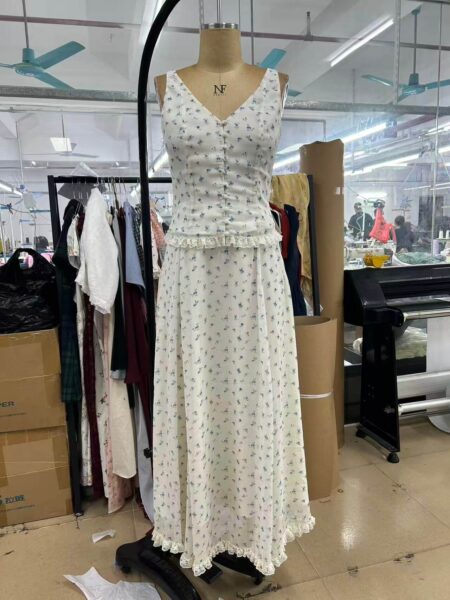
Before cutting, connect the accepted sample, measurement sheet, pattern and bulk material records. Agree who can approve substitutions and which incoming lots need verification. Inspect construction and functional details as well as appearance during production.
For a viscose dress enquiry to Mugekoo, send drawings, material preferences, quantities and a delivery window using the manufacturing RFQ checklist. Ask the factory to confirm capability, sourcing options and the sampling sequence before committing to bulk.