Woven dress dart construction is a small sewing detail with a large effect on fit. Darts shape a flat fabric panel around the bust, waist, hip or shoulder; when they are uneven, twisted or poorly pressed, the dress can look distorted even if its main measurements are within tolerance. For buyers, dart quality belongs in both sample approval and bulk inspection.
Because woven fabrics have limited give, construction and pressing must work together. A well-made dart should guide the garment smoothly over the body without a sharp point, puckered seam or visible mismatch between left and right sides.
Start with the approved pattern and sample
The pattern determines dart position, length, intake and direction. During sample approval, check the garment on the intended fit form or model and record any change to the dart point or shaping. A revised dart affects not just the front panel but also balance across side seams, waist seams and lining pieces.
Link these details to the women’s clothing fit block used for the style. A dart that works on one base size may need a clear grading rule across the full size range.
Key sewing points to inspect
At the sewing line, confirm the operator follows the correct start and end marks. The stitch line should be smooth, with no skipped stitches, abrupt back-tacking at the point or excessive tension. Dart points normally taper gradually; the exact finishing method should follow the approved construction standard and fabric behavior.
Inspect paired darts as a set. Their placement, length and angle should mirror one another where the design is symmetrical. On a shaped bodice, compare the distance from dart point to bust level, center front and side seam. Small differences can make a finished dress hang unevenly.
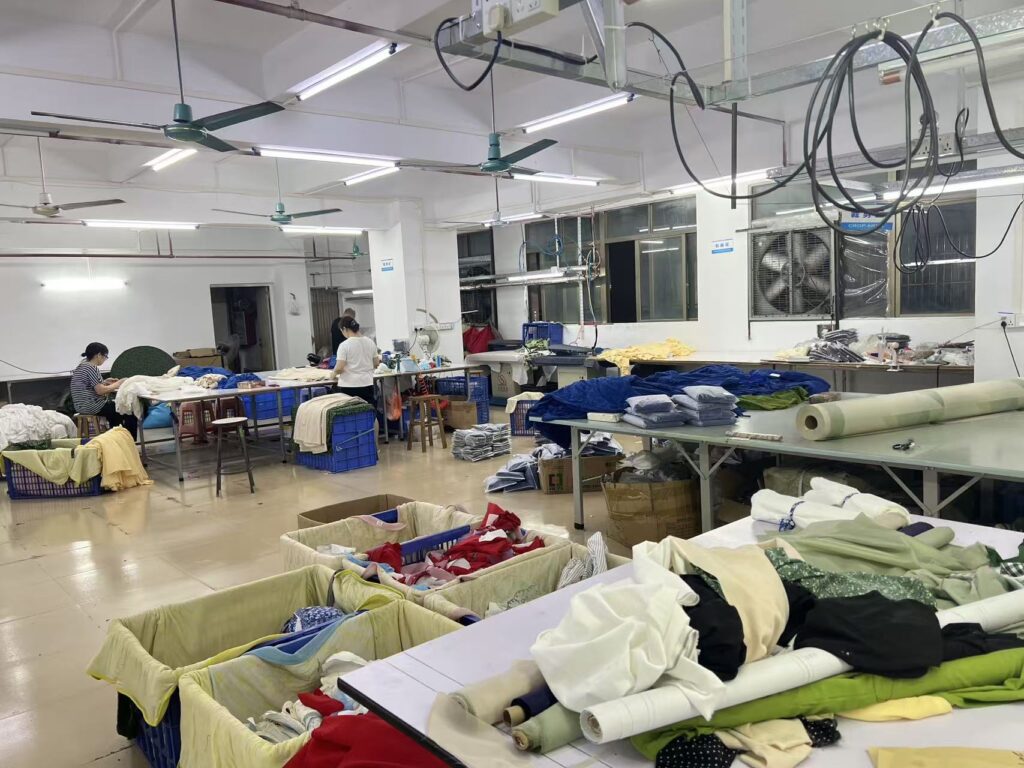
Pressing is part of dart construction
Darts should be pressed in the agreed direction and with the right temperature, moisture and pressure for the fabric. Over-pressing can create shine or a permanent ridge; under-pressing can leave a bulky seam that shows on the face side. Lightweight woven fabrics may also need a press cloth or a controlled cooling period to retain shape.
Consider dart construction together with lining selection. A lined style needs sufficient room around the dart area, consistent seam allowances and a clean relationship between the shell and lining so the garment does not pull.
Common bulk-production issues
Buyers should look for puckering, dart points that are too sharp, mismatched left and right shaping, visible thread tails, twisted seam allowances and press marks. These defects may be isolated at first but can become systematic when a machine setting, guide or operator method changes.
A line-level check is most useful before too many units are completed. The same approach is described in inline inspection during production: identify the operation, correct the cause, recheck the next bundle and document the result.
Include darts in your final inspection plan
At final inspection, evaluate dart appearance on the garment as worn or displayed, not only on a flat table. Check the key size range, especially the largest and smallest sizes, because grading can change the visual balance. Also assess whether laundering or handling could worsen puckering; this sits alongside the woven dress shrinkage review.
For a dress with a zipper near a darted bodice or side seam, confirm that shaping remains smooth after closure and pressing. The zipper quality-control guide provides additional checks for that construction point.
Woven dress dart construction should be approved as a visible fit feature, then monitored as a repeatable sewing operation. For help reviewing a new woven dress specification or sample, send the style details through the contact page.