Woven dress interlining and fusing can strongly affect the structure, comfort and final appearance of a garment. For overseas fashion brands, wholesalers and retailers, these hidden materials matter because poor fusing may cause bubbling, stiffness, delamination, shrinkage or shape distortion after pressing and washing.
Interlining is commonly used in collars, plackets, waistbands, facings and other areas that need additional support. Buyers should therefore approve not only the outer fabric and lining, but also the interlining type, weight, bonding performance and application method before bulk production.
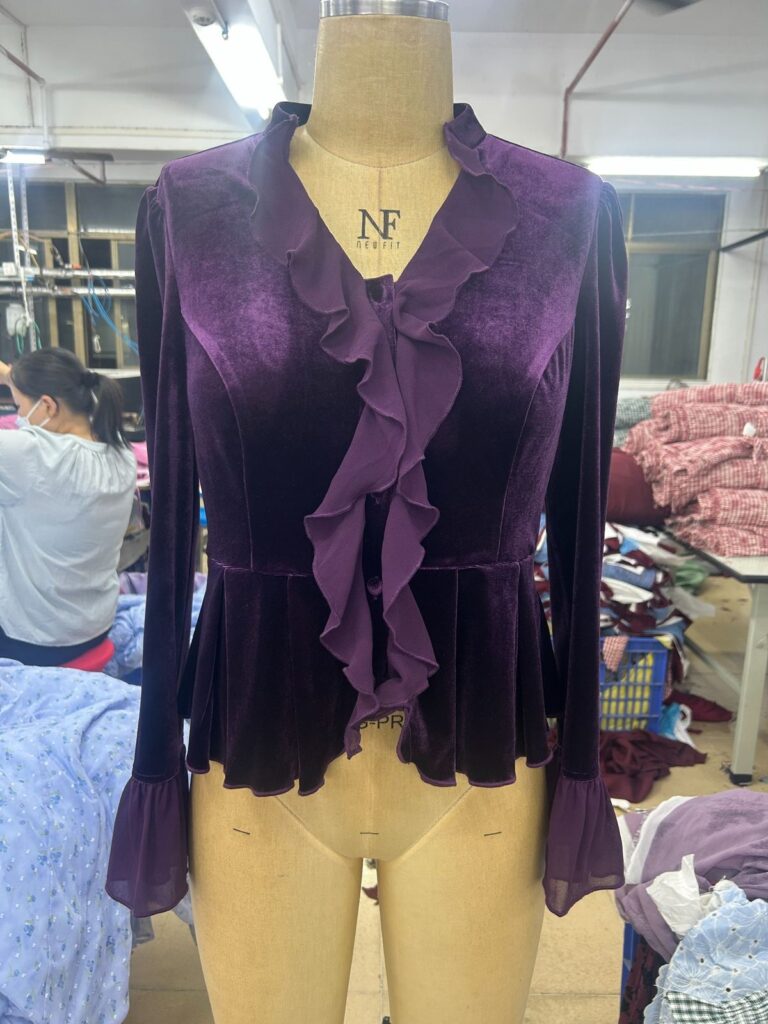
What Interlining Does in a Woven Dress
Interlining adds support without changing the visible design. It can help a neckline keep its shape, stabilize a button placket, support a waistband, strengthen a zipper area or prevent a facing from collapsing. The correct choice depends on the shell fabric, garment silhouette and required hand feel.
Buyers who are still reviewing the broader construction should first read our woven dress manufacturer bulk production guide.
1. Match Interlining Weight to the Shell Fabric
A lightweight woven dress usually needs a softer and lighter interlining than a structured tailored style. If the interlining is too heavy, the fused area may look stiff or create a visible difference in drape. If it is too light, it may not provide enough support.
2. Check Color and Show-Through Risk
On white, pastel or semi-sheer fabrics, dark or unsuitable interlining can show through the shell. The buyer should review the fused sample under normal lighting and confirm that the support layer does not change the visible color or opacity.
3. Test Bonding Strength Before Bulk Production
Fusible interlining uses heat, pressure and time to bond with the fabric. The factory should establish a suitable fusing condition for the specific materials. Buyers should ask whether test pieces have been checked for peeling, bubbling and hand-feel changes after bonding.
4. Watch for Bubbling and Delamination
Bubbling occurs when the interlining does not remain evenly bonded to the shell. It can appear immediately after pressing or later after washing and wearing. Uneven temperature, insufficient pressure, incompatible adhesive or fabric finishing can all contribute.
For garments that will be washed, combine fusing review with the relevant woven dress shrinkage testing process.
5. Consider Fabric Shrinkage Before Fusing
If the outer fabric and interlining react differently to heat, steam or washing, the fused area may distort. The factory should understand the dimensional stability of both materials and, where needed, condition or test them before production.
6. Approve Placement and Coverage
The tech pack or approved sample should clearly show where interlining is used. Common woven dress areas include front facings, button plackets, collars, cuffs, waistbands and selected zipper sections. Excess interlining can create stiffness, while missing support can make the garment lose shape.
7. Protect Delicate Outer Fabrics
Heat-sensitive fabrics, textured surfaces and certain finishes require careful fusing. Excessive heat or pressure can create shine, flatten texture or leave adhesive marks. For delicate styles, the factory may need lower-temperature materials or alternative support methods.
8. Compare Fused and Unfused Hand Feel
Buyers should physically compare the fused section with the surrounding garment. The goal is usually to add stability while preserving the intended softness and drape of the design.
9. Inspect Fusing During Sample Approval
Do not wait until final inspection to evaluate interlining. Review it during development and pre-production sampling, especially if the dress has structured necklines, fitted waists or detailed front openings.
Our women’s clothing manufacturer sample room capability guide explains what buyers should expect from development before bulk production.
10. Recheck After Pressing and Finishing
Fused areas should be inspected again after garment pressing because finishing heat may expose bonding problems that were not obvious earlier. Look for bubbles, edge lifting, strike-through, stiffness and shape changes.
For final appearance control, see our woven women’s wear finishing standards.
11. Include Interlining in the Bill of Materials
Interlining should be treated as a controlled material, not an informal factory substitute. The bill of materials should identify the approved type or performance requirement so repeat orders use a consistent support material.
12. Keep an Approved Fusing Reference
For repeat production, retain the approved sample, interlining specification and fusing conditions. If the outer fabric changes, the factory should repeat compatibility tests rather than assuming the previous settings will work.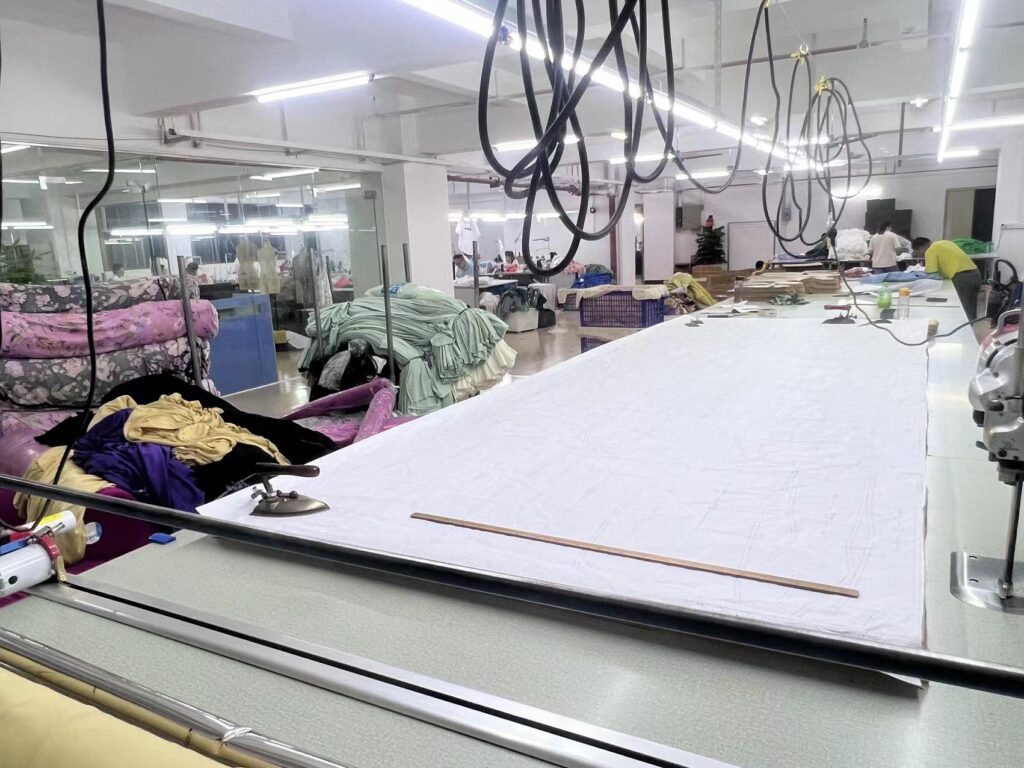
Woven Dress Interlining and Fusing Checklist
- Interlining weight matches the shell fabric
- Color does not show through
- Bonding strength is acceptable
- No bubbling or delamination
- Shrinkage compatibility checked
- Placement matches the approved sample
- Outer fabric is not damaged by heat or pressure
- Hand feel remains appropriate
- Fused areas are rechecked after pressing
- Approved material is recorded for repeat orders
Conclusion
Woven dress interlining and fusing are hidden construction details that can have a visible effect on quality. Buyers who approve material compatibility, bonding performance, placement and finishing conditions before bulk production can reduce bubbling, distortion and inconsistent garment structure.
If you are sourcing woven dresses, send your design, fabric details and target quantity for production review.