Woven dress pleats affect silhouette, movement and fabric consumption. A pleated skirt that looks correct on a hanger may open differently when worn, lose definition after care or meet the waistband unevenly. Buyers sourcing a pleated dress need to approve the actual fabric and construction together before bulk production.
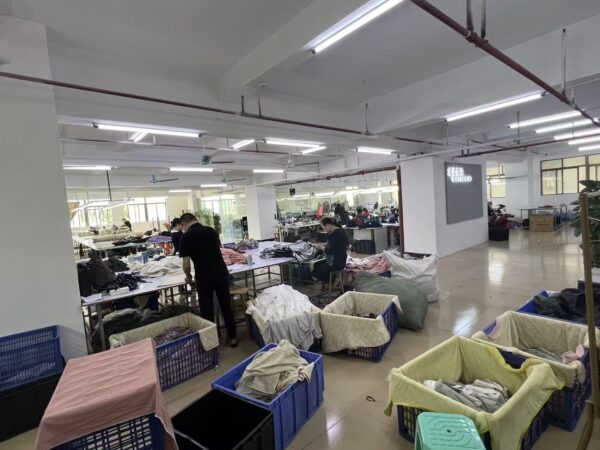
The first purchasing question is what appearance the design requires over time. A soft fold intended to open naturally and a sharply defined crease require different approval references. Write that expectation into the sample brief so the manufacturer can assess feasibility.
Define the pleat construction and visual target
Identify the pleat type, direction, count, finished spacing and depth where relevant. Mark where pleats start, whether they are stitched down and where any stitching ends. Show how the arrangement meets the waist seam, side seams and hem.
Include both a flat technical drawing and a worn appearance reference. Note whether symmetry is required around the center front and how any print should appear across folds. For designs where the pleats create volume, review how they open during movement rather than approving only their closed position.
Link these details to the woven dress approval sample. A mood-board image alone is not a reliable production instruction.
Trial the actual fabric before finalizing the order
Ask the factory to make representative pleated panels using the intended fabric and proposed process. Review hand feel, crease appearance, surface marking and any change in color or dimensions. Then develop the garment sample, because seams, lining and waistband construction can alter how the panel hangs.
Do not assume that a successful trial on one fabric proves another fabric will behave the same way. Composition, construction and finish can change the result. If the pleating process is outsourced, ask how the approved reference and lot identification travel with the panels.
Record the process reference and who approved it without inventing universal temperature or time settings. The manufacturer and specialist processor should establish appropriate conditions for the actual material.
Agree what must remain after care
State the intended care procedure and the acceptable finished appearance. Compare a cared-for sample with a retained original reference, using the same viewing and measuring conditions. Look at pleat definition, alignment, dimensions and the way the skirt falls.
AATCC lists TM88C for crease retention after home laundering and TM143 for apparel appearance after home laundering. A suitable laboratory can advise whether these methods fit the product and which procedure and acceptance criteria to specify. The method name alone does not define the buyer’s pass requirement.
Coordinate the review with the wash-care approval process. Do not approve a care label merely because the unwashed sample looks correct.
Check the complete dress, including lining and closures
Assess waist attachment, seam intersections, hem level and the opening around the zipper or placket. Confirm that the lining allows the intended movement and does not pull the pleated shell out of shape. Review the agreed size range where the pleat arrangement or fit changes with size.
| Buyer checkpoint | Approval evidence |
|---|---|
| Pleat layout | Annotated construction drawing and physical reference |
| Material response | Trial panel made from the intended fabric |
| Garment fit | Sample review in the agreed sizes and movement conditions |
| Care appearance | Documented procedure and comparison after care |
| Bulk consistency | Production checks tied to the approved revision |
Confirm consumption and packing before bulk release
Pleating changes how much fabric is needed to obtain the finished panel width. Have the factory base its estimate on the actual construction and usable fabric width. Review fabric consumption before fixing the order quantity, especially for limited stock or a directional print.
Agree the folding or hanging method using a packing trial. Open the packed sample after the agreed trial period and check whether unintended folds or distortion interfere with the approved appearance. Set realistic handling instructions that the packing team can reproduce.
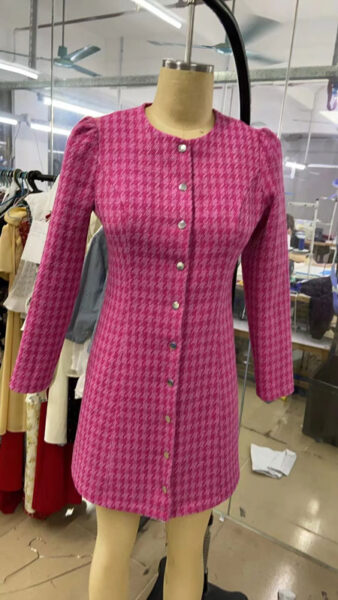
Prepare your pleated dress enquiry
Send construction drawings, fabric details, the size ratio, intended care and photographs showing the desired movement. Ask which material and garment trials are needed before price and production timing can be confirmed.
For a style review with Mugekoo, share your pleated dress brief. Use the enquiry to establish the proposed approval stages and any specialist processing needs, rather than assuming a pleated design follows the same production route as a plain skirt.