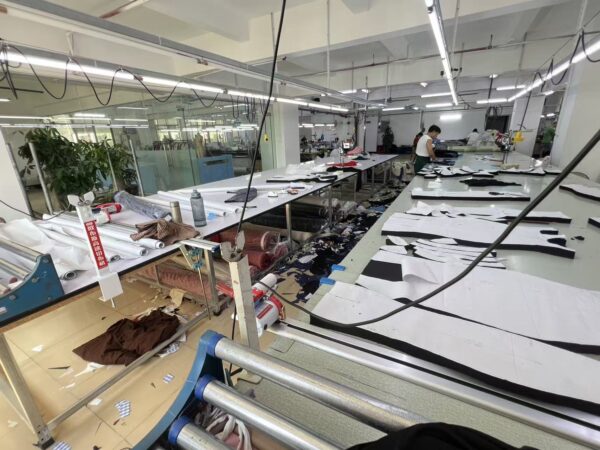
Woven shorts manufacturing requires clear decisions about rise, leg shape, waistband construction and intended coverage. A photograph can communicate a silhouette, but it rarely supplies enough information for a comparable factory quotation. For women’s fashion brands, wholesalers and retailers, the most useful sourcing brief combines technical drawings with an approved fit and material plan. This guide focuses on developing and ordering woven shorts rather than buying ready-made wholesale stock.
Define the silhouette and construction
Specify whether the shorts are tailored, relaxed, pleated, elasticated or another construction. Provide front and back drawings showing pockets, belt loops, darts, fastening and any lining. Mark decorative details separately from functional ones so the supplier can identify the actual operations required.
Describe the waist position and intended leg shape. A high-waisted tailored style and a loose pull-on style need different approvals even if their outseam measurements are similar. Confirm whether cuffs are permanently secured or simply turned up for presentation, and whether the hem must retain a particular shape after care.
Make the measuring sheet repeatable
Define waist, hip, front rise, back rise, inseam, outseam and leg opening measurements. Mark each measuring position on a diagram and state whether the garment is laid flat, fastened and measured relaxed. For an elasticated waist, record the agreed extended measuring condition separately.
Use the garment points of measure guide to establish common landmarks. Do not use total length as a substitute for rise and inseam: two shorts can have the same outseam while providing different seat coverage and movement.
Check fit during sitting and movement
Review the fit sample while standing, sitting and walking. Check the waist position, seat coverage, crotch comfort and whether the leg opening restricts movement. Observe pocket gaping and whether the hem rides up more than the intended design allows. Record the fit preference before proposing corrections.
Distinguish pattern problems from material behavior. A waistband that feels tight may need a circumference adjustment, an elastic change or a different construction. Ask the sample team to identify the affected area and proposed correction rather than changing several dimensions without a clear reason.
Approve shell fabric and pocket materials
Confirm fabric composition, weight, usable width, finish and care expectations. Evaluate drape, coverage and pressing appearance on the actual proposed fabric. If an early fit sample uses a substitute, retain that status and request a later sample in the intended bulk material.
Check pocket bag color, weight and outline through the shell, especially for pale shorts. Approve any lining together with the garment. The fabric sourcing guide helps organize submissions; the shorts specification should identify which material belongs to the shell, pockets and other components.
Plan waistband and closure approval
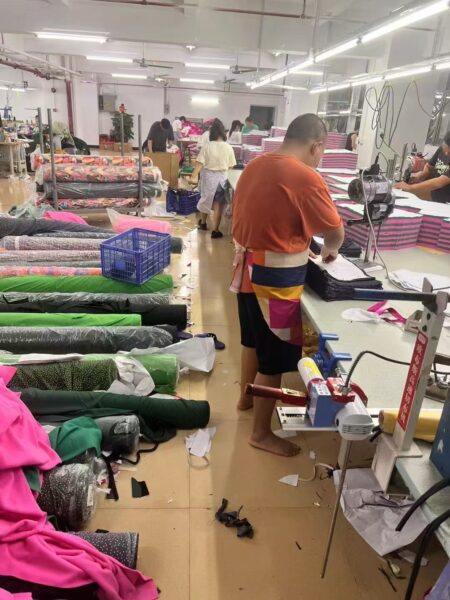
For a fixed waistband, specify finished depth, fastening, reinforcement and any belt loops. Confirm that the fly or other opening provides practical dressing access. For a pull-on style, document elastic dimensions, joining method and the intended gathered appearance.
Request a sewn waistband trial when elastic behavior is a key fit concern. Use the garment elastic sourcing guide for application-specific approval. The final sample should show how the waistband behaves in the assembled shorts, including the effect of pockets or other layers attached nearby.
Review sizes and compare like-for-like quotations
Ask how rise, hip, inseam and leg opening are graded across the ordered range. Review representative sizes where the range or design risk warrants it. A larger waist measurement alone does not establish suitable seat coverage or proportion in larger sizes.
Request quotation confirmation for fabric, pockets, closures, lining, labels, pressing and packaging. Clarify quantities by size and color, material minimums and sample charges. If a lower-cost alternative changes the pocket construction or waistband, approve a revised sample before comparing its price with the original specification.
Set the bulk release checkpoints
Confirm the pattern version, actual fabric, approved measurements and complete sample identification before cutting. During sewing, inspect crotch seams, waistband joins, pocket openings and closures. Final review should include measurements, clean finishing and practical fastening checks, with care-related requirements completed as agreed.
To discuss a woven shorts project with Mugekoo, send drawings, fabric preferences, fit information, quantities and a delivery window. Prepare the enquiry using the manufacturing RFQ checklist and ask the factory to confirm capability, material availability and the proposed sample sequence.