Successful woven women’s wear production depends on controlling material behavior before the first bulk panel is cut. Woven dresses, blouses, skirts and trousers usually have less stretch than knitwear, so grain-line errors, shrinkage, seam puckering and inaccurate tolerances are difficult to hide.
This guide explains the production controls overseas fashion brands, wholesalers and retailers should agree with a manufacturer when sourcing woven women’s apparel.
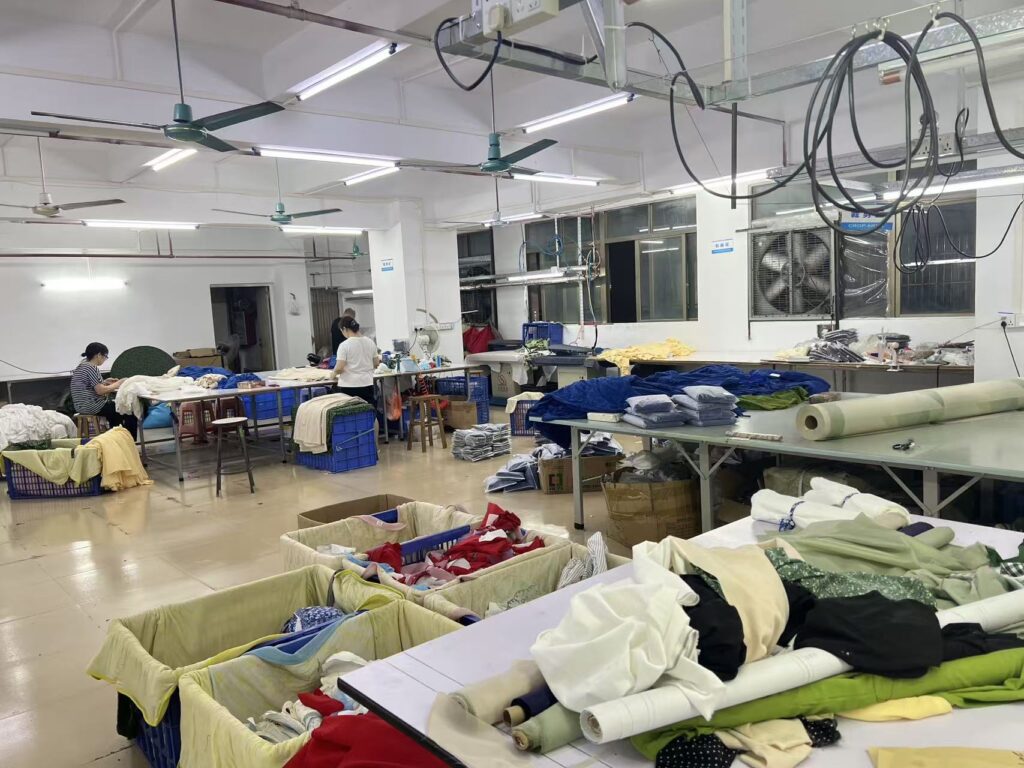
Why woven women’s wear needs category-specific control
Woven fabric is built from warp and weft yarns. Its stability makes it suitable for crisp shirts, structured dresses and tailored bottoms, but limited stretch also makes fit and construction accuracy critical. A rayon challis blouse, cotton poplin dress, satin skirt and linen trouser may all be woven products, yet each behaves differently during spreading, sewing and pressing.
Buyers should therefore avoid approving a factory only because it produces “women’s clothing.” The supplier should demonstrate experience with the intended fabric weight, silhouette and construction. For dress-specific checkpoints, see the woven dress manufacturing guide.
1. Define the fabric beyond fiber content
A useful material specification includes fiber composition, weave, weight, usable width, finish, stretch, opacity, hand feel and approved color. Two fabrics labeled “100% viscose” can have very different drape, shrinkage and seam strength.
Ask the manufacturer to confirm:
- supplier and article number;
- minimum order and minimum color quantity;
- bulk lead time;
- shrinkage and colorfastness results;
- risk of skew, bowing, snagging or seam slippage;
- shade-lot control method.
When alternatives are allowed, specify which properties are non-negotiable. A cheaper fabric is not equivalent if it changes opacity, recovery or finished measurements. The fabric sourcing guide for clothing production explains how to document material approvals.
2. Test shrinkage before finalizing patterns
Patterns and measurement charts must account for the approved fabric’s shrinkage. Testing should follow the care method intended for the garment. For washed styles, confirm whether measurements are controlled before or after washing and whether the bulk wash process matches the approved sample.
If fabric shrinks differently in warp and weft directions, the pattern may require directional compensation. Buyers should not accept an estimated shrinkage value when the actual bulk fabric can be tested before cutting.
3. Relax and inspect bulk fabric
Fabric tension can change after a roll is opened. The factory should relax appropriate fabrics before spreading and cutting. Incoming inspection should identify holes, stains, print defects, width variation and shade differences.
Shade rolls may need to be separated so panels from visibly different lots do not appear in the same garment. For printed or directional fabric, inspection should also confirm print direction, repeat and registration.
4. Lock grain lines and marker rules
Incorrect grain placement can cause twisting, uneven drape or distorted hems. Tech packs and patterns should show grain direction clearly. Nap, shine, one-way prints, stripes and checks may require one-directional markers or matching allowances, increasing fabric consumption.
Agree which seams and design points must match. Exact matching at every seam can raise cost, so buyers should identify visual priorities during costing rather than during final inspection.
5. Approve construction on the real fabric
Stitch type, needle size, thread and seam allowance should be tested on the production material. Lightweight woven fabric may pucker under excessive tension, while loosely woven fabric may slip at stressed seams. Sheer products may require French seams, binding or lining.
Review high-risk details such as concealed zippers, bias panels, narrow hems, gathers, pleats, rouleau straps, plackets and buttonholes. The approved sample should show the exact construction expected in bulk.
6. Balance fit, ease and size grading
Finished garment measurements should include enough wearing ease for the intended silhouette and fabric. Check movement at the bust, armhole, waist, hip and rise rather than reviewing flat measurements alone.
After approving the base size, evaluate graded measurements and a risk-based size set. Non-stretch fitted garments need especially careful review at the smallest and largest sizes.
7. Use a pre-production meeting
Before bulk starts, the production team should review the approved sample, pattern version, measurement chart, bill of materials, construction notes, color standards, labels and packing instructions. Any open issue should have an owner and deadline.
The meeting should identify difficult operations and quality checkpoints. If the factory cannot reproduce an approved detail consistently, the issue should be resolved before full line input.
8. Inspect first output and inline production
Measure and inspect the first garments from the line. Early checks can reveal systematic errors in seam allowance, pressing, zipper insertion or operator method. Correcting the process after the first dozen pieces is far less costly than repairing an entire order.
Use style-specific criteria alongside the broader garment quality control checklist. Typical woven-wear risks include seam puckering, twisting, uneven hems, shade mixing, press shine and measurements outside tolerance.
9. Connect production milestones to the delivery plan
Fabric booking, inspection, cutting, sewing, finishing and packing should appear in the production calendar. A delayed material approval can consume the sewing window even when the line is technically available.
Compare the proposed schedule with the clothing manufacturing timeline and define when buyer approvals are due.
Buyer’s woven production control table
| Stage | Required evidence |
|---|---|
| Fabric approval | Swatch, specification and test results |
| Pattern | Approved version, grain lines and shrinkage allowance |
| Sample | Fit, construction and measurement approval |
| Cutting | Shade grouping, marker and first-panel check |
| Sewing | First-output and inline inspection records |
| Finishing | Pressing, appearance and measurement verification |
| Packing | Labels, assortment and carton audit |
Final takeaway
Woven women’s wear production becomes predictable when fabric behavior, grain, construction, fit and inspection are approved as connected controls. A low quotation cannot compensate for material or pattern decisions left unresolved until bulk production.
Brands preparing woven women’s collections can contact the factory team with tech packs, fabric requirements, quantities and target delivery dates for a production review.