Woven dresses can vary greatly in manufacturing cost even when two styles look similar in a product photo. Fabric consumption, lining, pattern complexity, seam construction, trims, pressing and order quantity all affect the factory quotation.
This buyer-focused guide explains the main woven dress manufacturing cost factors fashion brands should compare before selecting a production partner.
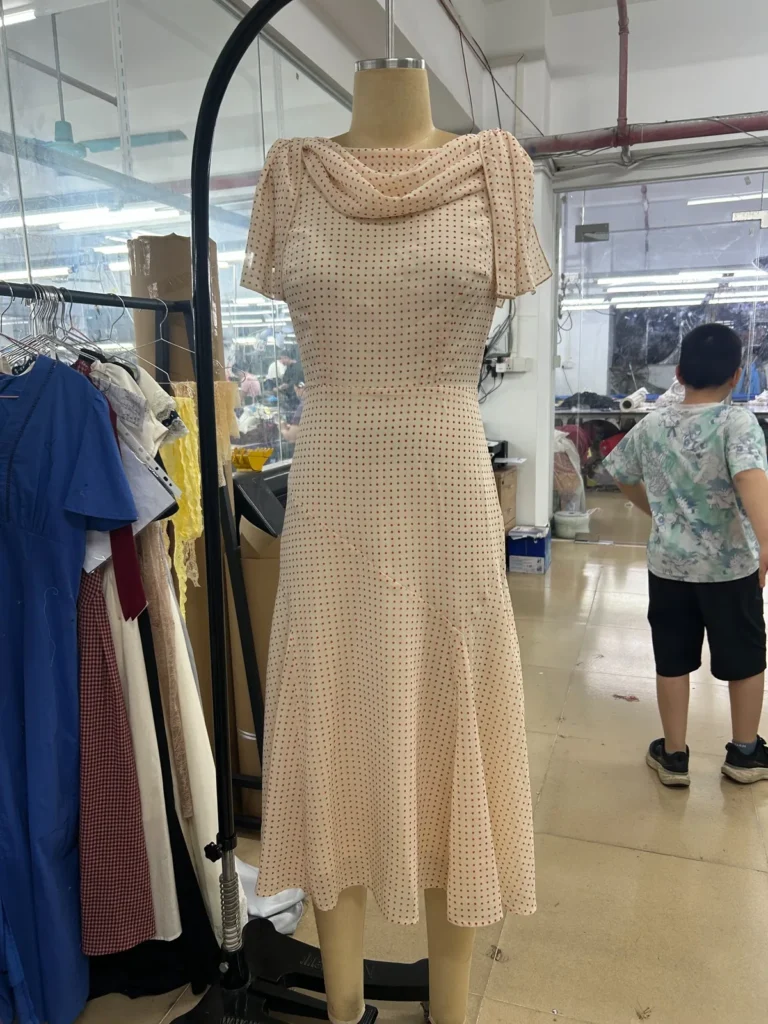
1. Fabric Is Usually the Largest Cost Component
Woven dress fabric cost depends on fiber content, construction, weight, width, finishing and order quantity. Rayon, cotton poplin, linen blends, satin, crepe and specialty fabrics can have very different prices and cutting yields.
Buyers should compare quotations using the same fabric specification. A cheaper quote may reflect a lighter weight, different composition or lower finishing standard.
Our fabric sourcing guide explains how material choices affect apparel production.
2. Fabric Consumption Changes With Silhouette
A fitted mini dress uses less fabric than a full-length gathered dress. Puff sleeves, ruffles, tiers, bias panels and wide skirts can increase consumption significantly. Pattern placement and fabric width also matter.
3. Lining Adds Material and Labor
Many woven dresses require full or partial lining for opacity, comfort or structure. The buyer should confirm lining composition, color, construction and which garment sections are lined.
4. Construction Complexity Drives Sewing Time
Darts, princess seams, pleats, gathers, smocking, covered buttons, invisible zippers, boning, elastic channels and shaped waistbands all add operations. More operations mean more sewing minutes and more quality checkpoints.
For a wider production view, see our woven dress manufacturer bulk production guide.
5. Pattern and Fit Development Affect Pre-Production Cost
A simple loose dress may require fewer fit revisions than a structured fitted style. Pattern development, grading and multiple sample rounds add cost before bulk production, especially for brands with strict fit standards.
6. Trims Can Change the Quotation More Than Buyers Expect
Invisible zippers, metal hardware, covered buttons, lace, elastic, branded labels and custom hangtags each have their own unit cost and supplier minimum. Buyers should ask for trim specifications rather than comparing only total garment prices.
7. Printing, Embroidery and Washing Add Separate Processes
Placement prints, all-over prints, embroidery, garment washing and special finishes can add setup costs and minimums. Artwork size, color count and technique should be confirmed before the final quotation.
8. Pressing and Finishing Matter for Woven Women’s Wear
Woven dresses often require more careful pressing than basic knitwear. Seams, collars, sleeves, gathers and hems need shape control to achieve a retail-ready appearance. Finishing quality should therefore be included in the production standard.
Our woven women’s wear production quality guide covers cutting and seam control in more detail.
9. MOQ Changes Unit Cost
Small orders distribute pattern setup, cutting preparation, sample approval and line changeover across fewer garments. Larger repeat orders may achieve better efficiency if the design and materials remain stable.
10. Quality Requirements Should Be Priced Upfront
If a buyer requires tighter measurement tolerances, additional inspections, special packaging or third-party testing, these requirements should be stated before quotation. Hidden requirements introduced after production starts often create delays and cost disputes.
How Buyers Should Compare Woven Dress Quotations
Ask each factory to quote against the same tech pack, size range, fabric specification, lining, trims, packaging and quantity. Then compare what is included. A meaningful quotation comparison is based on equal specifications, not just the lowest unit number.
You can also review our broader clothing manufacturing cost guide for other cost drivers.
Typical Information Needed for an Accurate Quote
- Front and back design or tech pack
- Fabric composition and target weight
- Size range and quantity by size
- Color quantity
- Lining requirement
- Trim details
- Print or embroidery artwork
- Packaging specification
- Target order quantity
Conclusion
Woven dress manufacturing cost is the result of material consumption, construction time, trims, finishing, development and order scale. Buyers get more accurate quotations when they provide complete specifications and compare factories on the same production standard.
If you are sourcing woven dresses, send your design, fabric requirement and target quantity for a manufacturing review.