For fashion brands, understanding the clothing manufacturing timeline is essential for planning product launches, inventory, marketing campaigns, and sales.
One of the most common questions brands ask when working with a clothing manufacturer is:
How long does it take to manufacture clothing?
There is no single answer because production time depends on the garment type, order quantity, fabric availability, customization requirements, sampling process, and manufacturing schedule.
A simple garment may move through production relatively quickly, while highly customized garments can require significantly more development time.
For brands working with an OEM clothing manufacturer, understanding every production stage can make planning much easier.
This guide explains the typical clothing manufacturing timeline, what can cause delays, and how fashion brands can make production more efficient.
1. The Typical Clothing Manufacturing Timeline
A typical custom clothing production process can include:
Design Preparation
↓
Manufacturer Evaluation
↓
Quotation
↓
Fabric & Material Sourcing
↓
Pattern Development
↓
Sample Production
↓
Sample Fitting & Revision
↓
Sample Approval
↓
Bulk Production
↓
Quality Inspection
↓
Packing
↓
Shipping
Each stage has a different timeline.
The total production period depends on how complicated the product is and how efficiently the brand and manufacturer communicate.
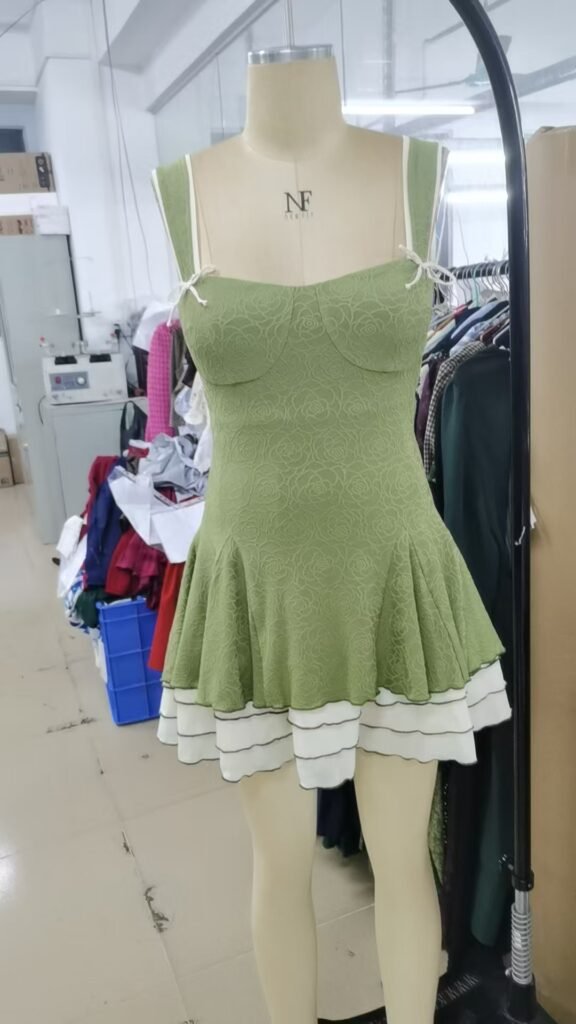
2. How Long Does Clothing Sampling Take?
Sampling is one of the most important stages of apparel development.
For a custom garment, the manufacturer may need to create:
- Patterns
- First samples
- Size adjustments
- Fabric tests
- Color samples
- Construction modifications
- Revised samples
A straightforward sample may take less time, while complicated designs can require multiple revisions.
For example, a garment with simple construction may require fewer adjustments than a dress with complicated draping, special fabric treatments, embroidery, or customized construction.
Why Sample Approval Matters
Bulk production should normally begin only after the brand approves the final sample and specifications.
If production begins before the design is properly confirmed, changes during bulk manufacturing can create:
- Additional costs
- Production delays
- Material waste
- Inconsistent garments
A properly approved sample gives the manufacturer a clear production reference.
3. Fabric Sourcing Can Affect the Production Timeline
Fabric availability is another important factor.
If the required fabric is already available from a regular supplier, sourcing can be relatively straightforward.
However, custom fabric requirements may take longer.
Examples include:
- Custom colors
- Special fabric compositions
- Custom GSM
- Printed fabrics
- Embroidered materials
- Washed fabrics
- Special finishes
- Sustainable fabric requirements
For this reason, fashion brands should communicate fabric requirements as early as possible.
A manufacturer with established fabric sourcing capabilities can often help identify suitable materials and reduce unnecessary delays.
4. How Long Does Bulk Clothing Production Take?
Bulk production time depends on several factors.
Product Complexity
Simple garments generally require fewer production processes.
More complicated garments may require:
- Multiple panels
- Special sewing techniques
- Embroidery
- Printing
- Washing
- Pleating
- Beading
- Special finishing
The more production processes involved, the more time may be required.
Order Quantity
A small production run and a large wholesale order do not necessarily have the same production timeline.
Large orders require more:
- Cutting
- Sewing
- Quality inspection
- Finishing
- Packing
Production capacity and the manufacturer’s current schedule also affect lead time.
Product Category
Different garments require different production processes.
For example:
- T-shirts
- Shirts
- Dresses
- Trousers
- Knitwear
- Jackets
may have significantly different production requirements.
Therefore, brands should ask manufacturers for a product-specific production timeline instead of relying on a general estimate.
5. What Is Clothing Manufacturing Lead Time?
Clothing manufacturing lead time refers to the amount of time required to complete a production order from an agreed starting point to finished goods.
However, brands should clarify exactly what is included in the quoted lead time.
For example, a manufacturer may quote a production lead time that begins after:
- Final sample approval
- Material confirmation
- Deposit payment
- Fabric arrival
A quotation saying “30 days production time” does not necessarily mean the garments will arrive at the brand’s warehouse 30 days after the order is placed.
This distinction is extremely important for international fashion brands.
6. Production Time vs. Shipping Time
Manufacturing time and shipping time are two different parts of the supply chain.
A simplified timeline may look like:
Product Development
→
Sampling
→
Material Preparation
→
Bulk Production
→
Quality Inspection
→
Packing
→
International Shipping
→
Delivery
Therefore, brands should calculate the entire supply-chain timeline rather than focusing only on factory production days.
This is especially important when planning:
- Seasonal collections
- New product launches
- Promotional campaigns
- Influencer campaigns
- Holiday sales
- Retail deliveries

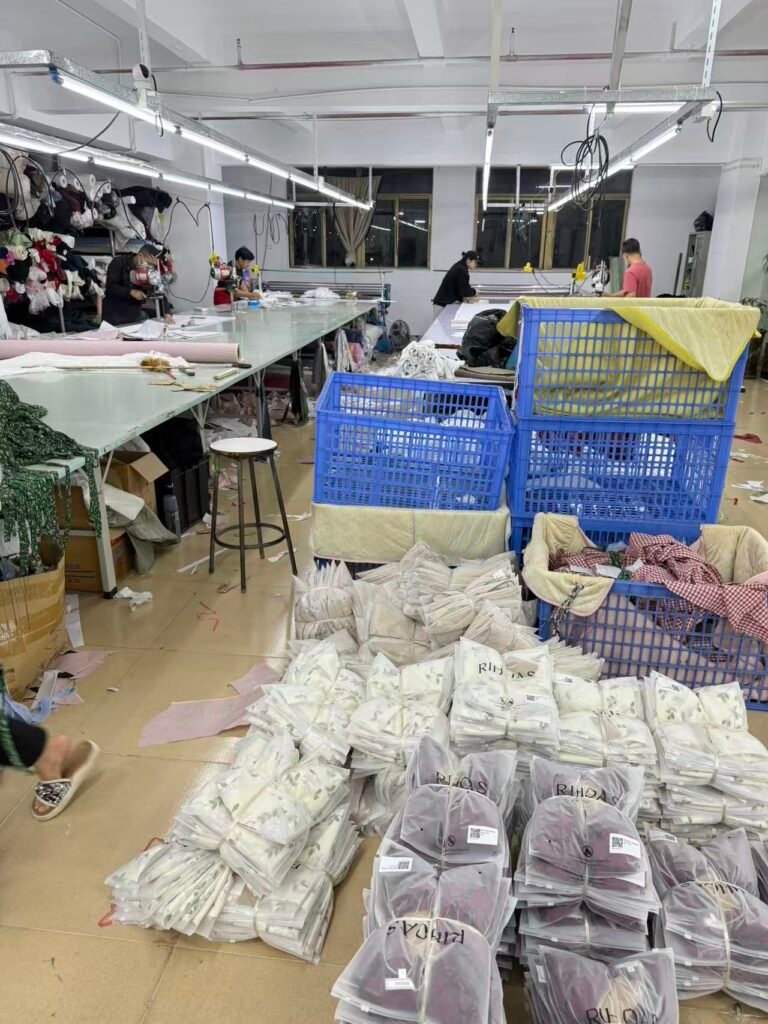
7. What Can Cause Clothing Production Delays?
Several common issues can extend the manufacturing timeline.
1. Incomplete Product Information
Missing measurements, fabric specifications, color references, or construction details can cause unnecessary communication and revisions.
2. Slow Sample Approval
If a brand takes several days or weeks to review samples, the entire production schedule moves accordingly.
3. Fabric Availability
Custom or unavailable fabrics may require additional sourcing time.
4. Design Changes
Changing measurements, materials, colors, or construction after sampling can require additional development.
5. Large Order Quantities
Large production orders may require more manufacturing capacity and scheduling.
6. Poor Communication
Unclear communication between the brand and manufacturer can result in incorrect materials, specifications, or production instructions.
7. Quality Problems
If finished garments fail inspection, rework or replacement production may be required.
Good production planning should therefore focus not only on speed but also on preventing avoidable problems.
8. How Fashion Brands Can Reduce Manufacturing Lead Time
Brands can improve production efficiency by preparing information before contacting a manufacturer.
A professional product package should ideally include:
- Design drawings
- Measurements
- Fabric specifications
- Color references
- Size charts
- Construction details
- Label requirements
- Packaging requirements
- Estimated order quantity
- Target delivery date
A detailed clothing tech pack can make communication between the brand and manufacturer much more efficient.
It also gives the manufacturer a clearer understanding of what needs to be produced.
9. Why Sample Approval Should Be a Key Milestone
Sample approval should be treated as an important production milestone.
Before approving a sample, brands should check:
Fit
Does the garment fit according to the intended measurements?
Fabric
Is the fabric composition, weight, texture, and appearance correct?
Construction
Are seams, stitching, closures, and finishing details correct?
Color
Does the final color match the approved reference?
Branding
Are labels, logos, hangtags, and other branding elements correct?
Measurements
Does the garment match the approved size chart?
Once the sample is approved, the final specifications should be clearly documented for bulk production.
10. A Practical Clothing Production Timeline
Although every project is different, fashion brands can think about production in several major stages:
| Production Stage | Main Purpose |
|---|---|
| Design Preparation | Define the product |
| Quotation | Confirm estimated manufacturing cost |
| Material Sourcing | Prepare fabrics and accessories |
| Pattern Development | Create production patterns |
| Sampling | Produce development samples |
| Fitting & Revision | Correct measurements and construction |
| Sample Approval | Confirm final specifications |
| Bulk Production | Manufacture the order |
| Quality Inspection | Check finished garments |
| Packing | Prepare goods for shipment |
| Shipping | Deliver products to the destination |
The exact timeline should always be confirmed with the manufacturer based on the specific product and order.
11. Why the Cheapest Manufacturer May Not Be the Fastest
Many fashion brands compare manufacturers primarily by unit price.
However, production efficiency is also important.
A manufacturer offering a slightly lower price may not necessarily provide the best overall value if the production process results in:
- Longer lead times
- More quality issues
- More revisions
- Poor communication
- Unstable material sourcing
- Delayed shipments
For growing fashion brands, reliable production can be more valuable than the lowest initial quotation.
The right manufacturing partner should balance:
Cost + Quality + Lead Time + Communication + Production Capability
12. How Mugekoo Supports Fashion Brands
Mugekoo provides custom clothing manufacturing and OEM/ODM production support for fashion brands, online retailers, wholesalers, and other apparel businesses.
Our manufacturing process covers key stages including:
- Product development
- Pattern development
- Sample making
- Fabric sourcing
- Bulk production
- Quality inspection
- Packing
- Shipping support
Our goal is to help brands turn product concepts into finished garments through a clear and organized manufacturing process.
For brands preparing a new collection, we recommend discussing the production timeline with the manufacturer before confirming the order.
This helps both sides understand:
- What needs to be prepared
- When materials need to arrive
- When samples need approval
- When bulk production can begin
- When the goods are expected to be ready for shipment
Final Checklist: Before Starting Clothing Production
Before placing a bulk clothing order, make sure you have:
✓ Finalized garment designs
✓ Confirmed measurements and size charts
✓ Selected fabrics and materials
✓ Prepared branding requirements
✓ Confirmed packaging requirements
✓ Approved the final sample
✓ Confirmed the production quantity
✓ Discussed the production lead time
✓ Confirmed the quality inspection process
✓ Planned the shipping schedule
Good preparation can significantly reduce unnecessary delays and make apparel manufacturing more predictable.
Conclusion
So, how long does it take to manufacture clothing?
The answer depends on the product, materials, order quantity, customization requirements, sampling process, and manufacturer’s production schedule.
Instead of asking only:
“How many days does production take?”
Fashion brands should ask:
“What are the complete production stages, what does the quoted lead time include, and when can the finished goods actually be shipped?”
Understanding the complete clothing manufacturing timeline allows brands to plan collections more effectively, reduce production risks, and avoid unexpected delays.
For brands looking for a reliable OEM clothing manufacturing partner in China, choosing a manufacturer with professional product development, sampling, production, quality control, and communication capabilities can make the entire process more efficient.
Mugekoo works with fashion brands seeking custom apparel manufacturing, OEM/ODM production, and private label clothing solutions.
Contact Mugekoo to discuss your product requirements, sampling needs, production quantity, and manufacturing timeline.