Working with an OEM women’s clothing manufacturer means the buyer retains control of the product specification while the factory turns approved requirements into repeatable production. The most important transition is not from sketch to sample; it is from an approved sample to hundreds or thousands of consistent garments.
This guide focuses on the buyer controls that matter between fabric approval and final shipment.
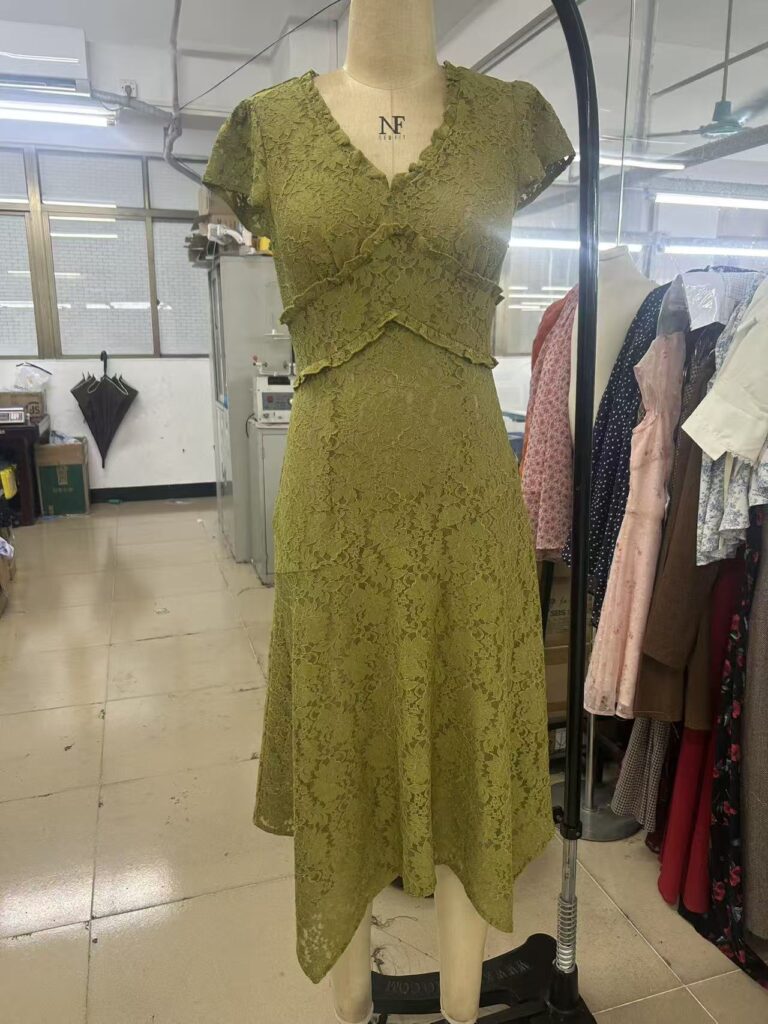
Define the OEM Standard Before Production
An OEM factory manufactures to the brand’s specifications, so ambiguity creates risk. The technical pack should define measurements, construction, stitching, trims, labels, artwork, fabric details, tolerances and packing requirements. Changes made verbally or across scattered messages are difficult to control on the production floor.
If your team is still preparing specifications, use our clothing tech pack guide before requesting a final bulk quotation.
Fabric Approval Should Be Documented
Fabric can change the fit, drape, appearance and performance of women’s garments. Buyers should approve the actual production fabric or an agreed reference standard, not rely only on a fiber-content description. Confirm composition, weight, color, hand feel, stretch where relevant, shrinkage expectations and any required testing.
For sourcing considerations, read fabric sourcing for clothing manufacturing.
Approve a Pre-Production Sample
The pre-production sample should represent the agreed bulk standard as closely as possible. Check measurements, silhouette, seam construction, trims, labels, color placement, finishing and packaging details. Record approval and unresolved exceptions before bulk cutting.
Our pre-production sample guide explains what brands should verify before production authorization.
Control Quality During Production, Not Only at the End
Final inspection is important, but it is late and expensive to discover a repeated construction problem after the entire order is finished. A stronger OEM workflow includes incoming-material checks, first-piece verification, inline inspection and final inspection. Early feedback helps prevent one defect from repeating across the whole run.
Key inline checkpoints
- Fabric and trim match the approved standard.
- Critical measurements remain within agreed tolerances.
- Stitch type, seam allowance and construction match the tech pack.
- Print, embroidery or embellishment placement is consistent.
- Workmanship issues are corrected before they accumulate.
Separate Critical, Major and Minor Defects
Not every defect has the same commercial impact. Buyers and factories should align on defect severity before final inspection. A safety issue, wrong size label or severe measurement failure is different from a small cosmetic variation. Clear classification makes inspection decisions more consistent and reduces arguments at shipment stage.
Use our garment quality control checklist to structure the review.
Protect Consistency Across Colors and Sizes
Women’s clothing often combines multiple sizes, colors and fabrics in one purchase order. Quality control should therefore verify consistency across the full assortment, not only the easiest reference size. Size grading, color variation, fabric stretch and construction difficulty can create different risks within the same style.
Confirm Packing and Shipment Requirements Early
Carton markings, polybags, hangtags, folding methods, barcode labels and assortment ratios should be defined before the final production stage. Retailers and wholesalers may have strict receiving requirements; correcting packaging after garments are packed creates avoidable labor and delay.
What Buyers Should Expect From an OEM Manufacturing Partner
A reliable OEM relationship depends on transparent approvals, traceable specifications and timely communication when production differs from the approved standard. The manufacturer should not silently substitute key materials or construction details. The buyer, in turn, should freeze specifications before bulk production and respond quickly to approval requests.
For a broader comparison of manufacturing models, see OEM vs ODM clothing manufacturing.
Final Takeaway
The best way to manage an OEM women’s clothing manufacturer is to turn every important product requirement into an approved, measurable production standard. Fabric approval, PPS confirmation, inline control and final inspection form one connected system. Mugekoo is the manufacturing brand behind the service, while the buyer’s product, quality and delivery requirements remain the center of the production process.