For a growing fashion brand, MOQ is not simply a factory number. It affects cash flow, inventory risk, fabric purchasing, color planning, size ratios and the final unit cost. When buyers compare a women’s clothing manufacturer, the better question is not only ‘What is your MOQ?’ but ‘How is the MOQ built for my product?’
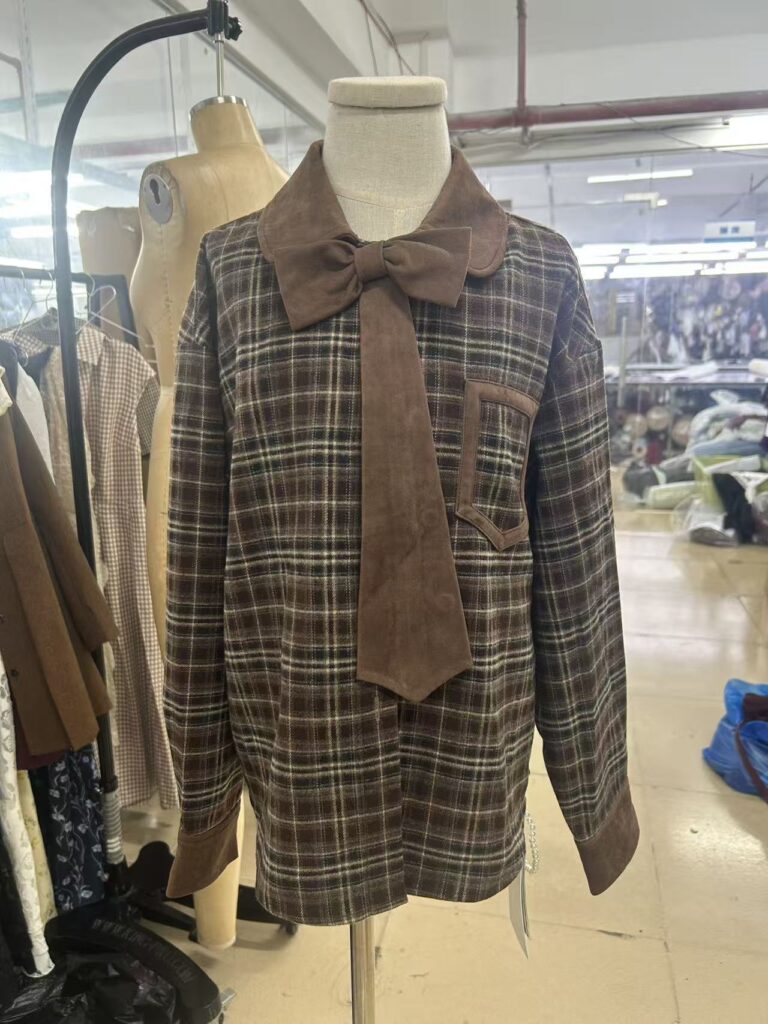
Why MOQ changes from one women’s clothing style to another
MOQ depends on the production inputs behind a style. A simple woven top using an available fabric can often be organized more flexibly than a fully custom dress that requires special dyeing, embroidery, custom hardware or a unique print. Fabric mills and trim suppliers may also have minimums that are different from the sewing factory’s minimum.
Before requesting a quotation, buyers should prepare a clear tech pack, target quantity, size breakdown, colorways, target fabric and expected delivery date. Our clothing tech pack guide explains the information manufacturers need before accurate costing.
Low MOQ does not always mean the lowest total risk
A very small order can reduce inventory exposure, but it may increase unit cost because pattern making, sampling, cutting setup, quality control and production management are spread across fewer garments. Brands should compare total landed economics rather than selecting a supplier only because it advertises the smallest MOQ.
For early collections, a practical strategy is to concentrate demand into fewer strong styles and controlled colorways. This gives the factory more efficient material purchasing and gives the brand cleaner sales data before expanding the range.
How fabric sourcing affects MOQ
Fabric is frequently the hidden constraint. Stock fabric can support smaller production runs, while custom-developed fabric, custom colors or special finishing may require larger commitments. Buyers can review our fabric sourcing guide for clothing manufacturing to understand how availability, lead time and minimum dye quantities influence production.
Use sampling to validate the order before scaling
Sampling should confirm fit, construction, workmanship, fabric behavior and key measurements before bulk cutting. A first order should not be used as an expensive substitute for product development. Fit samples and pre-production samples create checkpoints where the buyer can identify problems while changes are still manageable.
See the clothing sample development process and our guide to pre-production sample approval for a structured workflow.
Questions to ask a women’s clothing manufacturer about MOQ
- Is the MOQ calculated per style, per color or per fabric?
- Can multiple sizes be combined within one color quantity?
- Does the fabric supplier impose a separate minimum?
- Which custom trims or processes create additional minimums?
- How does unit pricing change at higher quantity tiers?
- Can approved stock fabrics be used for an initial market test?
Plan the first production run around sell-through, not just factory capacity
Wholesale and retail buyers should connect the production plan to expected sales channels. If one style will be distributed across several stores or wholesale accounts, size and color allocation should be planned before the purchase order is finalized. This helps prevent a situation where total quantity meets the factory minimum but individual variants are commercially unbalanced.
Quality control still matters on small orders
Low quantity should not mean informal quality standards. Measurement tolerances, workmanship expectations, labeling, packing and inspection points should be documented before production. Our garment quality control checklist covers the controls buyers should establish before shipment.
Building a scalable manufacturing relationship
The best first order creates a repeatable system. Once fit blocks, approved fabrics, construction standards and communication routines are established, repeat orders and new developments can become more efficient. Mugekoo supports custom women’s apparel development and production for overseas fashion businesses, while each project is evaluated according to its design, materials, quantity and quality requirements.
Buyer takeaway: Treat MOQ as a production-planning variable, not a single headline number. A capable women’s clothing manufacturer should be able to explain what drives the minimum and help buyers understand the trade-offs between quantity, customization, cost and lead time.