Choosing a women’s clothing manufacturer in China is not only a question of price or production capacity. For overseas fashion brands, wholesalers and retailers, the larger sourcing risk is whether the factory can reproduce the approved fit, fabric hand feel, workmanship and measurements consistently across an entire bulk order.
This guide explains a buyer-led workflow for controlling those variables from development through shipment. It is designed for purchasing teams that already have a collection concept and need a production partner capable of turning specifications into repeatable commercial garments.
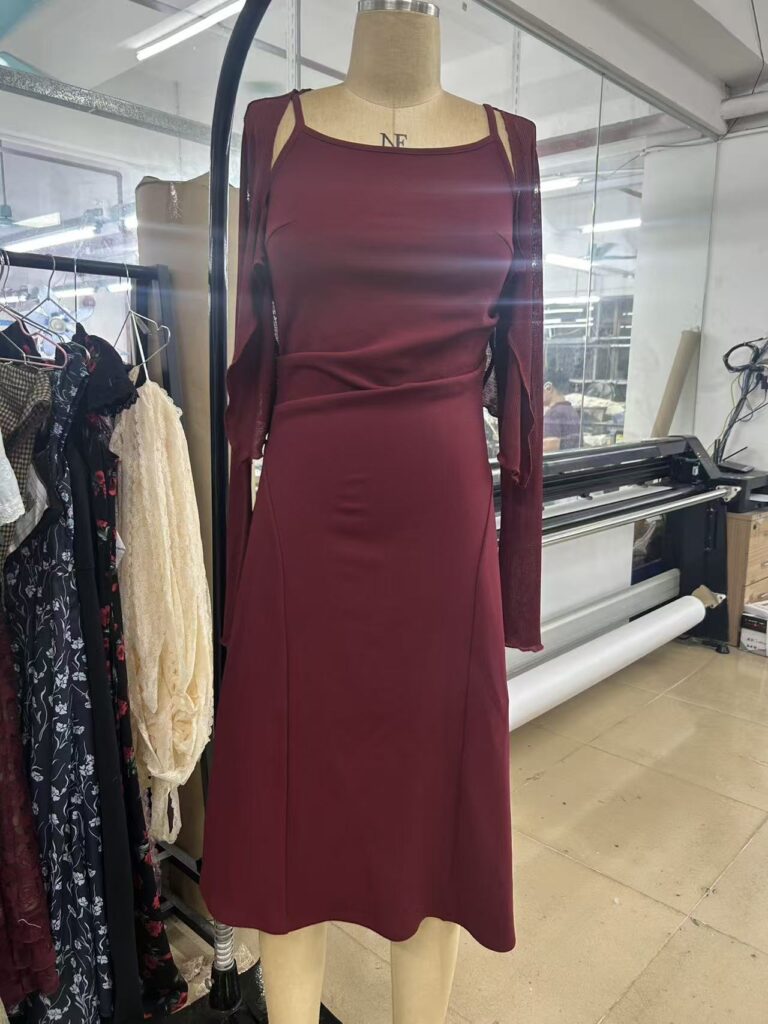
1. Start With Product Complexity, Not a Generic Factory Quote
Women’s apparel can include dresses, blouses, skirts, trousers, jackets and coordinated sets, each with different fabric behavior, construction requirements and fitting risks. A buyer should therefore evaluate whether a manufacturer has relevant experience with the actual product category instead of asking only whether it can “make women’s clothing.”
Before quotation, provide a clear tech pack, reference sample or specification sheet. Include construction details, measurement tolerances, fabric composition, target weight, trims, labels, packaging and expected order quantity. If your specification process is still developing, see our clothing tech pack guide.
2. Approve Fabric Before You Lock the Garment
Fabric changes can alter drape, shrinkage, opacity, stretch, seam appearance and final measurements. Buyers should approve the production-intent fabric before treating a sample as the final fit reference. For custom developments, request swatches or yardage with composition, weight, usable width, color information and any required finishing.
When several mills can supply a similar construction, compare more than the lowest price. Lead time, repeatability, minimum dye quantity and color continuity can be just as important. Our fabric sourcing guide for clothing manufacturing covers the commercial questions buyers should ask.
3. Separate Fit Approval From Pre-Production Approval
A fit sample answers whether the silhouette and measurements work. A pre-production sample should confirm that the factory can execute the approved garment with production materials, trims, construction and labeling. Combining these decisions too early can create expensive corrections after cutting begins.
Use a written comment sheet for each sample round. Record measurements, photos, construction comments and the revision date so both buyer and manufacturer work from the same approved version. For a more detailed sequence, review the clothing sample development process.
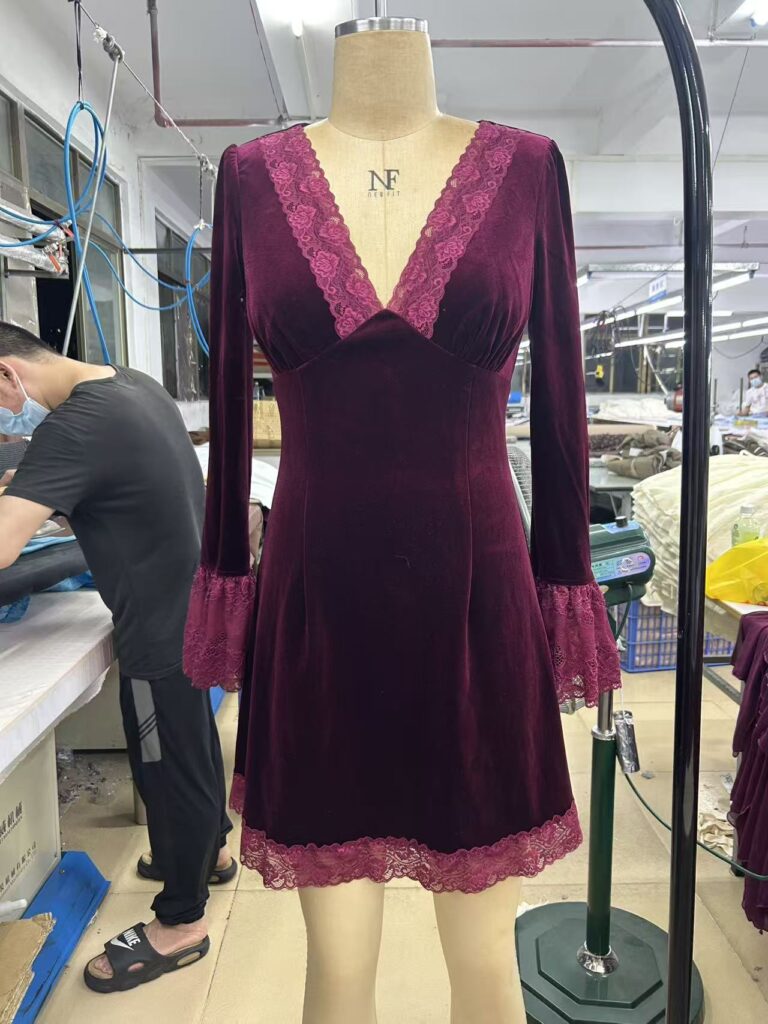
4. Define Measurement Tolerances Before Bulk Production
Bulk consistency requires measurable acceptance standards. Identify critical points of measure and assign realistic tolerances according to fabric and construction. Stretch knits, bias-cut styles and structured woven garments should not automatically use the same tolerance logic.
Ask the manufacturer how measurements are checked during sewing and finishing, not only at final inspection. Early detection reduces the chance that an entire lot repeats the same deviation.
5. Build Quality Control Into the Production Flow
Final inspection cannot repair a production process that was uncontrolled. A stronger approach uses checkpoints for incoming fabric and trims, cutting, first output, in-line sewing, finishing and packing. The buyer should define major concerns in advance: measurements, shade variation, seam puckering, skipped stitches, print or embroidery placement, label accuracy and packaging.
Use our garment quality control checklist to structure these checkpoints before shipment.
6. Plan MOQ by Style, Color and Fabric Commitment
“Low MOQ” is useful only when the commercial structure is clear. A manufacturer may support a smaller garment quantity while the fabric mill requires a larger dye lot, or trims may have their own minimums. Ask for MOQ by style and color, plus any fabric or trim minimum that sits behind the garment quote.
For a first order, fewer styles with deeper quantities can sometimes provide better production control than spreading the same budget across too many SKUs. The objective is not simply to place the smallest order; it is to create a production run that can be manufactured reliably and reordered if it sells.
7. Confirm the Bulk Timeline From Material Approval
A useful lead-time discussion starts from the date when fabric, trims, artwork and pre-production samples are approved. Ask the factory to separate material procurement, cutting, sewing, finishing, inspection and packing rather than giving one unexplained number. This makes delays easier to identify and manage.
For planning benchmarks and dependencies, see our clothing manufacturing production timeline.
Questions Buyers Should Ask a Women’s Clothing Manufacturer in China
- Which women’s product categories do you manufacture most frequently?
- Can you source custom fabrics and trims against our specifications?
- How do you manage sample comments and version control?
- What are your MOQ rules by style, color, fabric and trim?
- Which quality checkpoints happen before final inspection?
- How are measurement tolerances recorded and checked?
- What information is required before you confirm bulk lead time?
Final Takeaway
The right women’s clothing manufacturing partner is one that converts buyer specifications into a controlled process. Fabric approval, sample version control, measurable tolerances, in-line quality checks and transparent production planning matter more than a low quotation by itself.
Mugekoo works with overseas apparel buyers on custom women’s clothing development and production. The brand name is secondary to the sourcing objective: helping buyers establish a repeatable workflow from specification and sampling through bulk manufacturing.